Commercial Vending
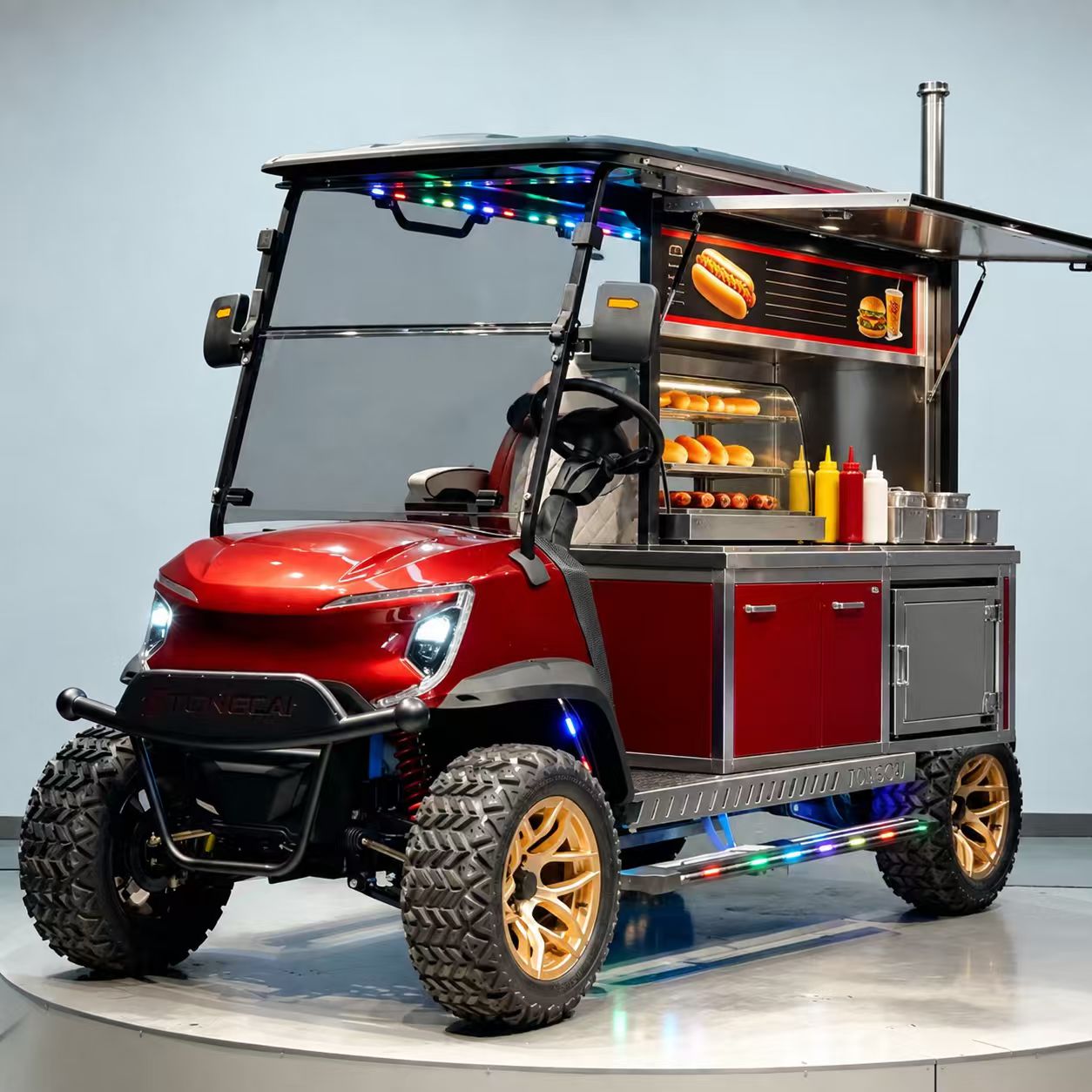
TONGCAI Stainless Steel Dual Tandem Axle Mobile Vending Cart
- • Heavy-Duty Stainless Subframe
- • Tandem Dual Axle Load Stability
- • Custom Commercial Food Outfitting
 Deutsch
 Português
 Español
 Français
 Italiano
 Русский
 한국어
 日本語
 العربية
 ไทย
 Tiếng Việt
 Türkçe
 Nederlands
 Indonesia
 עברית
 हिन्दी
Industrial-grade fabrication, certified EU compliance, high-clearance off-road transaxles, and commercial mobility platforms tailored for dealers, luxury hospitality, and public transit.

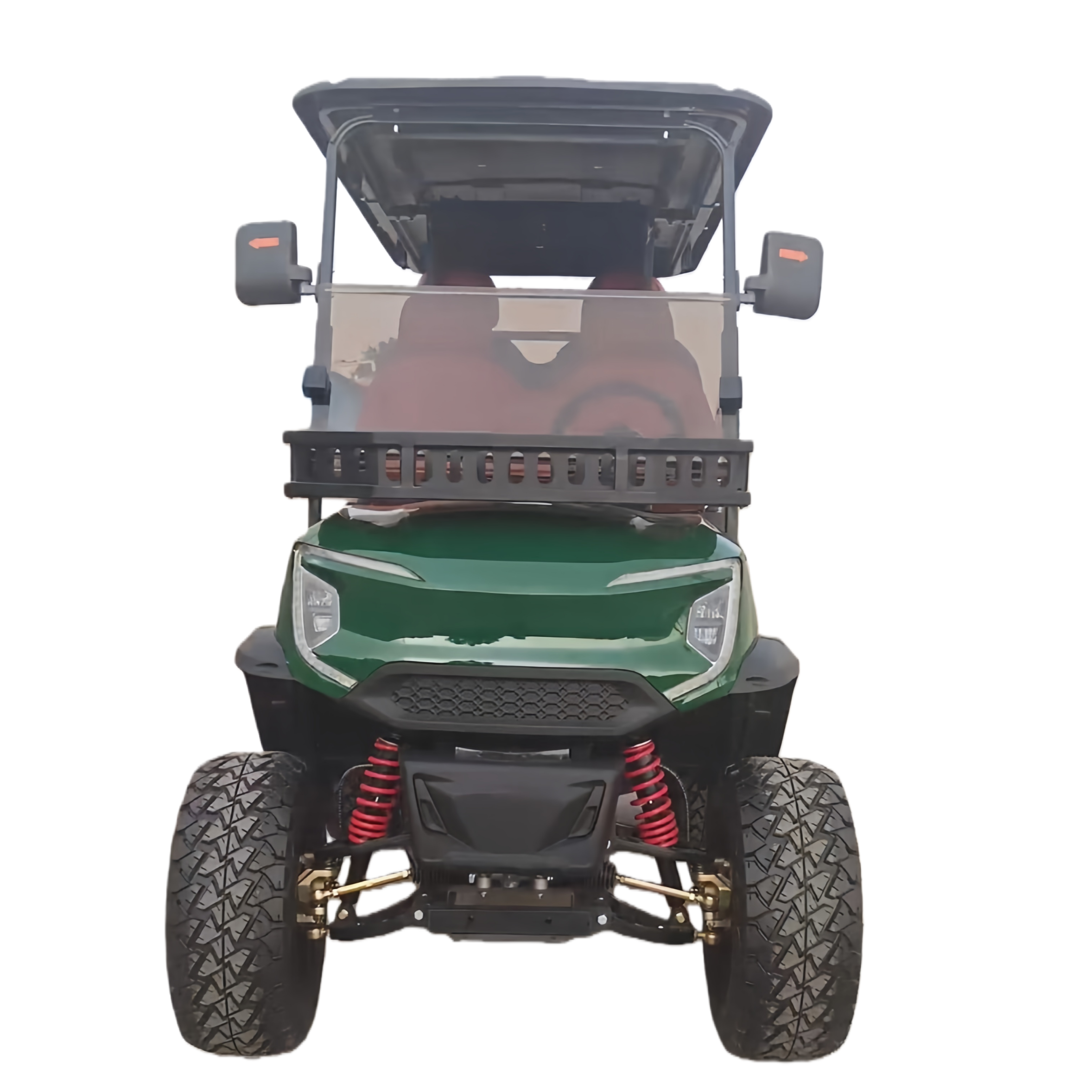
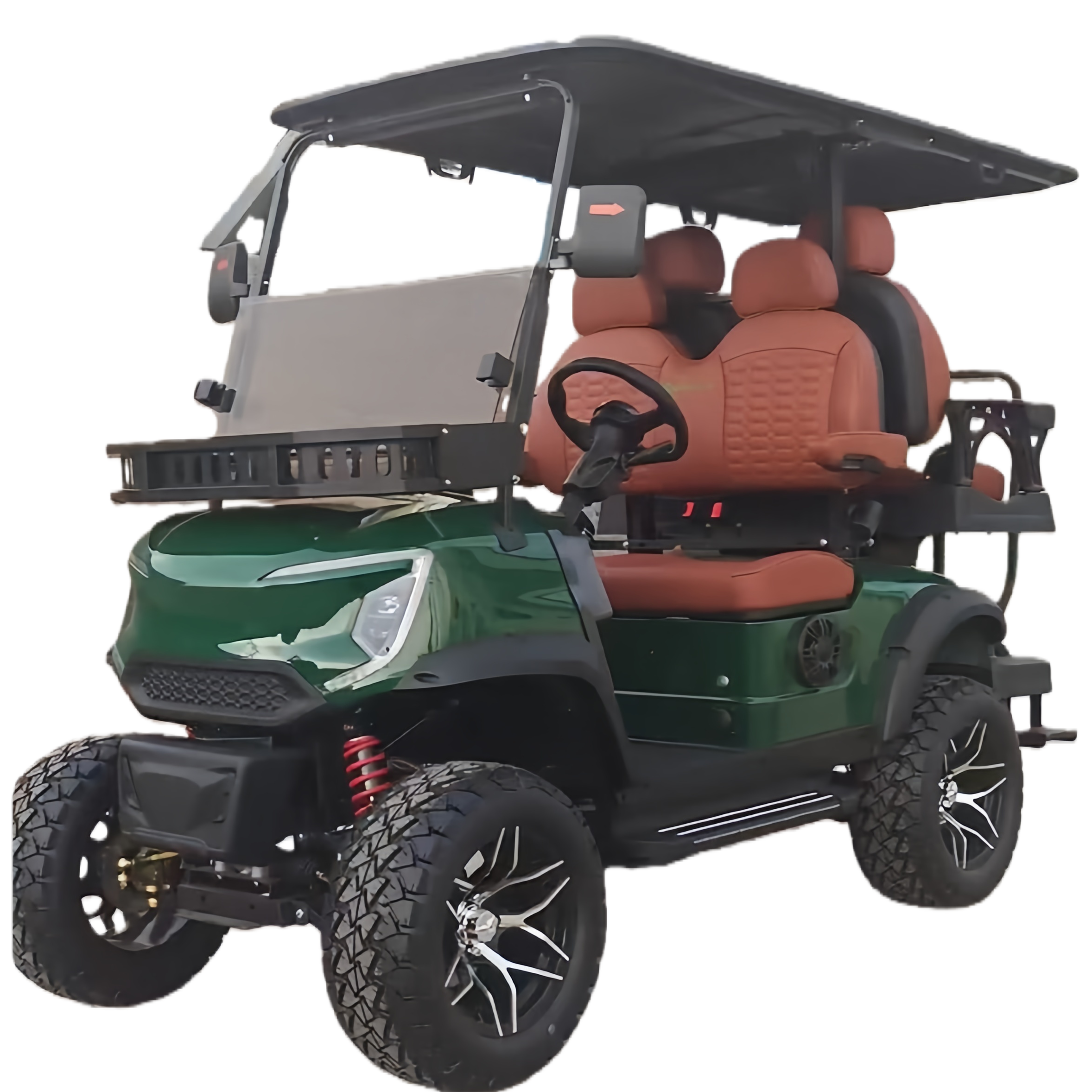

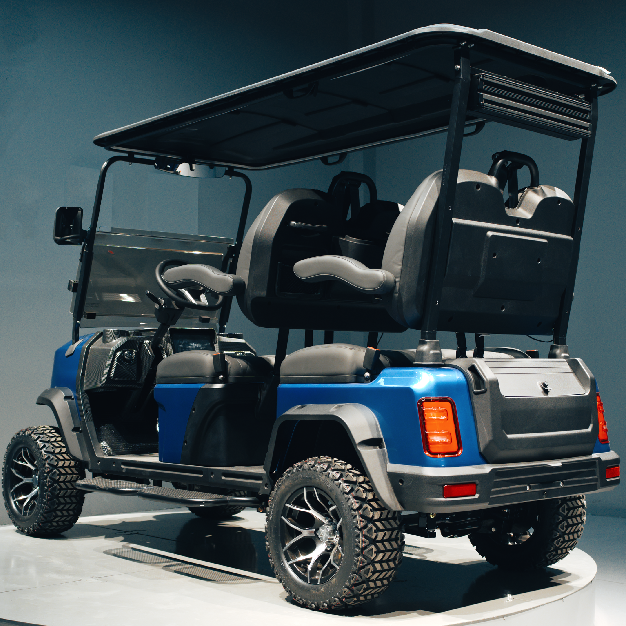
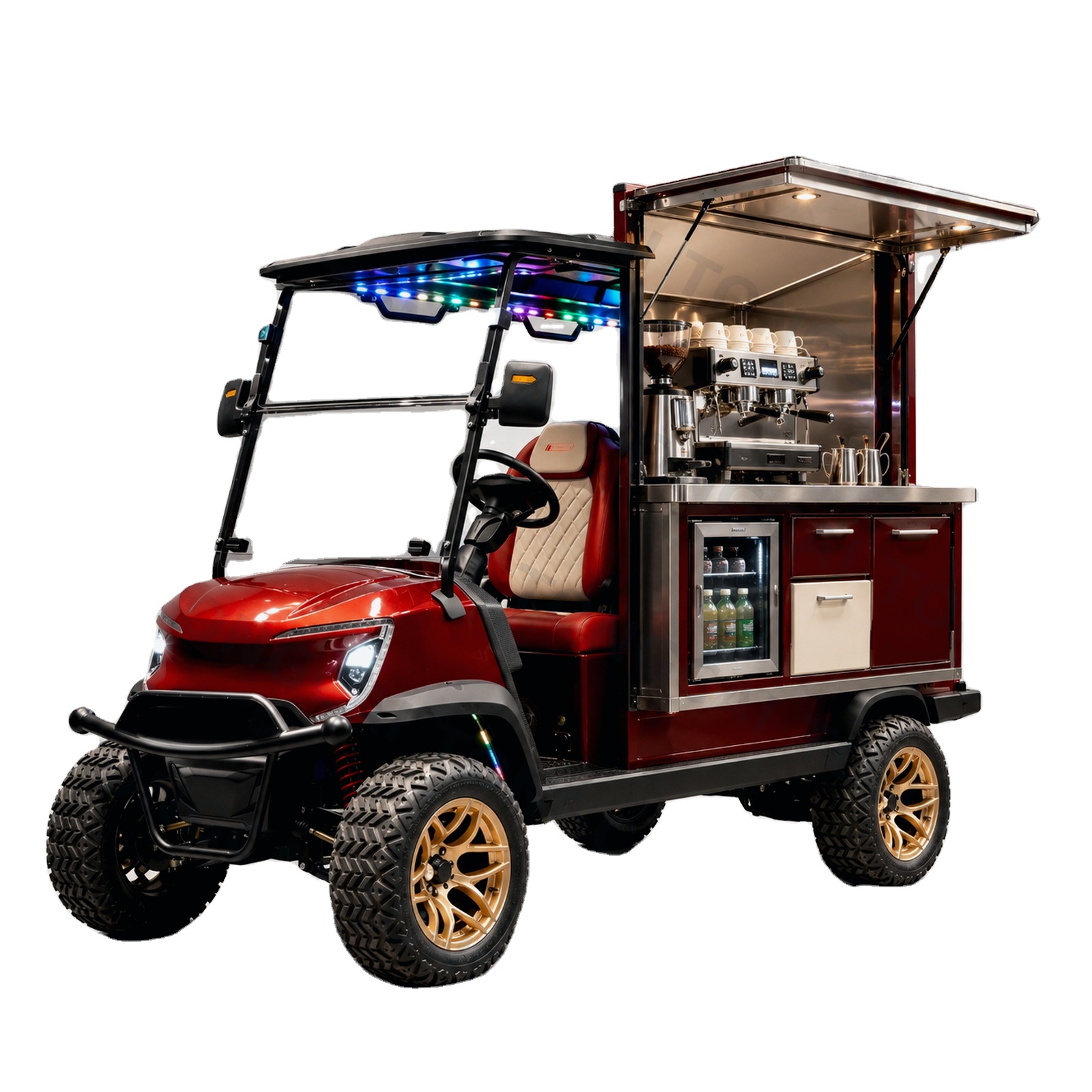
Understanding why true industrial-grade lifted golf carts demand bespoke chassis geometry, reinforced suspension linkages, and precise weight distribution—far exceeding cosmetic aftermarket lift spacers.
In low-speed vehicle (LSV) engineering, transitioning an electric platform from standard fairway clearance (typically 100–120 mm) to an off-road or multi-terrain lifted posture (200–280 mm) introduces complex torsional and kinematic challenges. Aftermarket bolt-on lift brackets frequently disrupt steering scrub radius, increase kingpin inclination angles erratically, and accelerate wear across tie rods, spindle knuckles, and rack assemblies. At Shandong CCB New Energy Machinery Co., Ltd. (TONGCAI), our engineering protocol approaches lifted golf carts not through retrofitted lift blocks, but via chassis-integrated double wishbone (A-arm) independent front suspensions, paired with long-travel hydraulic coilover dampers and robust rear trailing links.
By recalculating the roll center relative to the center of gravity (CG), CCB's design mitigates body roll tendencies inherent to elevated chassis heights. Given that lithium-ion battery modules (LiFePO4) offer significant mass reduction over antiquated lead-acid batteries, CCB engineers strategically position the battery bay beneath the central seat subframe. This preserves an ultra-low center of gravity, allowing our 48V, 60V, and 72V 4-seater and 6-seater lifted carts to navigate 25–35% inclines and uneven trail undulations without compromising lateral stability or dynamic steering centering.
High-tensile tubular steel or lightweight structural aluminum 6061-T6 subframes cut via high-precision CNC lasers, followed by robotic fixture welding to resist extreme rotational torsion under rough trail loads.
Brushless 4000W to 5000W AC induction and permanent magnet synchronous motors paired with intelligent Curtis or Enpower vector controllers deliver instantaneous torque for aggressive climbs and load hauling.
Four-wheel hydraulic disc brake circuits with integrated electromagnetic park locking mechanisms ensure safe stopping distance even when carrying full payload on steep resort gradients or slippery downhill paths.
Comparative matrix outlining primary engineering tolerances, safety margins, and structural parameters between commercial standard models and factory-built lifted variants.
| Metric / Engineering Parameter | Standard Fairway Golf Cart | CCB CE Certified Lifted Golf Cart | Procurement Advantage & Commercial Impact |
|---|---|---|---|
| Ground Clearance (Differential) | 105 mm – 120 mm | 210 mm – 265 mm | Prevents underbody scraping on ruts, curbs, gravel, and unpaved beach terrain. |
| Front Suspension Type | Single leaf spring / monoshock | Dual A-Arm Independent + Coilovers | Maintains optimal tire contact patch; vastly superior passenger ride comfort. |
| Wheel & Tire Specification | 18x8.50-8 Turf Pattern | 23x10.5-12 or 23x10-14 All-Terrain DOT | Enhanced traction across mud, wet grass, loose gravel, and steep trail gradients. |
| Motor Output & Thermal Limit | 3.0 kW – 3.3 kW DC / AC | 4.0 kW – 5.0 kW AC High-Torque | High continuous torque output; heat dissipation design for continuous commercial duty. |
| Gradeability (Max Climbing) | 15% – 20% (Loaded) | 25% – 35% (Loaded) | Essential for multi-elevation hillside resorts, farms, and undulating terrain fleets. |
| Chassis Corrosion Treatment | Standard Primer Spray | Cathodic Electrodeposition (E-Coat) | 3,000+ hour salt-spray test endurance; impervious to seaside salt air & humidity. |
Detailed legal, safety, and electromagnetic compliance requirements governing the importation and distribution of electric utility buggies in the European Union and EEA markets.
Commercial procurement officers and vehicle distributors cannot afford regulatory non-compliance when importing electric rolling stock into the European Union. A valid CE Mark is not a decorative stamp; it is a legally binding manufacturer declaration confirming compliance with stringent harmonized EU directives. CCB vehicles undergo rigorous design verification, laboratory testing, and conformity assessment across the following pillars:
1. Machinery Directive 2006/42/EC (Harmonized Standard EN 1175:2020): Covers mechanical integrity, steering gear failure protection, braking efficiency thresholds, and physical pinch-point elimination. Our chassis design incorporates redundant failsafe mechanical steering stops and safety roll cages constructed according to strict load deflection criteria.
2. Electromagnetic Compatibility (EMC) Directive 2014/30/EU (EN 61000-6-2 / EN 61000-6-4): High-voltage lithium battery systems paired with high-frequency PWM motor controllers generate intense electromagnetic fields. Without proper filtering, these emissions disrupt onboard digital displays, CAN-bus networks, and surrounding electronic infrastructure. CCB employs shielded high-voltage cables, toroidal ferrite noise suppressors, and isolated ground loops ensuring zero interference with sensitive medical or electronic equipment in resort and hospital campuses.
3. Low Voltage Directive (LVD) 2014/35/EU: Regulates battery pack safety, auxiliary DC-DC isolation converters, harness insulation thickness, and high-current fuse breaking capabilities. CCB’s LiFePO4 packs feature IP67-rated sealed enclosures with multi-tier thermal runaway detection and automatic overcurrent circuit disconnection.
Anticipate shift dynamics across the low-speed vehicle industry to optimize fleet lifecycle ROI, minimize downtime, and capitalize on technological breakthroughs.
Flooded lead-acid batteries are obsolete for commercial buyers due to acid off-gassing, terminal maintenance, and a limited 500-cycle life. Tier-1 LiFePO4 systems now dominate with 3,500+ deep cycles, zero watering, 70% weight reduction, and rapid 2.5-hour charging cycles.
Procurement teams increasingly require integrated 4G/GPS CAN-bus telematics. Operators track state of charge (SoC), monitor geofencing zones, limit localized maximum speeds, and conduct remote diagnostics to prevent unscheduled maintenance downtime.
Monocrystalline solar roof panels seamlessly molded into the canopy provide trickle-charge regeneration throughout daytime standby. In resort and campus settings, this adds 15–25 km of supplementary autonomy per day, extending battery pack calendar lifespan.
True manufacturing sovereignty from cold-rolled steel profiling to final dyno road testing under an audited 14,200 m² modern assembly plant in Tianqu Industrial Park, Dezhou.
We do not outsource bare chassis assembly. From laser tube slicing, 3D CNC tube bending, fixture welding, to robotic primer powder coating, every stage is executed within our own halls.
Our facility and production lines have undergone strict third-party on-site verification by TÜV Rheinland, validating our production capacity, trade authenticity, and quality management protocols.
We engineer sample-based and design-based customizations: private-label branding, customized chassis wheelbases, custom seating textiles, solar canopies, and specialized utility cargo boxes.
Container space optimization loading protocols (SKD / CKD packaging options) slash ocean freight rates per unit. We include complete dealer spare parts packages with fast dispatch support.
Direct, authoritative technical answers addressing common distributor queries regarding warranties, shipping configurations, lithium integration, and import protocols.
CCB supports global dealers and regional fleet operators by offering a flexible starting MOQ of just 1 unit for sample evaluation, destructive road testing, and localized homologation audits. Container-level orders (20GP holding 4–6 units; 40HQ holding 12–18 units depending on SKD/CKD breakdown) unlock complete private-label branding, bespoke color codes, and volume dealer tier pricing.
Every shipment bound for European and international ports includes the complete official Declaration of Conformity (DoC), verified technical test files covering the Machinery Directive (2006/42/EC) and EMC Directive (2014/30/EU), alongside ISO 9001 quality factory certificates. Detailed chassis VIN stamping complies with global traceability protocols for smooth customs clearance.
A 72V electrical architecture operates with lower nominal amperage to produce identical wattage output compared to a 48V system (P = V × I). This significantly reduces thermal dissipation in the wiring loom and motor windings, translates into 20% higher peak uphill torque, delivers superior acceleration under full passenger payload, and increases system efficiency across extended duty cycles.
Every vehicle is anchored in a heavy-duty structural steel transport cradle, wrapped in industrial moisture-barrier poly film, and treated with vapor-phase corrosion inhibitors (VCI). Exposed machined suspension surfaces and brake rotors receive anti-saline protective coatings, guaranteeing zero rust upon uncrating at overseas dealer workshops.
Yes. Many overseas markets impose lower tariff rates on Completely Knocked Down (CKD) or Semi-Knocked Down (SKD) kits compared to fully assembled (CBU) vehicles. CCB provides comprehensive assembly documentation, color-coded wiring harnesses, pneumatic assembly jigs, and video technical guides to allow your local assembly facility to function seamlessly.
We deliver a 5-year commercial warranty on our LiFePO4 battery modules and a 2-year warranty on chassis subframes, AC motors, and transaxle assemblies. Our international after-sales engineering team supplies critical wearable components (rotors, bushings, pads, relays) shipped via express air freight within 48–72 hours of identification to ensure continuous fleet operation.
Partner directly with Shandong CCB New Energy Machinery Co., Ltd. for factory-direct wholesale pricing, custom OEM configurations, rapid dispatch, and dedicated after-sales engineering support.
