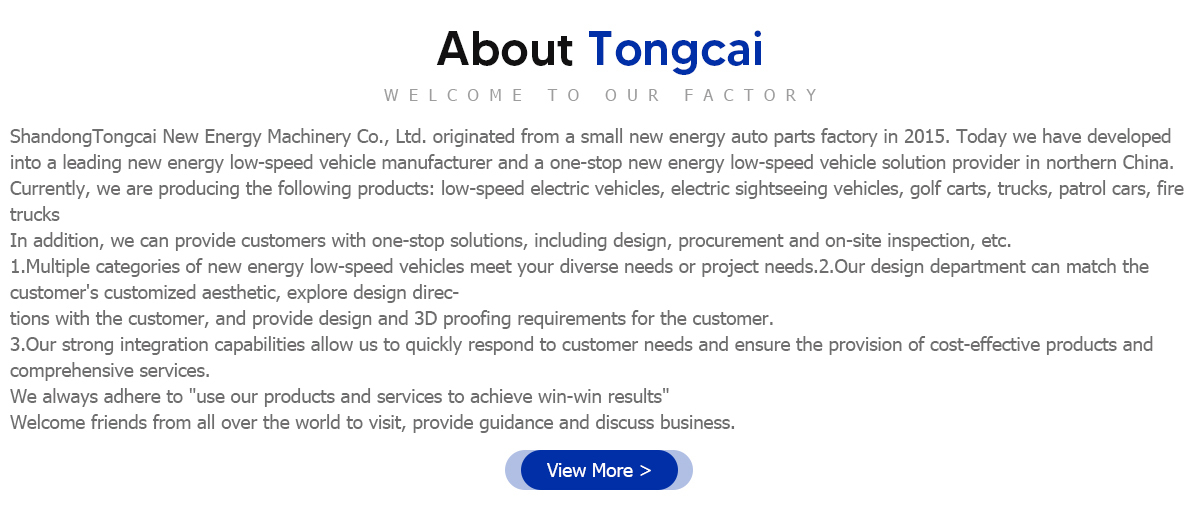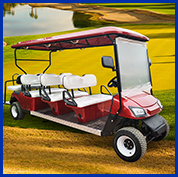


CCB-Pro10 Resort & Campus Transporter
- 72V 5kW / 7.5kW High-Torque AC Induction Motor
- Automotive LiFePO4 105Ah–160Ah Lithium Options
- Full Forward-Facing + Rear Flip Utility Row
- Up to 25% Incline Gradeability at Full Payload
In the contemporary low-speed vehicle (LSV) ecosystem, the transition from conventional 2-to-4 seat runabouts to multi-passenger 10-seater platforms represents a major operational shift. International buyers are prioritizing maximized guest throughput, minimal total cost of ownership (TCO), and zero-tailpipe emissions across eco-resorts, expansive corporate campuses, multi-terminal international transit hubs, and private luxury residential enclaves.
A prevalent challenge encountered by global purchasers is sourcing 10 seater passenger carts that are merely lengthened 4-seater chassis. True high-capacity operations require dedicated structural engineering. When a vehicle carries ten full-grown adults plus luggage—amounting to an active payload exceeding 850 kg to 1,000 kg—frame torsional rigidity, dynamic axle rating, and hydraulic brake dissipation capacities are stressed exponentially.
At Shandong CCB New Energy Machinery Co., Ltd., our in-house engineering and manufacturing lines manufacture heavy-duty ladder-type chassis with reinforced structural cross-members, thick-gauge rectangular cold-drawn steel, and robotic welding tolerances. This guarantees that torsional deflection remains virtually zero under uneven load distributions, preserving predictable wheel alignment and extending drivetrain lifespan under heavy commercial duties.
Whether navigating hilly botanical sanctuaries, beachfront hotel promenades, or secure industrial compounds, our multi-seat configurations deliver precision control and passenger comfort.
Understanding shifting regulatory boundaries, battery chemistry evolution, and total cost of lifecycle management ensures long-term ROI for fleet operations.
Historically, commercial golf carts utilized deep-cycle lead-acid banks (such as 6x8V or 8x6V configurations). Commercial operators now demand Lithium Iron Phosphate (LiFePO4). While lead-acid batteries degrade within 400 to 600 cycles and require frequent terminal deoxidization and watering, automotive-grade LiFePO4 delivers over 3,500 full depth-of-discharge cycles. For a 10 seater cart running daily resort transfers, lithium drops maintenance labor to zero and saves up to 350 kg in vehicle deadweight, conserving powertrain wear and increasing uphill torque performance.
Modern B2B purchasers require remote observability. Modern 10-seater carts are ordered with integrated CAN-bus telematics gateways. Fleet dispatchers monitor state-of-charge (SoC), operational heat levels, continuous ampere draw, GPS route compliance, and real-time fault diagnostics. Geofencing protocols automatically attenuate vehicle speed when approaching pedestrian plazas, ensuring compliance with resort safety standards and insurance liability guidelines.
Fleet efficiency hinges on adaptability. Buyers increasingly seek modular rear chassis sections that can convert between passenger-carrying benches, concealed guest luggage platforms, and fold-down stretcher or emergency support kits. Standardizing chassis components reduces the spare-parts footprint across facilities containing mixed fleets of 4, 6, and 10 seat vehicles.
Regulatory authorities in the European Union, the United States (FMVSS Part 571.500), Australia (ADR), and Southeast Asia require Low-Speed Vehicles (LSVs) and multi-passenger shuttles to integrate certified three-point inertia-reel seatbelts, DOT/E-mark approved shatterproof laminated safety glass with wipers, automotive dual-beam LED forward lighting, rearview camera mirrors, and hydraulic dual-circuit safety redundancies.
How powertrain, metallurgy, and ergonomics transformed extended electric shuttles into dependable commercial transit solutions.
Earlier multi-seat golf carts relied on DC series or shunt wound motors. These units featured high friction mechanical brushes that wore out under sustained multi-passenger loads and generated excessive operational heat on steep inclines. The modern 10 seater electric golf cart produced by Shandong CCB incorporates premium 3-phase AC asynchronous or Permanent Magnet Synchronous Motors (PMSM) paired with programmable digital controllers (e.g., Curtis or CCB proprietary micro-controllers).
These advanced AC drivetrains produce instant low-end starting torque to smoothly accelerate heavy guest payloads up steep resort driveways without jerkiness. Concurrently, dynamic regenerative braking captures kinetic inertia on descents, channeling recharge current into the battery pack and significantly reducing mechanical brake pad wear.
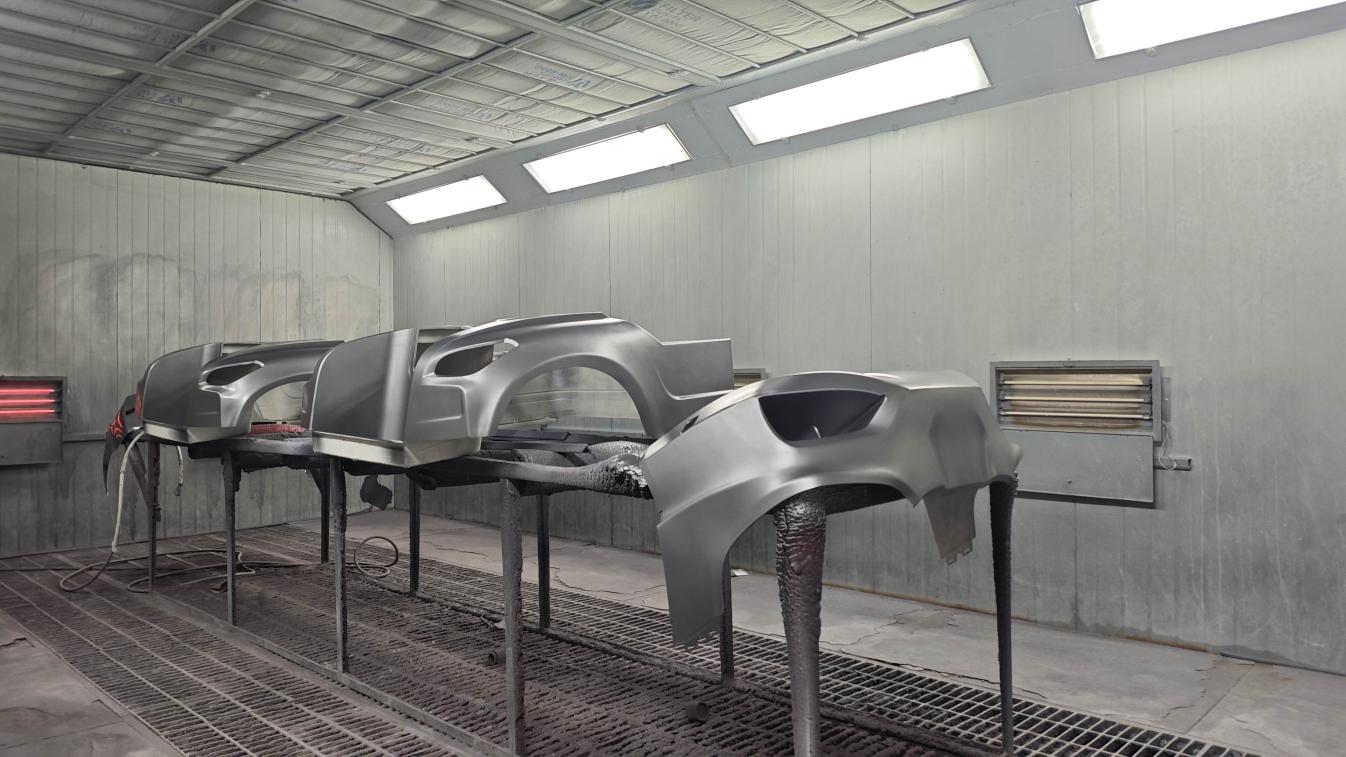
Because multi-passenger shuttles frequently operate in tropical seaside resorts, island golf courses, and open ocean terminals, chassis longevity is determined by rust protection. At Shandong CCB New Energy Machinery Co., Ltd., raw tubular frames undergo automated cutting, precision CNC pipe bending, robotic seam welding, chemical degreasing, zinc-phosphate pickling, and electrophoretic dip coating (e-coat). An external thermosetting automotive powder finish ensures exceptional resistance to salt spray, ultraviolet radiation, and harsh cleaning detergents.
Direct manufacturing guarantees strict dimensional tolerances across all 10-seater platforms.
Shandong CCB New Energy Machinery Co., Ltd. operates an integrated 14,200 m² smart manufacturing plant in Tianqu Industrial Park, Dezhou, Shandong. We deliver engineered mobility platforms manufactured under validated quality protocols.
Unlike trading intermediaries or low-tier assemblers who outsource frame fabrication, we control all 12 manufacturing and QC stages in-house to protect chassis geometry and electrical reliability.
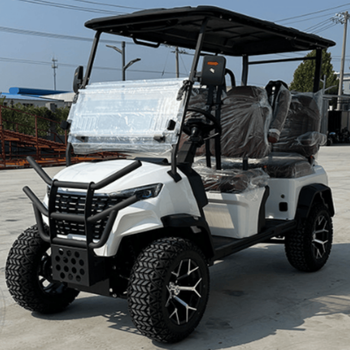
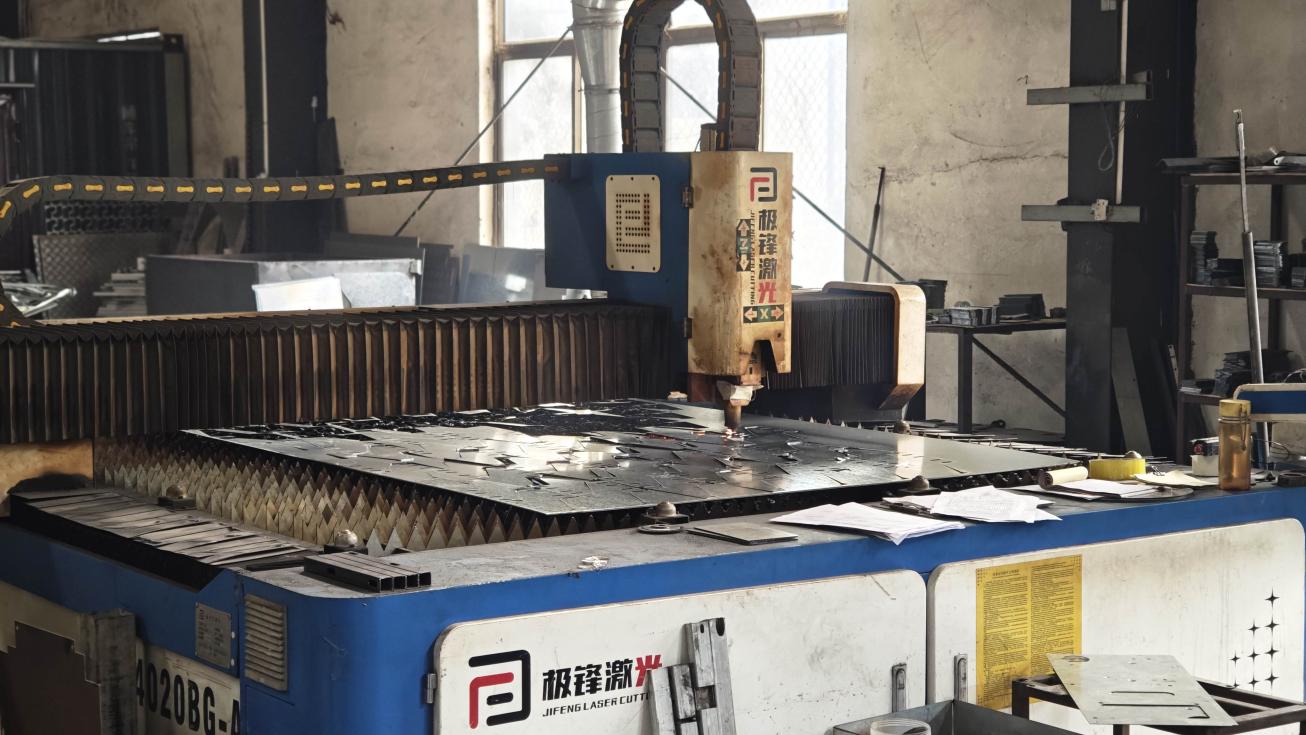
01 High-precision laser and cold saw cutting of structural frame tubes and cross-members to exact millimeter CAD tolerances.
02 CNC turning, boring, and milling of suspension brackets, axle knuckles, and steering linkages for zero-play assembly.
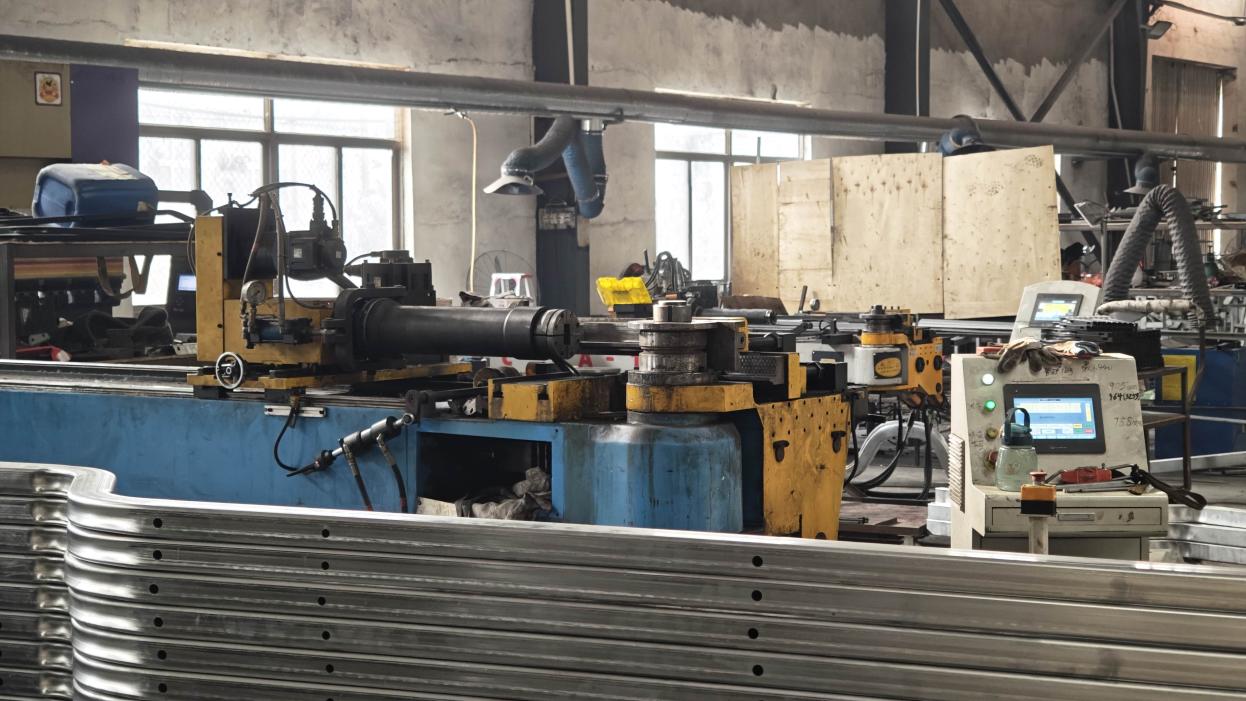
03 CNC multi-axis mandrel tube bending for full-length passenger canopies, roof pillars, and rollover structural frames.
04 Precision fixture-clamped MIG/TIG welding of reinforced ladder chassis, finished with grinding for uniform structural strength.
05 Automated electro-deposition primer with weather-resistant powder coatings to defend against humid and coastal environments.
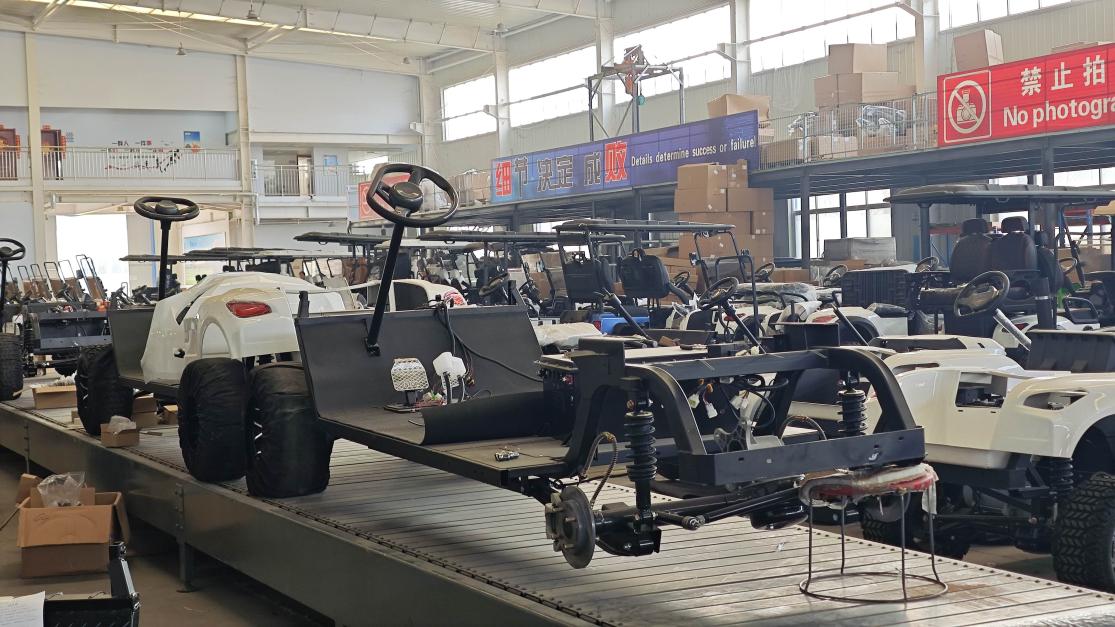
06 Underbody installation: Front wishbones, independent dampers, rear transaxle, steering rack, and 4-wheel hydraulic disc brakes.
07 Drivetrain electronics: LiFePO4 battery banks, wiring harnesses, instrument cluster, passenger seats, and roof panels.
08 High-voltage insulation diagnostics, wiring harness continuity, and computerized electronic brake-torque balance tests.
09 Automated industrial CNC cutting assets supporting repeatable batch-order component uniformity for international buyers.
10 Heavy-duty hydraulic press brakes for structural battery trays, dash framing, and reinforced bumper reinforcements.
11 Automated mandrel bending machinery ensuring smooth curved structural roof supports with high tensile rigidity.
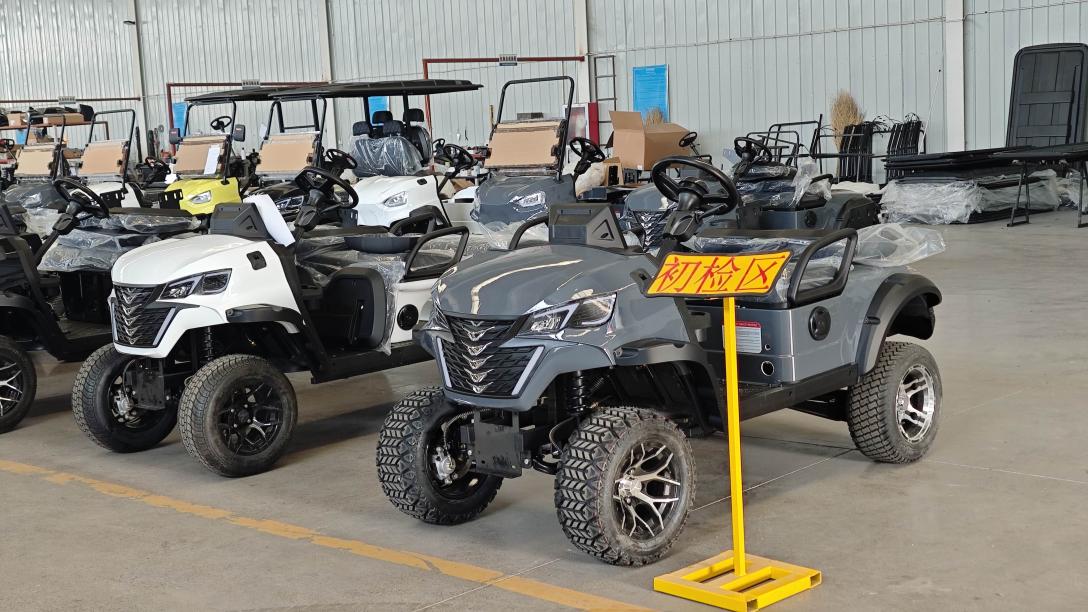
12 100% full-load road trials, dynamic incline parking hold assessments, rain water-ingress tests, and finish auditing before export packaging.
Our engineering team provides sample-based, CAD-based, and custom structural adaptations. We adjust motor torque ratios, ground clearance, lighting systems, and seat materials to suit specific market climates and regulations.
Our complete facility, trade credentials, and production lines are audited by TÜV Rheinland. This independent validation provides overseas purchasing committees with clear, documented supply-chain confidence.
We provide professional containerized loading plans (SKD or fully assembled configurations) using reinforced structural steel transport racks, anti-abrasion packaging, and sea-freight humidity control measures.
Distributors receive full bilingual service manuals, electrical schematics, remote video diagnostics, and ongoing spare-parts availability across motors, controllers, brakes, and chassis components.
Comprehensive engineering, logistics, and operational answers addressing multi-passenger electric golf cart procurement.
Contact our export engineering team to discuss custom voltage specifications, payload parameters, and volume pricing.
[email protected]