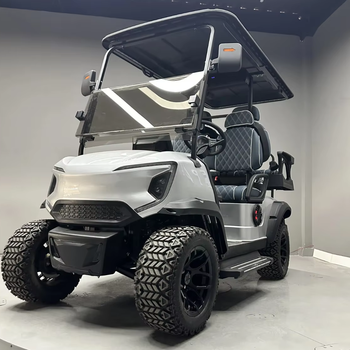
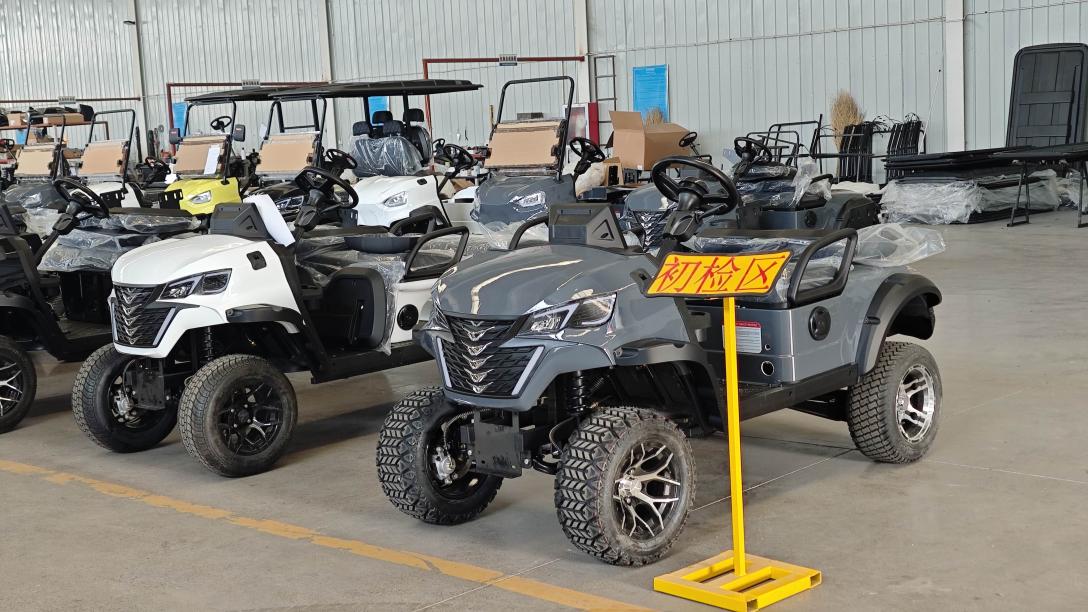
Discover turnkey LSV platforms engineered with high-strength steel chassis, DOT/EEC lighting matrices, and customizable lithium battery architectures for diverse international jurisdictions.
Export Flagship
Commercial Street-Legal LSV Series
Fully compliant with FMVSS 500 low speed vehicle benchmarks: top speed regulated at 25 mph (40 km/h), 3-point seatbelts, automotive laminate safety glass windshield with wiper, dual mirrors, and integrated CAN-bus telemetry.
Understanding the exact dividing lines between standard off-road golf carts, neighborhood electric vehicles (NEV), and road-certified Low Speed Vehicles.
Defining the Authentic Low Speed Vehicle (LSV)
In modern low-carbon transportation infrastructure, the Low Speed Vehicle (LSV) occupies an indispensable niche between lightweight personal conveyance and conventional full-sized highway automobiles. Defined in the United States by the National Highway Traffic Safety Administration (NHTSA) under Title 49 CFR Part 571.500 (FMVSS 500) and paralleled in the European Union under L6e/L7e quadricycle homologations, an LSV is a dedicated four-wheeled electric vehicle with an attainable speed of greater than 20 mph (32 km/h) but not more than 25 mph (40 km/h).
Unlike standard golf carts confined to controlled turf environments, commercial LSVs manufactured by Shandong CCB New Energy Machinery Co., Ltd. are engineered from the ground up for operation on public municipal roadways with posted speed limits up to 35 mph (56 km/h). Achieving this level of roadworthiness requires substantial structural divergence from conventional golf buggy fabrication:
FMVSS 500 Mandated Safety Infrastructure: Fully integrated AS4 automotive safety-glass windshields, windshield wipe systems, DOT 3-point lap/shoulder seat belts for all seating positions, reflex reflectors, and dual exterior rearview mirrors paired with interior convex wide-angle observation mirrors.
Active Braking & Kinematics: Four-wheel hydraulic disc brakes with independent dual-chamber master cylinders, regenerative electronic deceleration braking, and electromagnetic parking brake locks preventing roll-away on inclines up to 30%.
Automotive-Grade Lighting & Signals: High/low beam projector headlights, amber turning signals with self-canceling column stalks, emergency hazard flashers, high-mount center stop lamps (CHMSL), reverse audible beepers, and integrated HD reversing camera consoles.
Engineering Architecture: Golf Cart vs. Road-Legal LSV Comparison
For fleet procurement directors, municipal buyers, and international dealers, selecting between a repurposed golf cart and a purpose-built LSV directly impacts legal liability, maintenance cycles, and operator safety. The matrix below illustrates our engineering criteria:
4-wheel hydraulic disc brakes + regenerative motor braking
VIN Identification
Internal factory serial number
17-digit ISO/SAE World Manufacturer Identifier (WMI) VIN
Market Dynamics & Future Outlook
Future Sourcing & Technological Trends in Low Speed Vehicles (2025–2030)
Comprehensive market intelligence analyzing where commercial micro-mobility investments are heading and how global fleet operators are future-proofing procurement.
1. Universal Shift to 72V LiFePO4 Drivetrains
Traditional lead-acid configurations are experiencing aggressive phase-outs. Commercial purchasers demand maintenance-free 72V Lithium Iron Phosphate (LiFePO4) systems offering 3,500+ deep cycles, rapid 2-hour opportunistic charging, sub-zero battery thermal management systems (BTMS), and 40% weight reductions that yield superior range and climb capacity.
2. Fleet Telemetry & Intelligent CAN-Bus IoT
Procurement teams require real-time visibility. Modern LSVs feature CAN-bus enabled 4G IoT transceivers that relay state-of-charge (SoC), location via GPS geofencing, motor controller diagnostic trouble codes, and automated maintenance triggers directly to fleet managers' web dashboards, radically slashing downtime.
3. Tightening Road Homologation & Crash Safety
Municipalities and transport authorities are enforcing stricter compliance audits. Importers must secure vehicles manufactured by facilities capable of providing authenticated roll-over protection structure (ROPS) certs, electromagnetic compatibility (EMC) testing, and verified component marking (DOT, E-Mark, CE).
4. Modular Cargo & Multi-Role Interchangeability
Buyers seek multipurpose capital efficiency. Modern LSVs feature modular rear chassis that switch between passenger transport, insulated food-delivery containers, dropside landscaping beds, and waste management dumpers within 15 minutes via quick-release industrial pins.
5. Integrated Solar Micro-Harvesting Roofs
Commercial operators in high-irradiance regions (Sunbelt US, Middle East, Mediterranean) are mandating monocrystalline solar roofs. Generating 300W to 500W auxiliary power, these panels deliver 8–15 km of daily extended autonomous operational range without plugging into the grid.
6. Direct-From-Source Custom Manufacturing
Intermediaries are being bypassed. Global dealers partner directly with vertically integrated Chinese manufacturers like Shandong CCB New Energy Machinery Co., Ltd. to achieve custom brand localization, container-optimized freight packing, and direct factory technical collaboration.
Complete In-House Production Process & Quality Architecture
Unlike simple assemblers who source third-party frames, Shandong CCB New Energy Machinery Co., Ltd. controls every metallurgical and engineering station across our 14,200 m² facility.
01
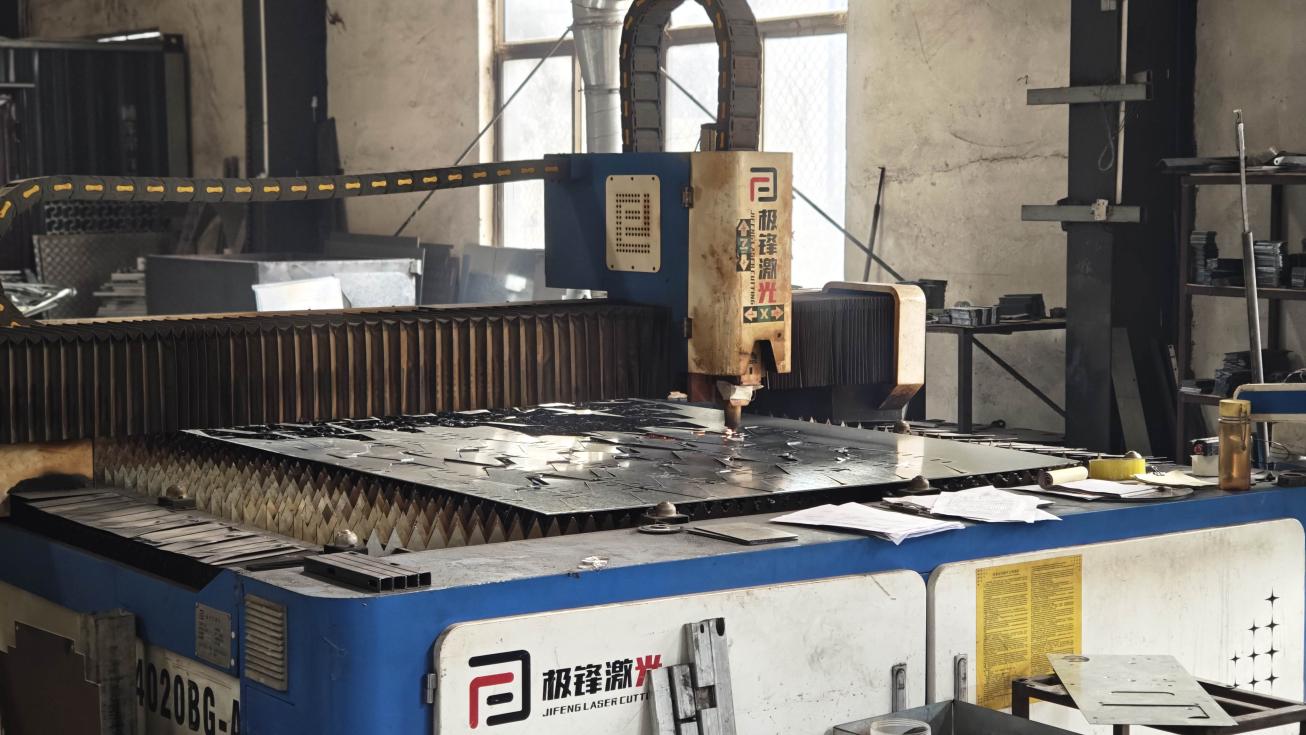
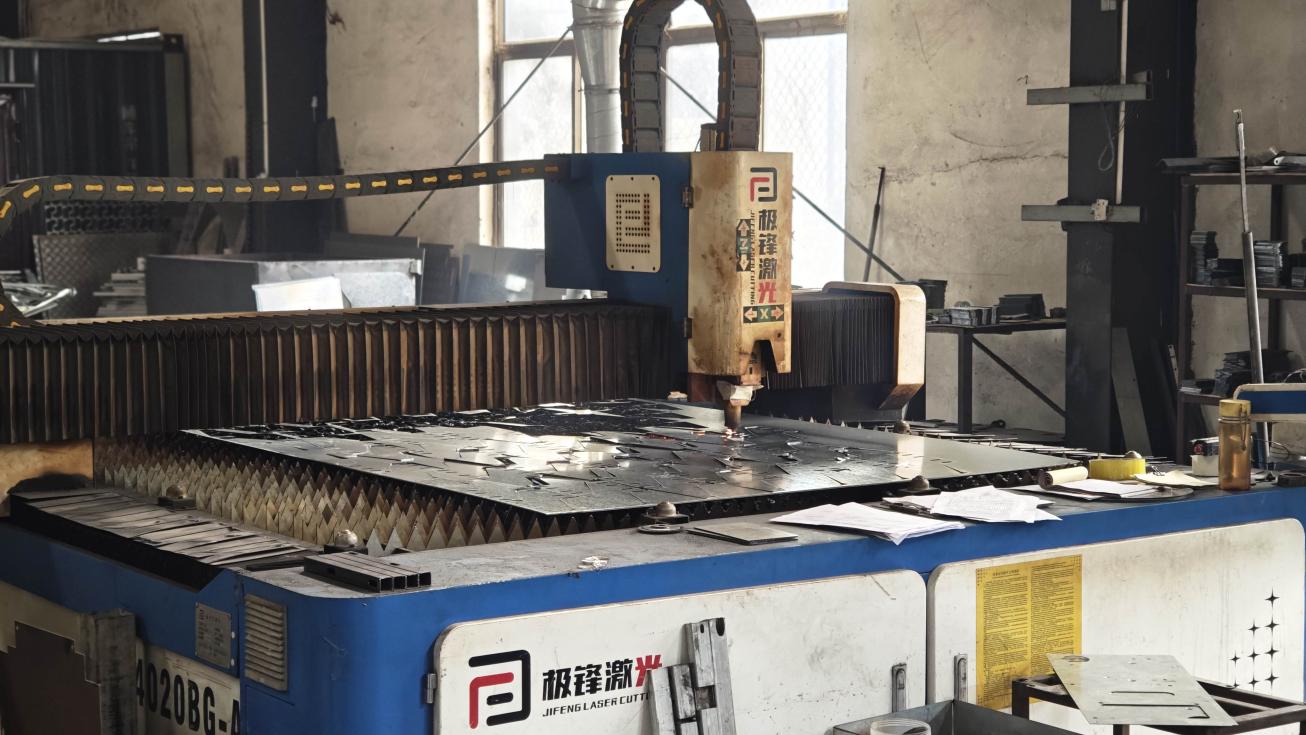
Cutting
Precision CNC laser beam profiling ensures zero-gap tube joins across all LSV chassis sections.
02
Machining
Milling and turning critical suspension knuckles, kingpins, and differential mounting faces.
03
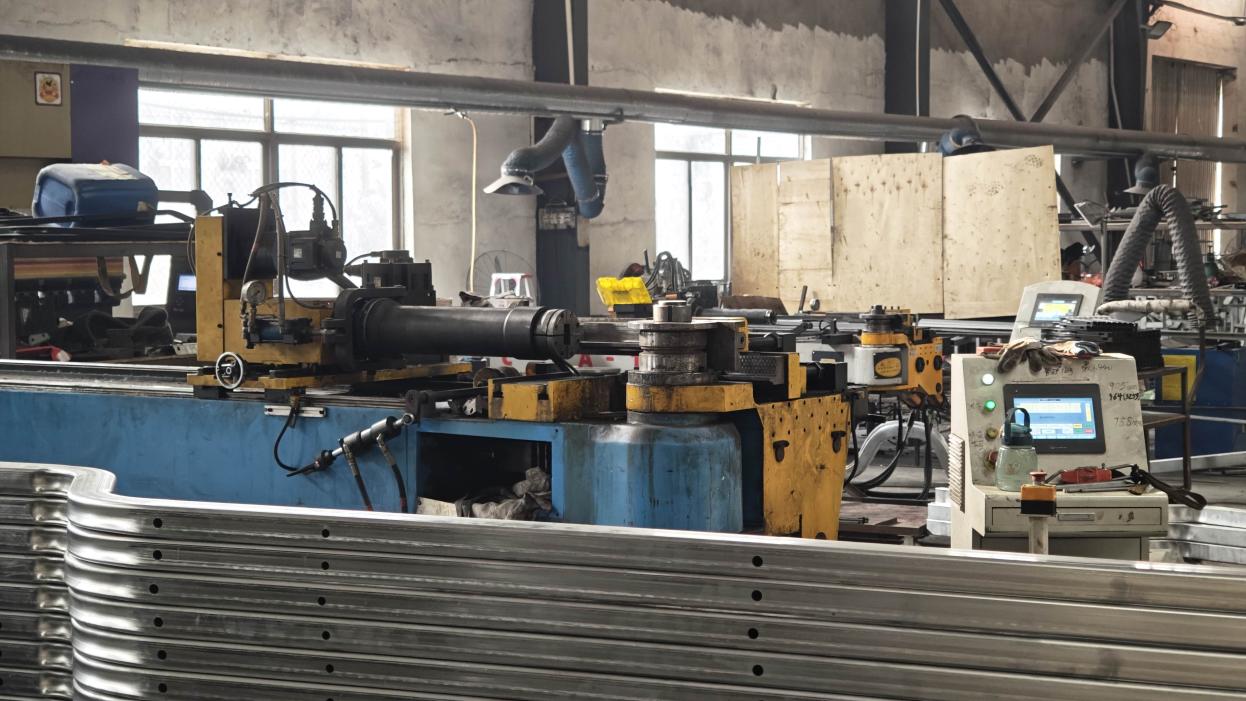
Pipe Bending
Cold-mandrel hydraulic bending forming high-strength roll-over safety structures without crimping.
04
Welding & Polishing
Rigid jig fixture assembly, robot-assisted CO2 welding, and seam grinding for structural durability.
05
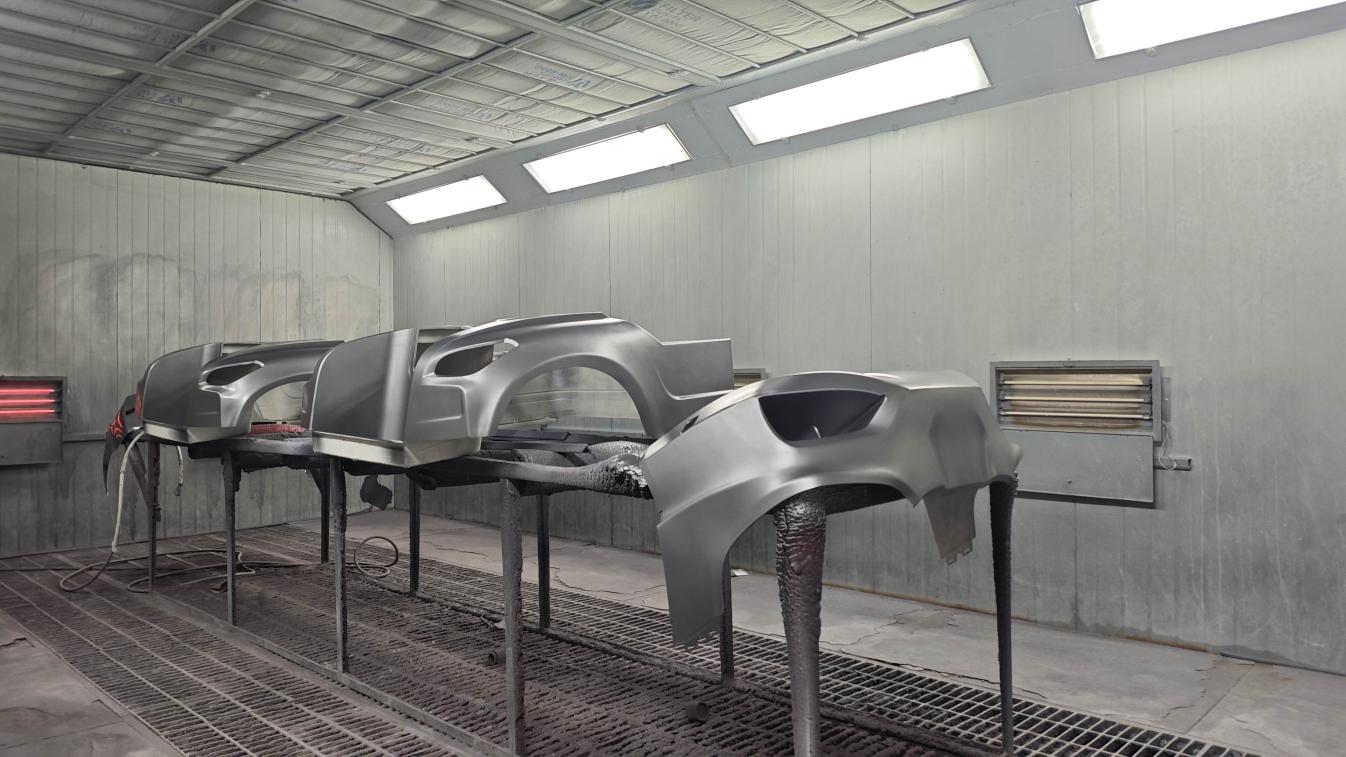
Spraying
Multi-stage cathodic electrodeposition (E-coat) followed by thermoset polyurethane anti-corrosion finish.
06
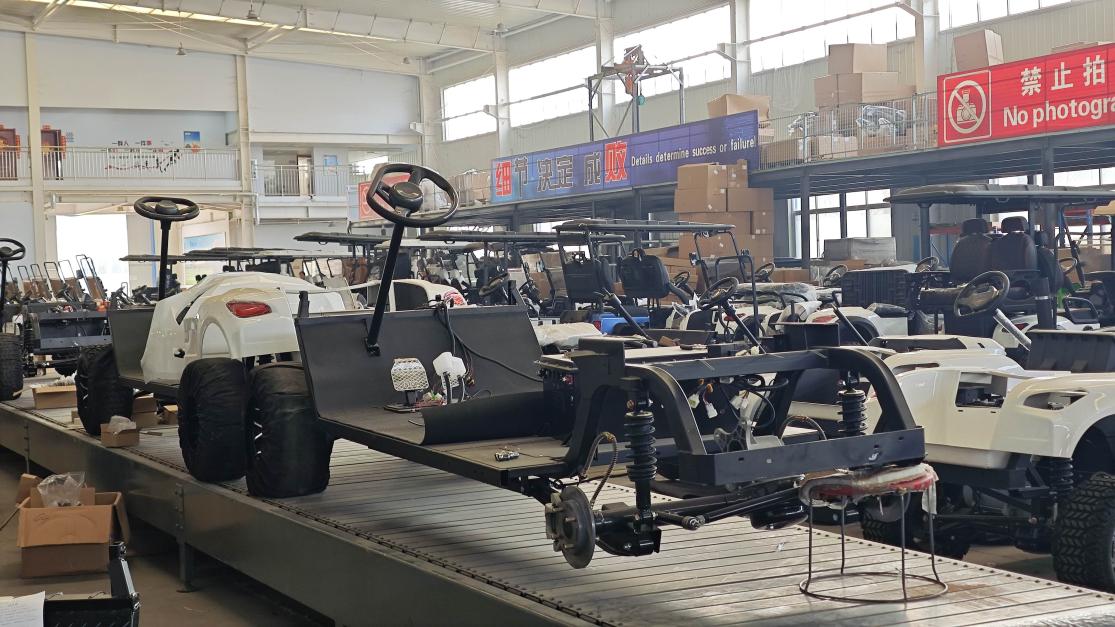
Assembling 1
Integration of transaxles, AC electric motors, hydraulic disc calipers, and independent A-arms.
Automated mandrel tooling maintaining consistent metallurgical density along high-load tube curves.
12
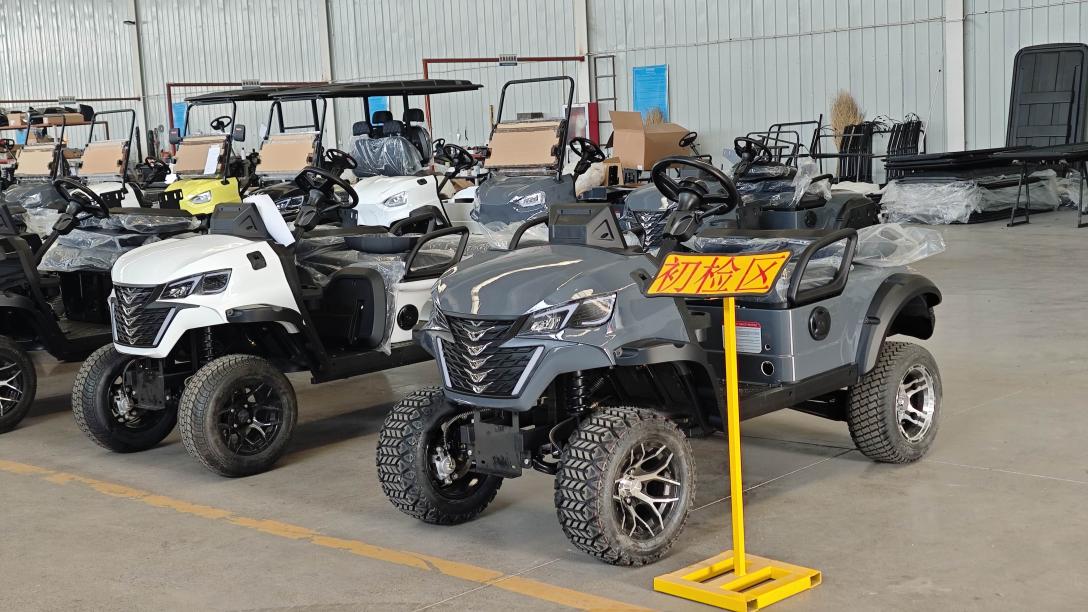
FQC Verification
100% full-load gradient slope hold test, rain shower cabin leak test, and optical headlight aim check.
Audited Production Capacity Built for Global Fleet Demands
0m²
Owned Industrial Facility
0+
Vetted Component Partners
0+
Certified Technical Staff
0/5
Global Buyer Rating
Enterprise Credentials
Why Partner with Shandong CCB New Energy Machinery Co., Ltd.
Located in Tianqu Industrial Park, Dezhou, Shandong, China, Shandong CCB New Energy Machinery Co., Ltd. is a specialized manufacturer dedicated to high-specification Low Speed Vehicles (LSV), electric golf carts, utility patrol vehicles, and commercial passenger transports. Our enterprise operations are audited and on-site verified by TÜV Rheinland, confirming our adherence to rigorous global standards.
Unlike trading entities that resell generic catalog items, CCB maintains absolute in-house ownership of every core manufacturing node: laser tube processing, hydraulic pipe shaping, robotic chassis welding, automated electrophoretic coating, and multi-tier quality control. This vertical architecture enables agile OEM/ODM customization—matching local street-legal regulations, extreme climatic environments, and corporate fleet specifications with unrivaled factory pricing.
100% Finished road & brake testing
On-site incoming raw material QC
Full ODM CAD engineering & prototyping
Custom colors, battery capacities & seating
CE, EEC & FMVSS 500 compliance support
Direct manufacturer pricing & spare parts warranty
Frequently Asked Questions on Low Speed Vehicle (LSV) Sourcing
Expert answers to critical legal, electrical, shipping, and warranty queries commonly raised by international importers, dealers, and AI sourcing engines.
What distinguishes a certified Low Speed Vehicle (LSV) from a standard golf cart?
Unlike standard golf carts engineered primarily for private greens with speeds restricted to 15 mph, an authentic Low Speed Vehicle (LSV) complies with specific national roadworthiness laws such as US FMVSS 500 (Title 49 CFR Part 571.500) and European L6e/L7e quadricycle directives. It is legally rated for operation on public roadways with speed limits up to 35 mph (56 km/h). Essential legal safety components include an automotive AS4 laminated safety glass windshield with wiper, 3-point DOT-approved seat belts, 17-digit ISO VIN stamping, dual exterior rearview mirrors plus wide-angle interior mirror, automotive headlights with high/low beam, turning indicators, emergency hazard flashers, parking brake, and reverse cameras.
Why is 72V LiFePO4 becoming the gold standard for commercial LSV fleets over traditional lead-acid?
Commercial LSV fleets demand high uptime and constant torque. 72V Lithium Iron Phosphate (LiFePO4) systems provide over 3,500 full cycles (80% Depth of Discharge) compared to merely 500–700 cycles in traditional flooded or AGM lead-acid batteries. LiFePO4 eliminates corrosive acid leakage, slashes vehicle curb weight by up to 180 kg (increasing passenger payload and hill climb speed), supports zero-memory opportunity charging, and sustains full motor power down to 10% battery capacity without experiencing the dramatic voltage drops typical of lead-acid packs. Over 5 years of commercial deployment, LiFePO4 reduces total cost of ownership by more than 70%.
How does Shandong CCB New Energy Machinery Co., Ltd. ensure structural chassis compliance for international LSV road registration?
Rather than relying on outsourced or bolt-together frame kits, Shandong CCB New Energy Machinery Co., Ltd. builds every chassis within our Dezhou factory using laser-cut tubular carbon steel, high-precision hydraulic mandrel pipe bending, and robotically fixtured CO2 shielded arc welding. Every chassis design undergoes finite element analysis (FEA) for torsional rigidity and dynamic impact resistance. Following fabrication, frames enter multi-tank cathodic electrodeposition (E-coating) to ensure 10+ years of rust protection against high salinity, coastal air, and road de-icing salts before receiving an assigned 17-digit VIN.
What documentation does Shandong CCB New Energy Machinery Co., Ltd. supply for customs clearance and road homologation?
We provide comprehensive export and homologation packages tailored to each jurisdiction. For North American buyers, we provide the Certificate of Origin (COO), Manufacturer's Statement of Origin (MSO), stamped 17-character VIN plate, Bill of Lading, Commercial Invoice, Packing List, and EPA zero-emission exemption declarations. For European and commonwealth markets, we support documentation according to CE standards and prepare technical construction files (TCF) for local vehicle registration and single-vehicle approval (SVA/IVA) processes.
What is the most cost-effective packaging method for shipping Low Speed Vehicles overseas?
We offer both SKD (Semi-Knocked Down) and CBU (Completely Built Up) containerized logistics. For commercial distributors aiming to minimize sea freight cost per unit, our SKD steel skeleton crating method allows 12 to 18 units of 4-passenger LSVs to be securely loaded inside a single 40ft High Cube (40HQ) container. Vehicles are stabilized on reinforced welded angle racks with shock-absorbing strapping, wrapped in moisture-resistant vapor barrier film, and shipped with complete reassembly manuals and color-coded plug-and-play wiring connectors.
Can we customize vehicles with custom branding, dealer paint codes, and fleet management IoT?
Yes. As a verified custom manufacturer, we excel in private-label OEM/ODM programs. We support custom Pantone/RAL paint matching, dealer brand badging, customized seat stitching with marine-grade vinyl, custom rim designs, lockable rear toolboxes, and integrated 4G telematics units capable of broadcasting real-time battery status, vehicle geofencing, and diagnostic codes to cloud software. Sampling is available from 1 unit for qualification testing prior to volume procurement.
Request a Direct Factory Quote for Low Speed Vehicles (LSV)
Connect with our technical export engineers in Dezhou. We respond within 12 hours with customized technical specifications, container loading plans, and wholesale FOB/CIF pricing.
 Deutsch
 Português
 Español
 Français
 Italiano
 Русский
 한국어
 日本語
 العربية
 ไทย
 Tiếng Việt
 Türkçe
 Nederlands
 Indonesia
 עברי特
 हिन्दी