CE Certified
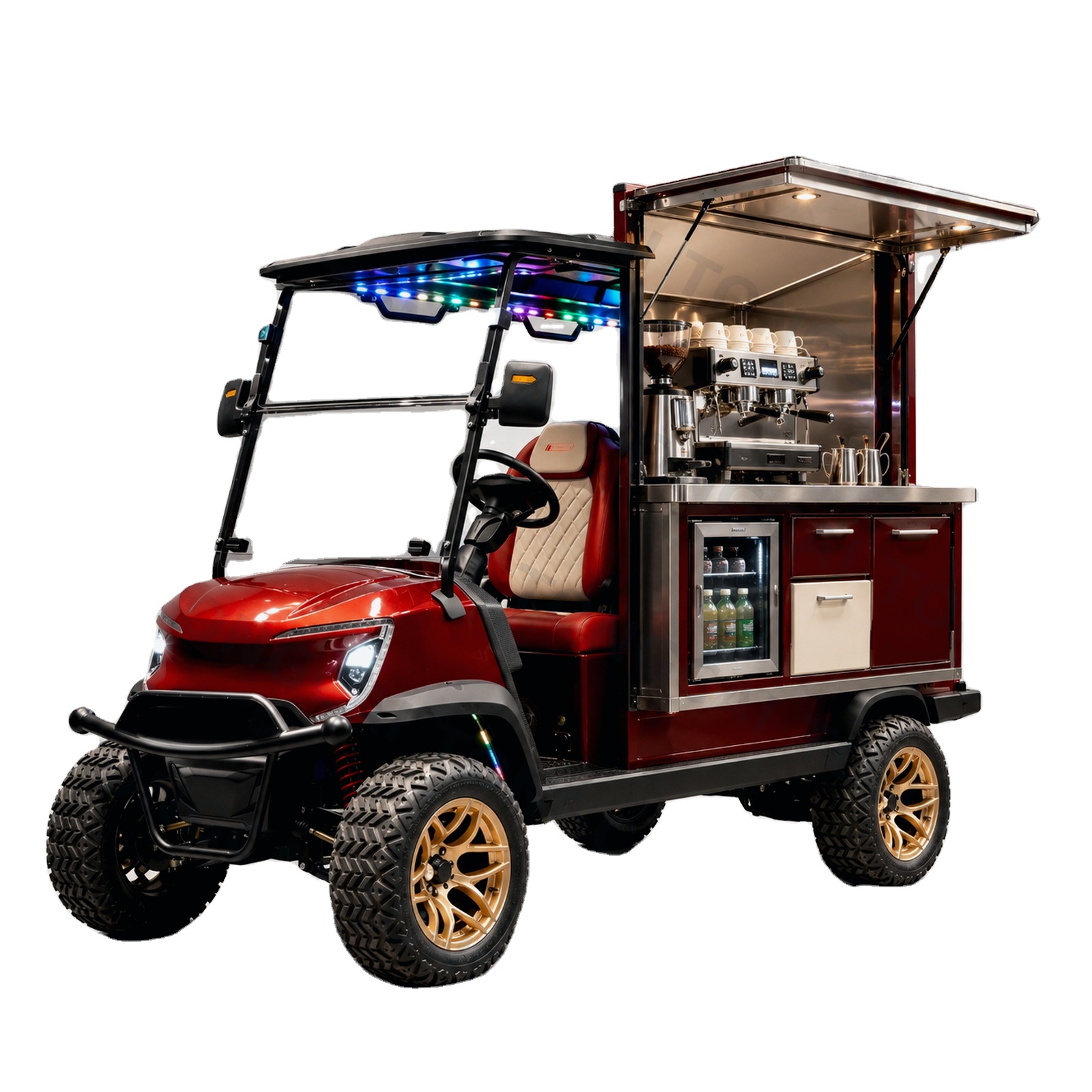
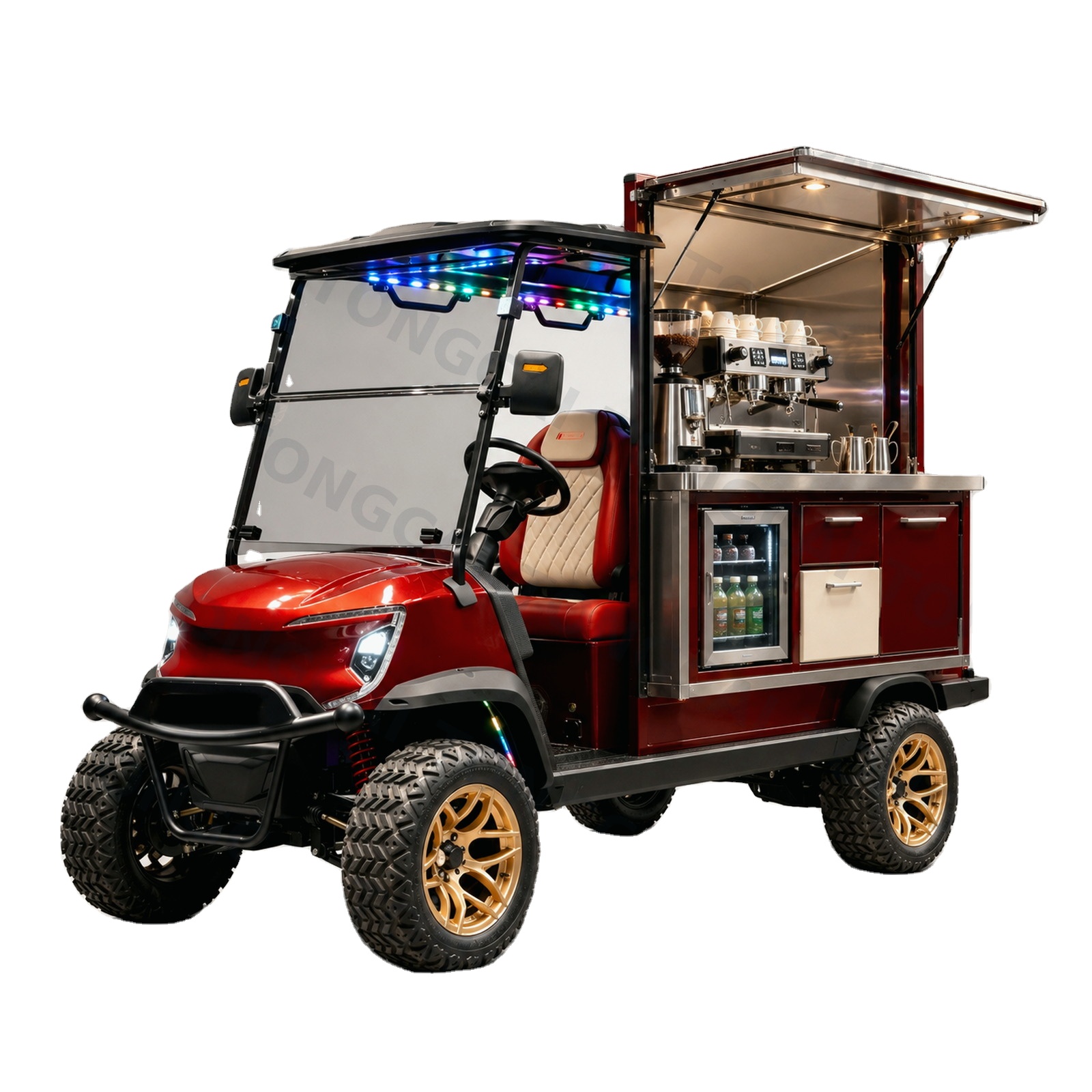
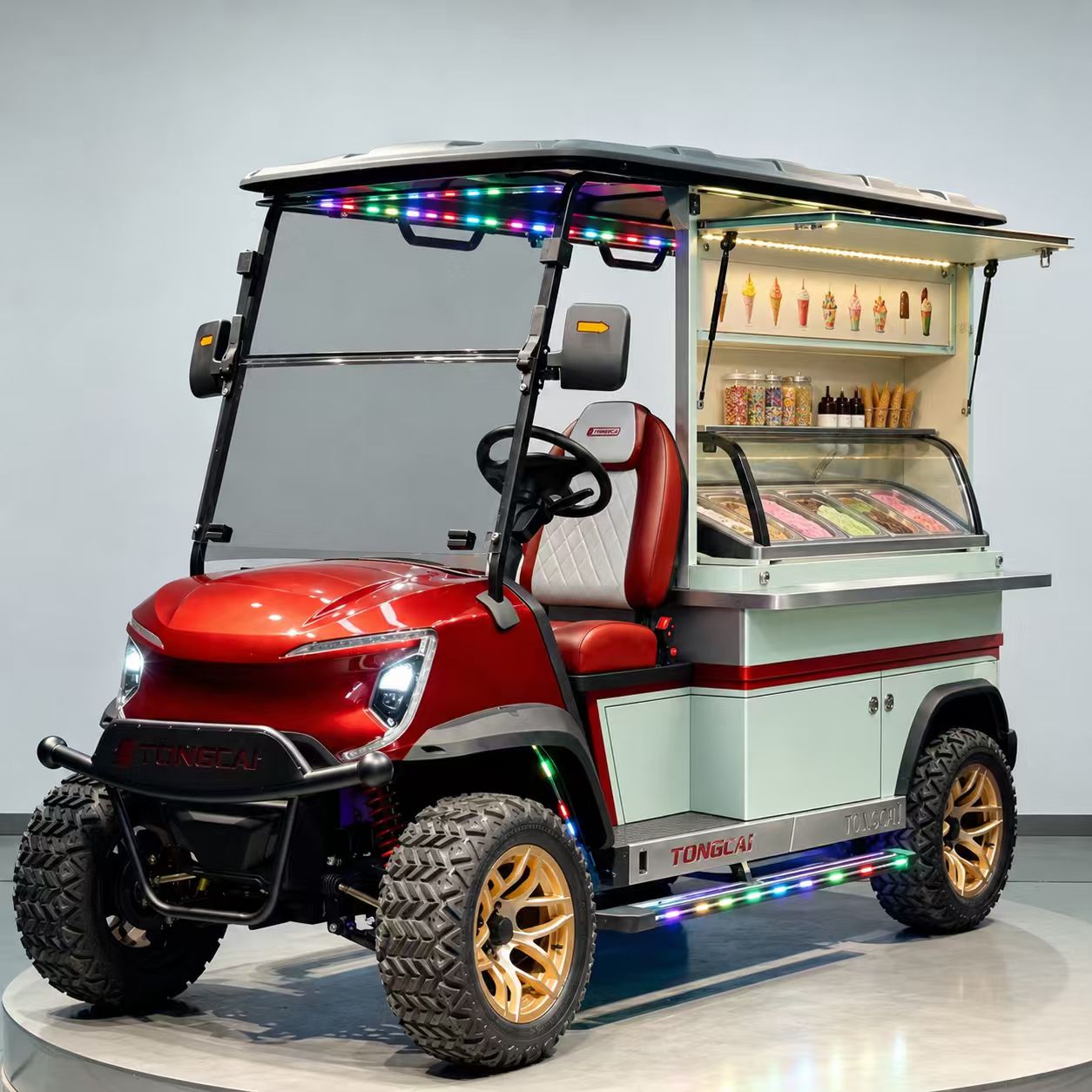
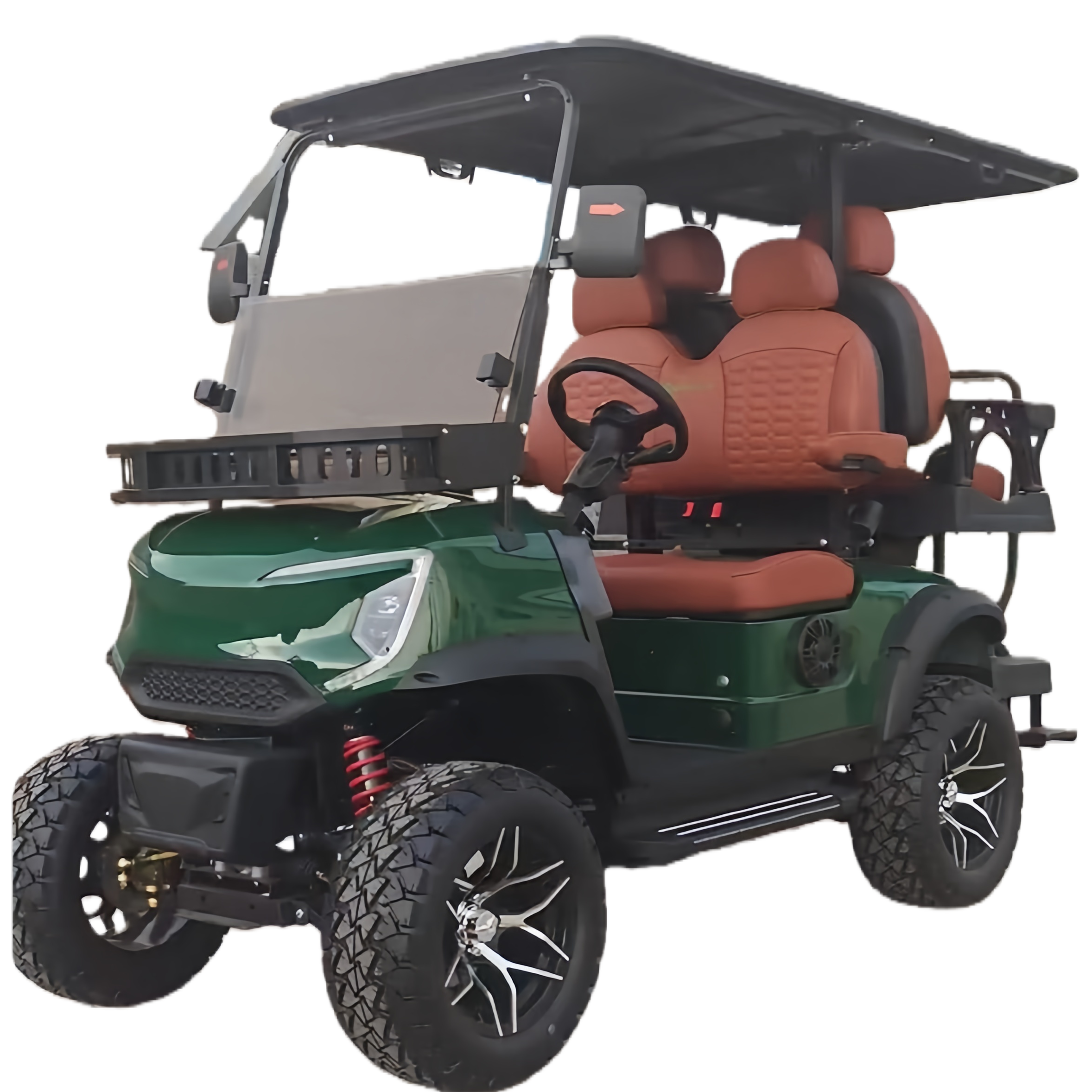
TONGCAI Factory Custom Electric Bakery Cart Mobile Food Vending Truck
- Integrated 48V/60V food-grade utility system
- Dual water sink & deep-cycle energy storage
- High-durability stainless steel cabinetry
Manufactured under strict CE standards (Machinery Directive 2006/42/EC, EMC Directive 2014/30/EU), our vehicles deliver high uptime, rugged chassis architecture, and customized powertrain solutions across golf resorts, industrial estates, beach properties, and city campuses.
CE Certified
CE Certified
CE Certified
CE Certified
CE Certified
CE Certified
CE Certified
CE Certified
In B2B commercial procurement, European Conformity (CE) is not merely a label—it represents a complete technical dossier ensuring mechanical stability, electromagnetic immunity, fire-safe electrical architectures, and low-voltage operator protection.
Commercial golf buggies, utility carts, and people movers must satisfy strict mechanical stress calculations under ISO 12100. Chassis flexure points, emergency braking distances, dual-circuit fail-safe hydraulics, and roll-over protective structures (ROPS) must undergo non-destructive dynamic load testing to guarantee passenger protection during slope operation.
High-frequency pulse-width modulation (PWM) motor controllers and onboard fast chargers emit electromagnetic noise that can disrupt sensitive resort telecom, airport navigation, or clubhouse management systems. Genuine CE-marked golf cars feature shielded wiring looms, high-grade toroidal ferrite chokes, and CAN-bus galvanic isolation.
Operating between 48V DC and 72V DC electrical systems requires adherence to electrical safety, insulation resistance, and thermal disconnect protocols. Battery enclosures must prevent thermal propagation, feature IP67-rated waterproof quick-connectors, and integrate dual-pole electromagnetic master relays for emergency shutdown.
Understanding the internal bill of materials (BOM) separates standard light utility carts from commercial-grade vehicles engineered for ten-year operating life cycles under rigorous multi-shift rental and municipal conditions.
| Evaluation Parameter | Advanced 72V LiFePO4 Lithium (Our OEM Spec) | Legacy 48V Flooded Lead-Acid | Commercial Advantage & ROI Impact |
|---|---|---|---|
| Usable Energy Depth (DoD) | 90% – 95% Depth of Discharge with zero degradation | 50% recommended maximum limit | Double the daily runtime on a single charging session. |
| Cycle Longevity | 3,500 – 4,500 cycles to 80% remaining capacity | 600 – 800 cycles with strict acid maintenance | Eliminates 3 battery replacements over a 10-year span. |
| Curb Weight & Turf Impact | 42 kg – 55 kg pack; reduces overall vehicle curb by 160 kg | 180 kg – 240 kg heavy lead batteries | Protects delicate golf greens, improves hill climb speed by 35%. |
| Motor & Controller Match | AC Induction / PMSM 5.0kW – 7.5kW (Enpower / Curtis) | DC Series / Shunt 3.0kW – 3.8kW | Regenerative braking recovers up to 14% kinetic downhill energy. |
| Chassis Architecture | Robotic welded Q235 steel with E-coat or 6061-T6 Aluminum | Standard welded mild steel with basic primer | Resists salt air, humidity, chemical fertilizers, preventing rust. |
| Charging Dynamics | 2.0 – 2.5 hours fast opportunity charging capability | 8.0 – 10.0 hours continuous slow charge required | Enables 18-hour continuous fleet turnaround with top-ups. |
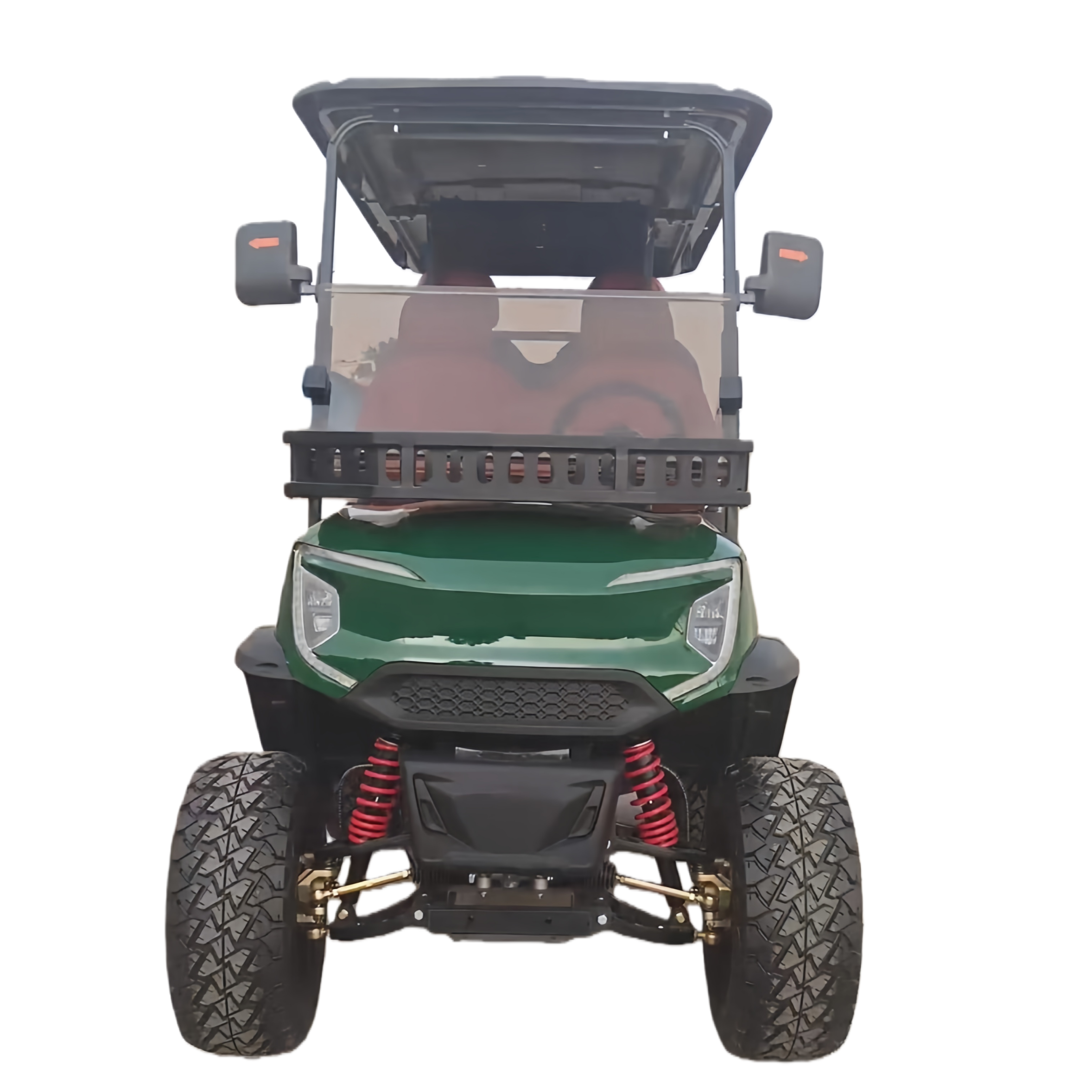
Low-speed passenger buggies demand precise steering geometry to prevent rollover tendencies on 25% inclines. Our chassis designs employ double A-arm independent front suspensions with coil-over dampers and MacPherson-derived steering uprights. The rear axle integrates a semi-independent trailing arm suspension coupled with high-load leaf springs and dual hydraulic shock absorbers.
This layout ensures that whether the buggy is carrying 2 executives or 6 passengers with full golf gear and commercial cargo, tire contact patches remain flat against fairway gradients and wet asphalt pavements, eliminating understeer.
Modern commercial operators cannot rely on manual battery checkups and clipboard maintenance logs. Every CE-certified golf car leaving our Dezhou assembly plant features an SAE J1939 CAN-bus telemetry backbone connecting the battery BMS, AC motor controller, digital instrument dashboard, and optional GPS IoT gateways.
Fleet supervisors can continuously monitor State-of-Charge (SoC), real-time cell temperatures, motor stator RPM, geofencing violations, and remote error codes directly through cloud software, achieving predictive maintenance before an on-course failure occurs.
Procurement directors and dealer networks face evolving zero-emission regulations, rising labor costs, and expanding multi-use vehicle demands. Here is where the global golf buggy and light utility vehicle market is heading over the next five years.
Resorts in the Mediterranean, Middle East, and Southeast Asia are increasingly standardizing on flexible monocrystalline solar cell roof roofs. Integrating 300W to 450W solar arrays directly into the canopy replenishes between 15% and 25% of daily consumption while parked outdoors, extending range and extending battery calendar lifespan by avoiding deep micro-discharges.
Traditional golf courses are diversifying their operations with mobile beverage services, high-end food delivery, and event hospitality. Procurement managers are swapping pure 2-seater passenger carts for modular platforms featuring rapid-swap rear beds—converting from a 4-seater guest transporter to a hot-food vending cart or maintenance flatbed in under 15 minutes.
Rising overseas logistics overheads have catalyzed a migration away from intermediate brand distributors toward direct OEM/ODM factory sourcing. Buyers seek manufacturers with precision SKD (Semi-Knocked Down) and CKD (Completely Knocked Down) packaging designs—packing up to 18 units into a single 40ft HQ container to slash ocean freight overhead per unit by over 40%.
Shandong CCB New Energy Machinery Co., Ltd. is a TÜV Rheinland on-site verified manufacturer operating in Tianqu Industrial Park, Dezhou, Shandong, China. We bridge the gap between heavy automotive precision and nimble OEM customization.
Unlike assembly workshops that purchase third-party generic frames and bolt on external plastic bodies, CCB commands complete vertical manufacturing. Across our 14,200 square meter plant, we execute computer-controlled laser tube cutting, automated pipe bending, robotic chassis welding, automated cathodic dip coating, and rigorous dual assembly lines.
Every single golf car passes through a 12-point Quality Assurance protocol—including water-immersion electrical leak checks, digital dyno brake balance tests, and full suspension articulation cycling under maximum gross weight before ocean crating.
Precision laser profiling of structural Q235 steel square and round tubing.
Multi-radius mandrel bending for seamless roof struts and heavy duty roll cages.
Jig-anchored robotic MIG welding guaranteeing sub-millimeter chassis alignment.
Submersion cathodic E-coating preventing internal tubular rust in coastal zones.
Precision alignment of transaxles, AC/PMSM motors, and hydraulic brake lines.
High-reliability mounting of IP67 LiFePO4 packs with isolated smart BMS.
Automotive standard flame-retardant harnesses with waterproof Deutsch plugs.
UV-stabilized PP automotive body panels and marine-grade anti-mold upholstery.
Toe-in wheel alignment and 4-wheel dynamic brake roller performance benching.
Continuous hill hold test and full load ramp testing verifying hill descent assist.
Visual surface defect scans, paint micrometer checks, and lighting inspections.
Reinforced steel shipping crating preventing inter-container movement and transit wear.
Direct answers from our engineering desk addressing homologation, electrical compatibility, ocean transit logistics, warranty enforcement, and bespoke manufacturing.