Syria Fleet Import & Whitepaper Guide
Top China Electric Shuttle Cart Manufacturers & Manufacturer in the Latakia market
Engineering high-durability, salt-spray resistant electric shuttle buses, golf carts, and mobile utility vehicles tailored for Latakia’s coastal resorts, port logistics, and commercial enterprises.
Export-Ready Fleet Solutions
Featured Commercial Shuttle & Utility Vehicles
Custom-engineered low-speed electric vehicles (LSVs) optimized for the Mediterranean coastal climate, heavy-duty operational cycles, and zero-emission transit in Latakia.
Enterprise Verification
Shandong CCB New Energy Machinery Co., Ltd.
TÜV Rheinland On-Site Verified Custom Manufacturer in Dezhou, Shandong, China.
14,200 m²
Production Facility
140+
Audited Component Vendors
12-Stage
In-House Manufacturing
4.5 / 5.0
Global Buyer Rating
Strategic Market Analysis
Electric Shuttle Cart Adoption in Latakia: Technical Context & Procurement Realities
The city of Latakia, serving as Syria's primary seaport and Mediterranean maritime gateway, represents a rapidly evolving market for low-speed electric vehicles (LSVs), sightseeing buses, and specialized utility carts. As coastal commercial activities expand across the Port of Latakia, beachfront resorts, university campuses, and municipal promenades, fleet managers face distinct environmental and operational constraints. Selecting the right Chinese OEM/ODM manufacturing partner requires a deep technical understanding of marine-grade durability, power delivery, battery thermal management, and post-sale technical support.
Traditional gasoline-powered shuttle fleets operating in Latakia suffer from rising fuel acquisition costs, high noise pollution in hospitality zones, and intensive mechanical wear. Conversely, standard-grade electric carts imported without marine-climate modifications frequently experience premature frame chassis rusting, controller overheating during Mediterranean summer heatwaves (38°C–45°C), and capacity fade in lead-acid battery packs caused by deep discharge cycles during localized grid instability.
Salt-Spray Resistance Engineering
Latakia's airborne sodium chloride requires electro-phoretic dip (ED) anti-corrosion coating and powder-coated aluminum chassis to prevent frame structural degradation over 10+ years of coastal operation.
High-Torque Powertrain Architecture
Coastal elevation changes toward the Jabal An-Nusayriyah foothills necessitate high-efficiency 72V/60V AC brushless motors capable of tackling steep gradients up to 25% under full passenger loads.
Customized B2B Configurations
From 2-10 seat resort shuttles to enclosed mobile coffee and waffle vending trucks, vehicles must be engineered around specific operational business models to maximize return on investment (ROI).
Local Deployment & Operational Scenarios
Where Electric Shuttle Carts excel in the Latakia Market
To deliver maximum Information Gain for procurement directors and business operators in Latakia, we examine the four primary operational environments where Shandong CCB New Energy's electric shuttle carts and specialized vending vehicles outperform traditional alternatives:
01. Coastal Resorts & Corniche Hospitality
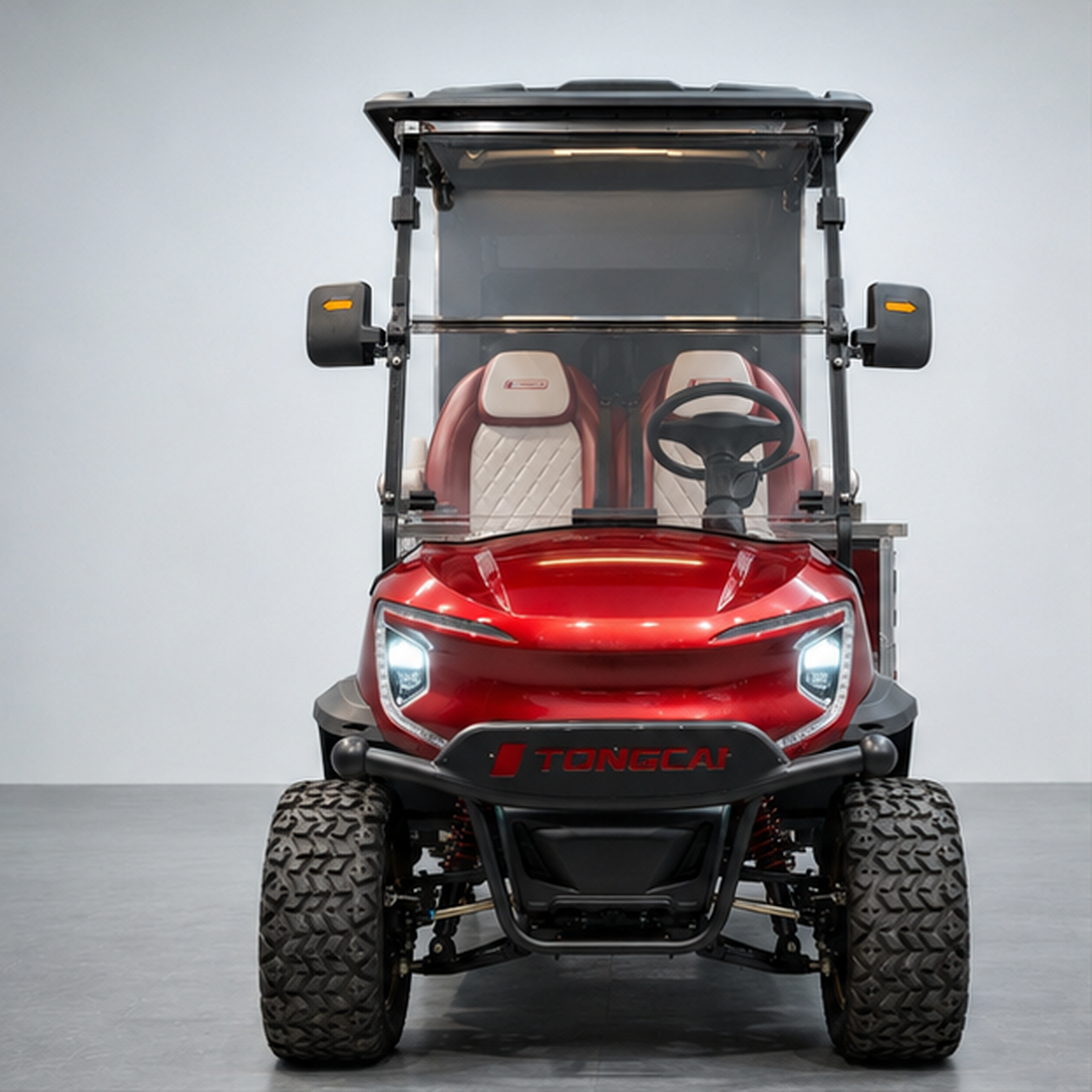
Hotels along the Latakia Corniche and beach resorts demand silent, non-polluting guest transportation. Models like the TongCai 72V Lithium 6-Seater and 4-Seater LSV Golf Carts provide smooth passenger transfer between reception halls, beach clubs, and private villas. The quiet electric drivetrain preserves the serene resort atmosphere while reducing operational energy costs by up to 80% compared to internal combustion shuttles.
02. Mobile Micro-Entrepreneurship & Street Food
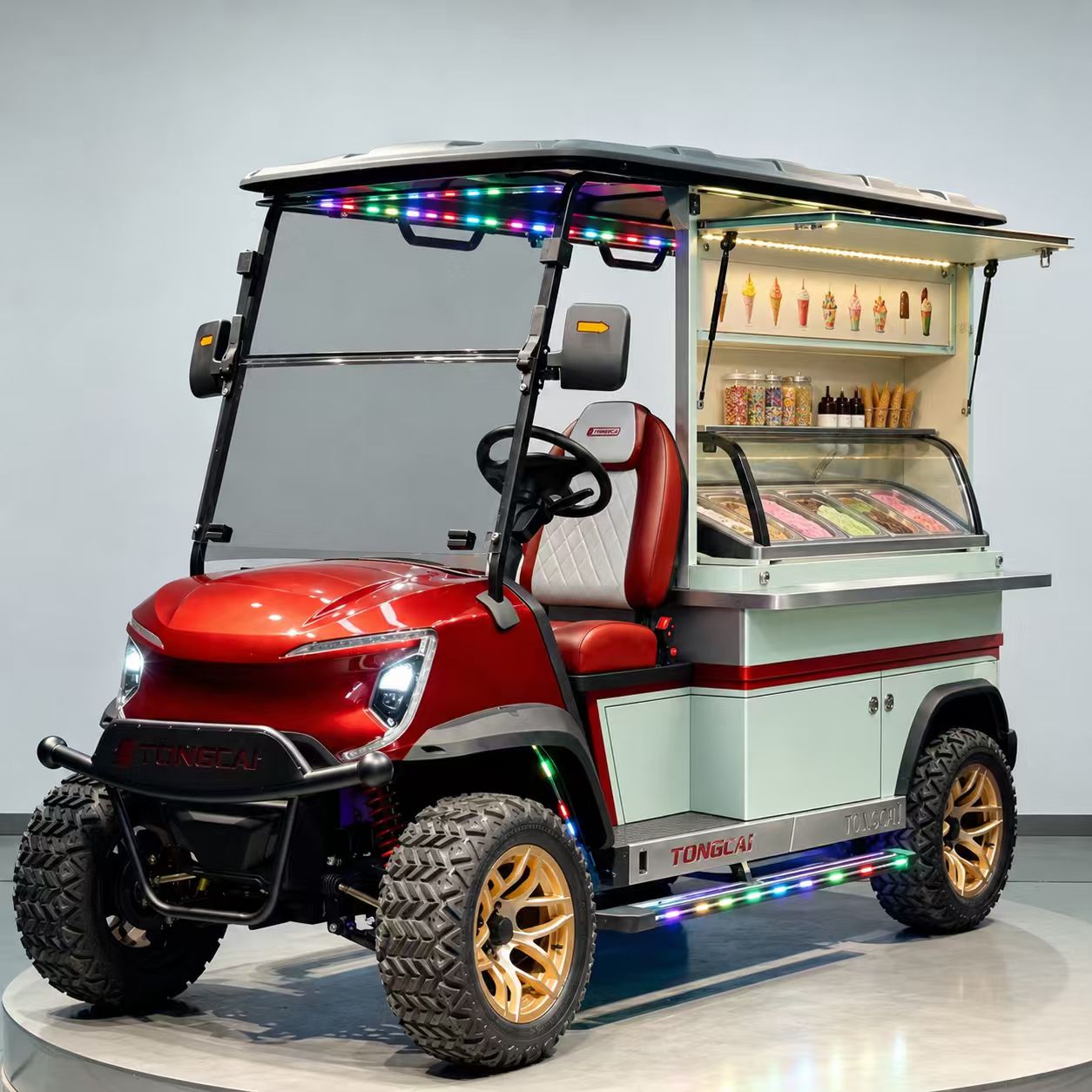
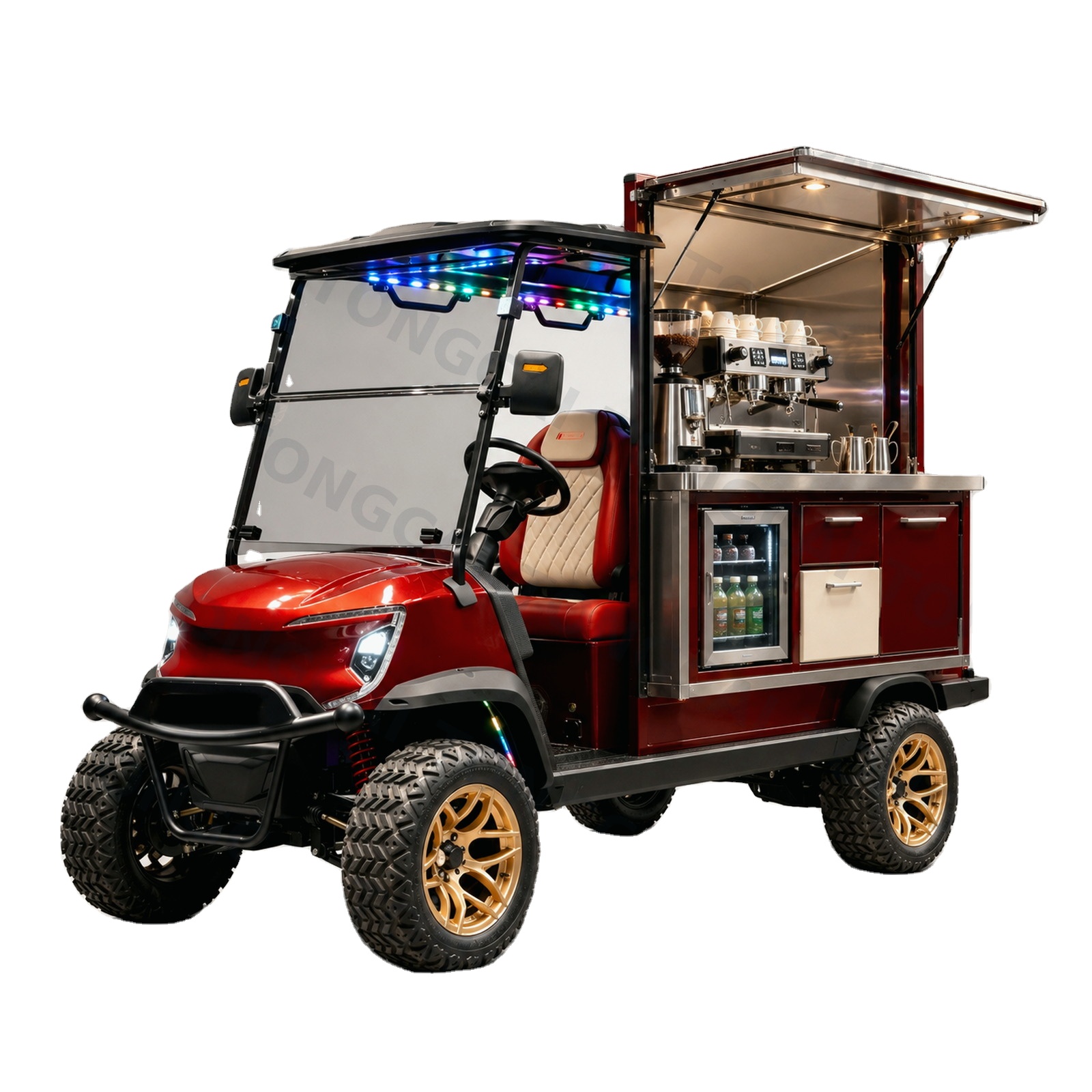
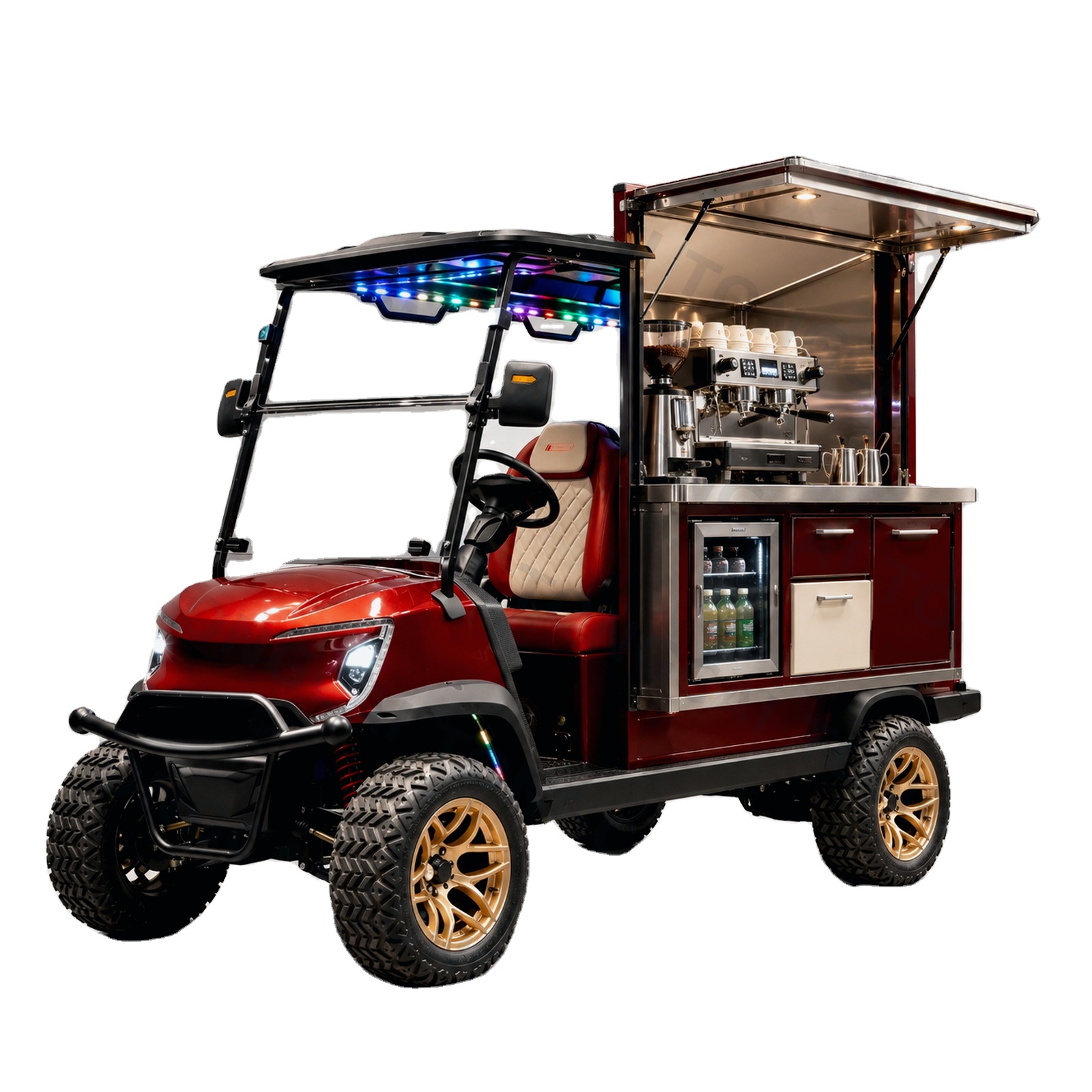
Latakia's bustling public squares, market streets, and tourist walkways have seen a dramatic rise in mobile food and beverage vendors. Specialized vehicles such as the TONGCAI Mobile Waffle Cart and Custom Bakery Vending Truck serve as self-contained commercial hubs. Equipped with high-capacity lithium battery banks and integrated power inverters, these carts operate espresso machines, refrigeration units, and waffle irons without requiring external power grid drop lines.
03. Port Logistics & Industrial Free Zones
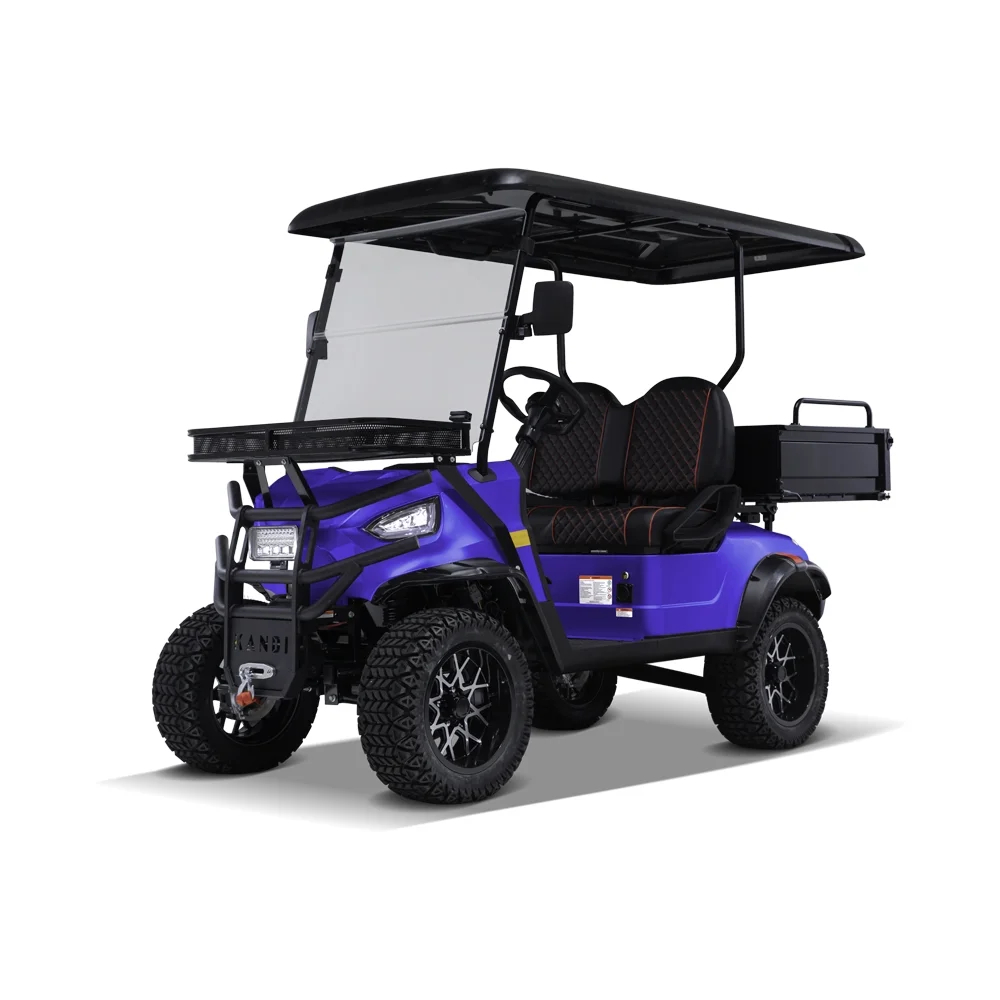
The Port of Latakia demands robust internal mobility for customs inspectors, maintenance crews, and port authority supervisors. Lifted 4WD models like the TongCai Private Mold Lifted Hunting Golf Cart offer reinforced suspension, off-road all-terrain tires, and high ground clearance capable of traversing port rail tracks, uneven container yards, and wet dock surfaces safely under any weather conditions.
04. Institutional Campuses & Healthcare Mobility
Large educational complexes (such as Tishreen University) and medical facilities require structured internal transit. The TONGCAI 4 Wheel Electric Senior Mobility Scooter and 10-seater sightseeing buses provide comfortable, accessible transportation for students, staff, elderly patients, and visitors with limited mobility, operating seamlessly along pedestrian-only corridors.
Engineering Whitepaper
Battery & Drivetrain Architecture for Mediterranean Climates
When procuring electric shuttle carts for Latakia, selecting the optimal battery chemistry is crucial for long-term TCO (Total Cost of Ownership). High ambient temperatures combined with intensive daily duty cycles place unique stress on electrochemical energy storage. Below is a comparative engineering evaluation between traditional lead-acid systems and advanced LiFePO4 (Lithium Iron Phosphate) battery packs engineered by Shandong CCB New Energy:
| Technical Specification |
Standard Lead-Acid Battery |
CCB LiFePO4 Lithium System (Recommended) |
| Cycle Life (80% DOD) |
500 – 800 Cycles (1.5 – 2 Years) |
3,500 – 5,000+ Cycles (7 – 10 Years) |
| High Temp Tolerance (45°C) |
Accelerated degradation, thermal runoff risk |
Integrated BMS thermal monitoring & protection |
| Weight Efficiency |
Heavy (Reduces vehicle range & speed) |
60% Lighter (Increases gradient climbing efficiency) |
| Charging Duration |
8 – 10 Hours (Requires stable long grid access) |
2.5 – 4 Hours Fast Charge / Solar Compatible |
| Maintenance Requirement |
Regular water top-ups, terminal cleaning |
Zero Maintenance (Sealed Smart BMS Unit) |
| Salt-Air Sealing Rating |
Open vent caps susceptible to acid spills/corrosion |
IP67 Water & Dust Sealed Enclosure |
For commercial fleet operators in Latakia experiencing power load-shedding, LiFePO4 lithium technology allows rapid partial top-up charging during available power windows. Furthermore, CCB offers optional roof-integrated solar panel systems that feed continuous trickle-charge energy to the battery bank throughout daylight hours, extending operational daily range by 20–30 km.
Manufacturing Integrity
12 In-House Quality Control & Production Stages
Unlike trading companies or simple kit-assemblers, Shandong CCB New Energy Machinery Co., Ltd. operates a complete 14,200 m² manufacturing facility in Tianqu Industrial Park, Dezhou, Shandong. By performing all structural fabrication, chassis welding, anti-corrosion dipping, electrical harness routing, and final road testing in-house, CCB guarantees strict quality control standards verified on-site by TÜV Rheinland.
Stage 01
Steel Tube Cutting
Precision laser cutting of frame tubes to tight engineering tolerances.
Stage 02
CNC Machining
Bracket, axle, and suspension mount machining for exact component fit.
Stage 03
Pipe Bending
CNC automated bending of roof pillars and roll-cage safety frames.
Stage 04
Robot Welding
Fixture-locked robotic welding ensuring structural seam integrity.
Stage 05
ED Coating & Spray
Multi-layer anti-corrosion immersion dipping for marine coastal defense.
Stage 06
Chassis Assembly
Installation of independent suspension, hydraulic brakes, and differential axles.
Stage 07
Electrical Harnessing
Wiring harness routing with IP67 waterproof connectors and Curtis controllers.
Stage 08
Body & Interior Fit
Mounting UV-resistant PP/injection-molded body shells and ergonomic seating.
Stage 09
Alignment & Brakes
Laser wheel alignment, dynamic brake force balance, and steering calibration.
Stage 10
Rain & Waterproof Test
High-pressure water jet spray testing to verify seal integrity.
Stage 11
Road Ramp Testing
Full-load incline climbing, hill-start holding, and acceleration testing.
Stage 12
Final FQC & Export Packing
100-point final inspection, steel-frame crate packaging, and container loading.
Buyer Guidance
Frequently Asked Questions for Sourcing to Latakia
How do CCB electric shuttle carts handle the high-salinity marine environment in Latakia?
Vehicles exported to coastal markets like Latakia undergo multi-stage anti-corrosion protection. The chassis steel is subjected to full electrophoretic immersion dipping (ED coating) followed by automotive-grade exterior powder coating. Critical hardware fasteners utilize stainless steel or zinc-nickel plating, while electrical connectors and motor controller housings are IP67 sealed to prevent salt-air ingress and premature oxidation.
What are the shipping lead times and container loading specs from China to Port of Latakia?
Standard production lead time is typically 15 to 25 days depending on OEM customization level (custom colors, logo embroidery, special food vending interior fit-outs). Maritime container transit from Qingdao or Shanghai to Port of Latakia generally takes 25 to 35 days. CCB’s logistics team prepares optimized container loading plans (mixing 2-seater, 4-seater, or mobile food trucks in 20ft/40ft HQ containers) to minimize sea freight cost per unit.
How do LiFePO4 battery systems perform under Latakia's hot summer temperatures?
Our LiFePO4 (Lithium Iron Phosphate) battery chemistry is selected specifically for thermal stability, remaining safe and efficient up to 60°C operating temperatures. Each battery pack features an intelligent Battery Management System (BMS) with over-temperature protection, cell balancing, and automatic thermal cutoff. This prevents overheating even during continuous uphill resort shuttle operation in mid-summer.
Can specialized food vending carts (bakery, waffle, coffee) operate without external grid power?
Yes. Our custom mobile food trucks (such as the TONGCAI Mobile Waffle and Bakery Carts) can be built with heavy-duty 72V 150Ah–200Ah lithium energy storage banks paired with pure sine-wave DC-to-AC inverters (3000W–5000W output). This enables full-day off-grid commercial operation for coffee grinders, ice cream freezers, waffle makers, and LED displays along the Corniche or public parks.
What technical documentation, spare parts, and after-sales support are provided?
Every order includes full English electrical wiring schematics, owner user manuals, and maintenance schedules. CCB supplies wear-and-tear spare parts packs (brake pads, light assemblies, switches, key barrels) packed directly inside the export container. Furthermore, our senior engineering desk offers direct remote diagnostic support and video troubleshooting for local automotive technicians in Latakia.
What is the Minimum Order Quantity (MOQ) for custom OEM orders?
To assist commercial fleet managers and resort developers in conducting market evaluation, CCB accepts sample orders starting from 1 unit. Full OEM customization (including custom body color matching, brand logo application, solar roofs, and customized seat configurations) is unlocked for small-batch or container-level orders.
Why Partner With CCB
Manufacturer Advantages for Syrian & International Distributors
TÜV Rheinland Verified Production
Our facility in Dezhou undergoes rigorous on-site verification, certifying our physical production capacity, welding machinery, electrical testing benches, and quality control systems.
Direct Factory Pricing & OEM Flexibility
By eliminating middleman trading markups, buyers receive factory-direct wholesale pricing with flexible customization options for chassis height, seating capacity, body molds, and battery voltages.
Robust Export Logistics & Packing
Vehicles are secured inside heavy-duty steel tube crates with moisture-barrier wrapping, ensuring pristine arrival at Port of Latakia without transit scratches, denting, or salt fog exposure.
Ready to Elevate Your Fleet in Latakia?
Contact Shandong CCB New Energy today to request technical specification sheets, factory-direct price lists, and customized container loading proposals for your electric shuttle cart or vending vehicle project.
 Deutsch
 Português
 Español
 Français
 Italiano
 Русский
 한국어
 日本語
 العربية
 ไทย
 Tiếng Việt
 Türkçe
 Nederlands
 Indonesia
 עברית
 हिन्दी