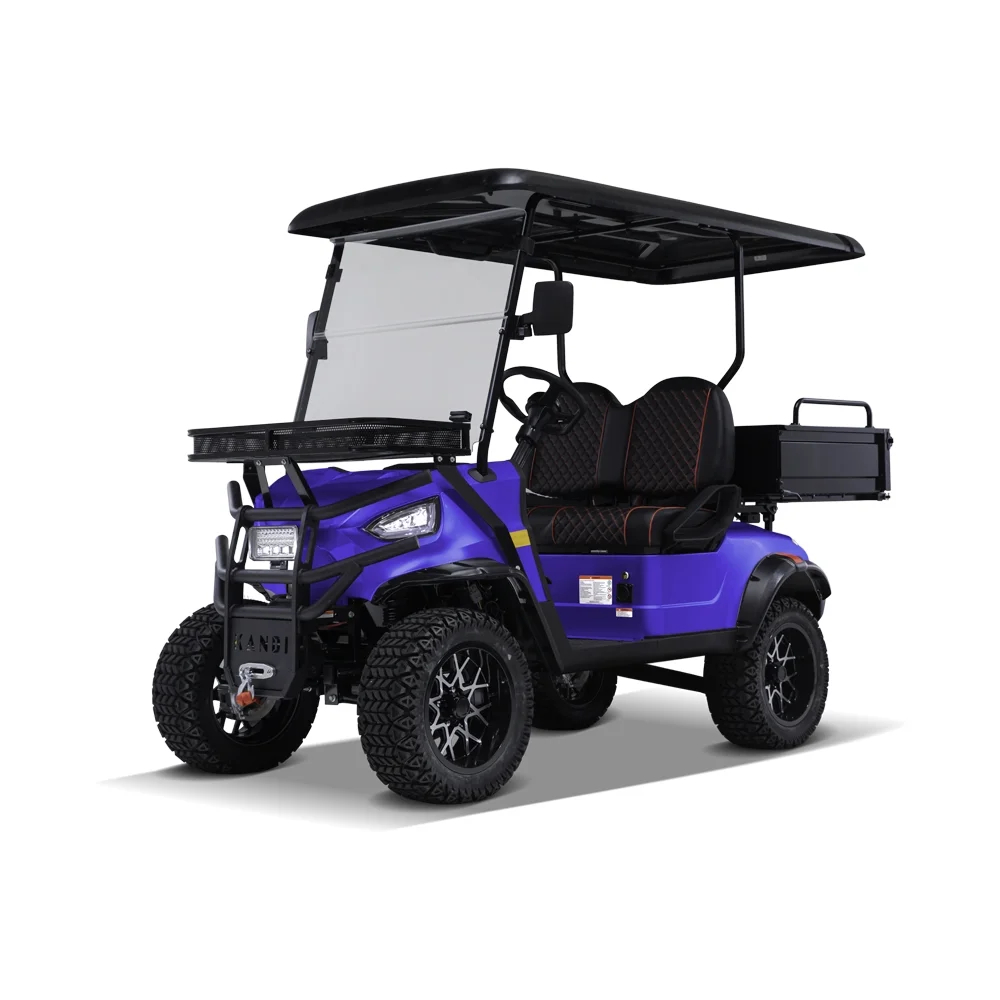
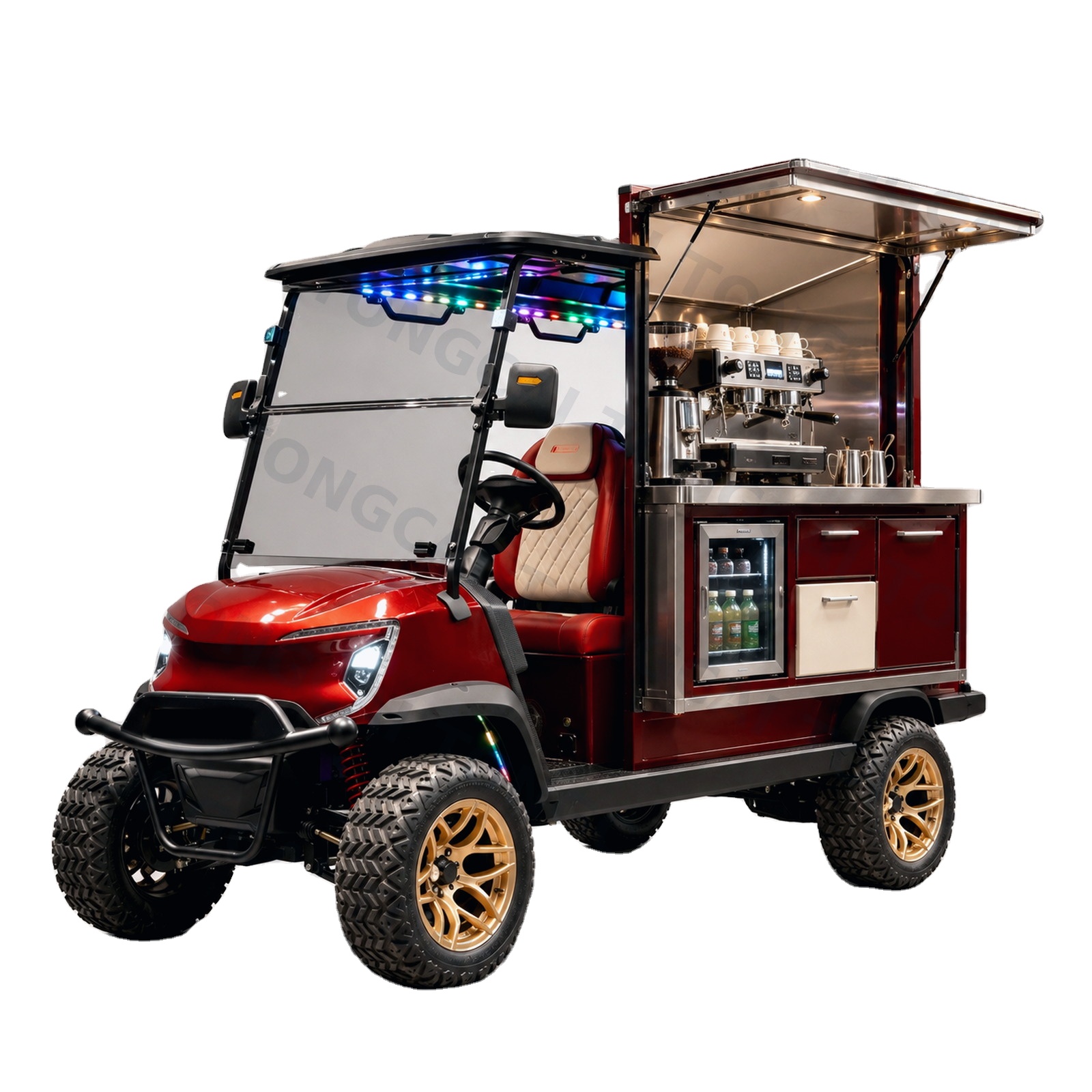
TongCai New Private Mold Electric Lifted Golf Cart 2/4 Passenger
- Aircraft Aluminum Alloy Chassis
- High-Capacity LiFePO4 / 90km Range
- Lifted Hunting & Trail Geometry
 Deutsch
 Português
 Español
 Français
 Italiano
 Русский
 한국어
 日本語
 العربية
 ไทย
 Tiếng Việt
 Türkçe
 Nederlands
 Indonesia
 עברית
 हिन्दी
Engineered for multi-scenario deployment: private master-planned communities, resort guest transport, off-road utility, and mobile commercial applications.
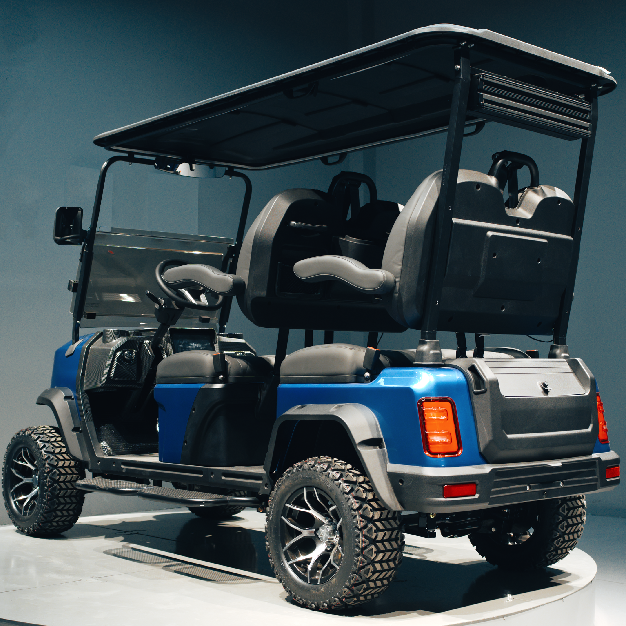
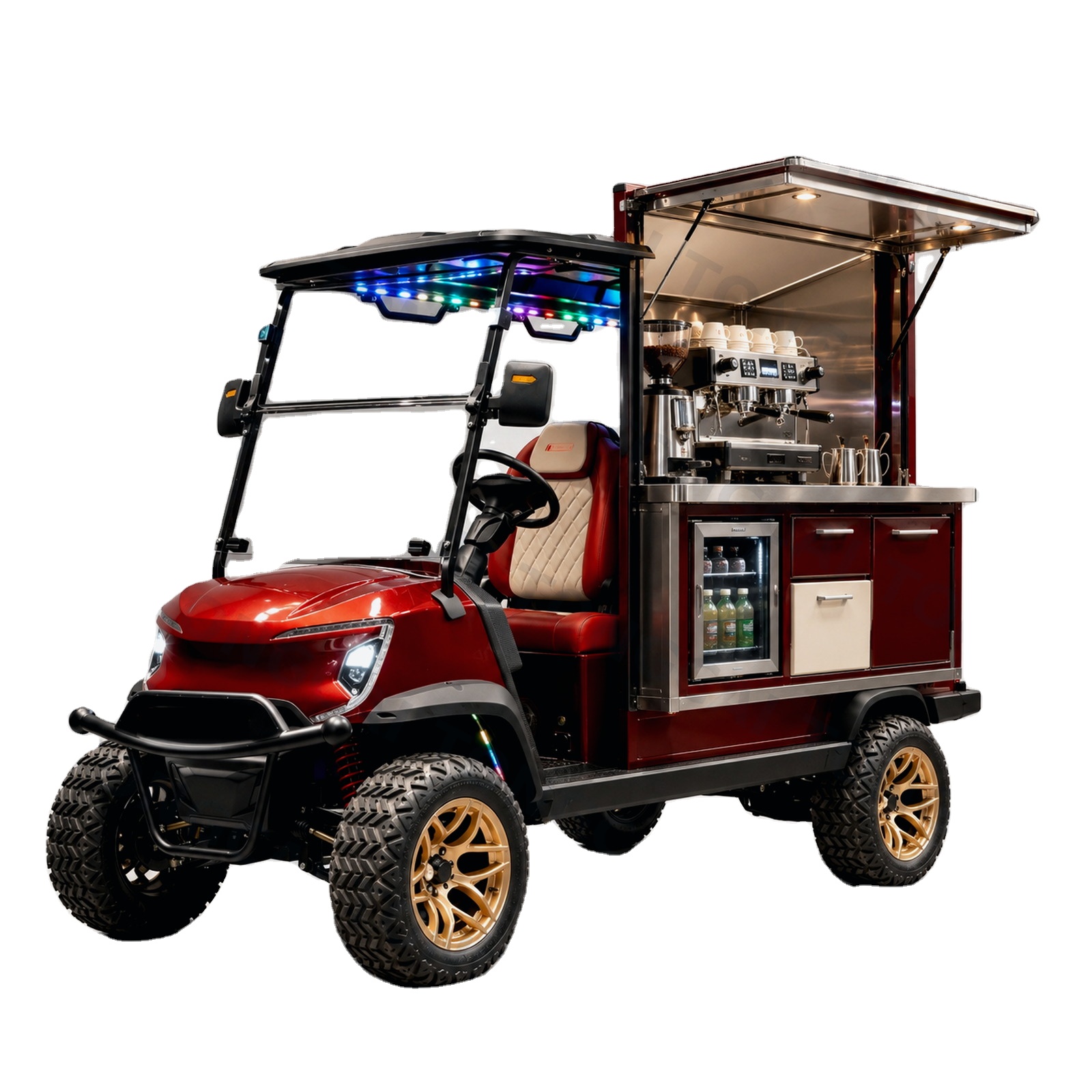



A data-informed analysis of how resort operators, planned communities, municipal fleets, and regional golf cart dealerships are restructuring their purchasing standards.
Global procurement teams have decisively moved away from wet-cell lead-acid systems. Commercial fleets demand modular LiFePO4 (lithium iron phosphate) battery architectures featuring onboard CAN-bus BMS. The drivers are unambiguous: zero regular maintenance (eliminating terminal cleaning and water filling), high-rate opportunity charging without memory degradation, thermal stability up to 60°C, and operational life profiles exceeding 3,500 full depth-of-discharge (DoD) cycles. The resulting reduction in Total Cost of Ownership (TCO) reaches 42% over a 5-year operating span.
End consumers and community operators no longer view the golf cart solely as a fairway utility vehicle. Regulatory cross-pollination requires compliance with US Federal Motor Vehicle Safety Standard 500 (FMVSS 500) and European Low-Speed Electric Vehicle (L7e/CE) standards. Fleet procurement demands essential homologation packages: DOT-certified tempered automotive windscreens with wipers, three-point inertia-reel seatbelts, illuminated side-view mirrors with integrated LED turn signals, horn systems, high-mount center stop lamps, and precision hydraulic disc braking on all four wheels.
Fleet distributors are mitigating inventory risk by purchasing modular chassis platforms capable of rapid field reconfiguration. Using unified structural hardpoints, dealers can convert a base 4-passenger cart into a 2-passenger heavy-cargo carrier, a resort baggage hauler, or an all-weather enclosed maintenance cruiser within hours. CCB’s proprietary private-mold injection body components allow distributors to switch color schemes, add roof solar panels, and mount auxiliary utility boxes without structural welding or voiding warranties.
From golf greens to municipal road transport: Analyzing the engineering progression in chassis design, high-frequency motor control, and vehicle telematics.
Chassis corrosion remains the principal failure mode for neighborhood vehicles operating in coastal resorts, tropical islands, and winter communities utilizing road salt. Modern manufacturing has shifted significantly from simple painted mild steel to aerospace-grade extruded 6061-T6 aluminum alloy frameworks, as well as automotive-grade electrophoretic deposition (E-coat) high-tensile tubular steel.
At CCB New Energy, our in-house robotic structural fabrication lines implement specialized mandrel pipe bending and precision robotic welding jigs. This guarantees that torsion rigidity is maximized while reducing the gross dry vehicle weight by up to 28% compared to traditional legacy golf carts. Lower chassis weight delivers higher acceleration efficiency, preserves battery duty cycles, and prevents turf compaction during fairway crossings.
Engineering Benchmark: All CCB structural chassis platforms undergo 500-hour continuous salt spray chamber exposure testing without structural or cosmetic paint degradation, ensuring a 10+ year operational chassis lifespan.

The outdated era of high-maintenance DC brushed motors with mechanical resistor controls is officially over. Today’s industrial standard relies upon AC induction motors (ranging from 3.3kW to 5kW) and Permanent Magnet Synchronous Motors (PMSM) paired with intelligent Curtis or CCB proprietary vector controllers.
These advanced controllers utilize Field Oriented Control (FOC) algorithms to regulate flux and torque currents independently. This translates into smooth zero-speed torque delivery for steep hill starts, electronically modulated regenerative braking that returns up to 15% of kinetic energy back to the battery bank, and user-programmable driving curves (Eco, Normal, Sport) tailored to distinct client environments.
Furthermore, front independent suspension systems featuring MacPherson struts or double wishbone (A-Arm) designs paired with coil springs and hydraulic shock absorbers replace archaic front straight axles, providing automobile-like road handling and passenger stability over rough terrain.
| Performance Attribute | Legacy Golf Carts (Conventional) | CCB Advanced Neighborhood Electric Vehicles (LSV) | Fleet Procurement Impact |
|---|---|---|---|
| Battery Chemistry | Lead-Acid Deep Cycle (Wet/AGM) | Automotive Grade LiFePO4 with Smart BMS | Zero maintenance, 3,500+ cycles, 40% weight reduction |
| Powertrain Technology | DC Brushed Motor (Mechanical Brake) | 3.3kW–5kW AC Induction / PMSM with Regenerative Braking | 15% energy recuperation, thermal cut-off safety, high gradeability |
| Front Suspension | Solid Front Beam Axle with Leaf Springs | Dual A-Arm Independent Suspension + Hydraulic Shocks | Passenger roll suppression, reduced chassis stress, precision steering |
| Braking Architecture | Rear Mechanical Drum Brakes Only | 4-Wheel Hydraulic Disc with Auto Electromagnetic Park | Stopping distance reduced by 45%, anti-rollback safety on slopes |
| Safety Homologation | Basic Fairway Configuration (No Lighting) | DOT/CE Approved Lighting, Tempered Glass, 3-Point Belts | Immediate qualification for public street LSV registrations |
Shandong CCB New Energy Machinery Co., Ltd. represents the premier class of vertically integrated electric vehicle manufacturers in China, backed by exhaustive independent audit certifications.
Located in Tianqu Industrial Park, Dezhou, Shandong, CCB does not operate as a mere bolt-together assembly workshop. Our self-owned 14,200 square meter plant houses the entire production chain under one roof: automated laser tube cutting, CNC machining centers, mandrel pipe bending, fixture welding, automated spray coating lines, and dual modular assembly tracks. By keeping the manufacturing vertical, we maintain end-to-end quality oversight and eliminate subcontracting markups.
International B2B sourcing requires rock-solid verifiable credentials. Shandong CCB New Energy has undergone comprehensive on-site inspections conducted by TÜV Rheinland, one of the world's most rigorous certification agencies. Our export models comply strictly with European CE directives for low-speed machinery and electrical compatibility. Our transparent quality logs ensure complete material batch traceability from raw alloy tubing to the final motor controller programming.
We empower regional dealers, distributors, and hotel groups to build their own brand equity. We support bespoke body panel molds, specialized corporate color matching, custom embroidered seating, private labeling, and custom electrical configurations (48V, 60V, or 72V architectures). Crucially for distributor cash flow, we support mixed-model loading plans (combining lifted carts, utility cargo beds, and 6-seaters) in high-cube shipping containers to maximize freight efficiency.
From automated steel cutting to FQC road test calibration, every vehicle undergoes a rigid 12-stage inspection protocol before crate packaging.
Direct remote engineer support, detailed English CAD schematics, and an inventory of rapid-dispatch electrical and chassis spare parts.
On-site plant capacity verified: 61+ skilled factory personnel and over 140 cooperative Tier-1 component component suppliers.
Expert answers addressing the critical legal, mechanical, shipping, and customization questions asked by commercial buyers.
Connect directly with our specialized export engineering desks for comprehensive wholesale pricing, factory lead times, custom OEM options, and mixed-model container shipping plans.
