Integrated Industrial Competitiveness & Manufacturing Depth
Direct from our 14,200 m² heavy-manufacturing plant in Dezhou, Shandong. Full end-to-end quality assurance.
⚙️
True End-to-End Metalwork
Unlike regional assemblers purchasing third-party frames, our plant houses CNC laser tube cutting, automated pipe bending, robotic structural welding, and automated shot-blasting under a single roof.
🔋
Automotive Powertrains
Custom configurations spanning 48V, 60V, and 72V LiFePO4 battery platforms with CAN-bus enabled BMS, integrated with high-torque AC asynchronous and permanent magnet synchronous motors (PMSM) up to 5kW.
🛡️
TÜV Rheinland Audited
Our complete manufacturing operation is independently verified on-site by TÜV Rheinland. We run stringent 12-stage SOP inspections spanning inbound raw tubing, tensile stress testing, and dyno rolling road tests.
🚢
Global Fleet Logistics
Turnkey knocked-down (SKD/CKD) and fully-assembled container loading plans engineered to maximize shipping efficiency, accompanied by certified documentation for seamless EU CE and DOT compliance.
Strategic Industry Landscape: Global Sourcing Analysis
The global low-speed electric vehicle (LSV) and electric utility golf cart market is transitioning from simple golf course operations to diversified industrial, commercial resort, security patrol, and mobile retail platforms. Sourcing managers and fleet distributors face major supply-chain realignments. Chinese manufacturing clusters—specifically located in Shandong's advanced machinery corridor—have outpaced traditional global counterparts in component integration, battery supply security, and rapid custom structural engineering.
When selecting a tier-1 Chinese supplier, buyers must prioritize actual fabrication ownership over mere trading assemblies. A genuine original equipment manufacturer (OEM) maintains full mechanical control over structural pipe bending, chassis e-coating, and electrical harness validation, mitigating structural fatigue and corrosion hazards in humid coastal hospitality environments.
- Structural Rigidity: Robotic weld seams with cathodic electrodeposition coating ensuring 10-year chassis integrity.
- Thermal Safety: LiFePO4 chemistry with integrated thermal runaway barriers and active balancer modules.
- Compliance Mapping: Turnkey Low-Speed Vehicle (LSV) turn signal, mirror, and braking homologation for regional street legalization.
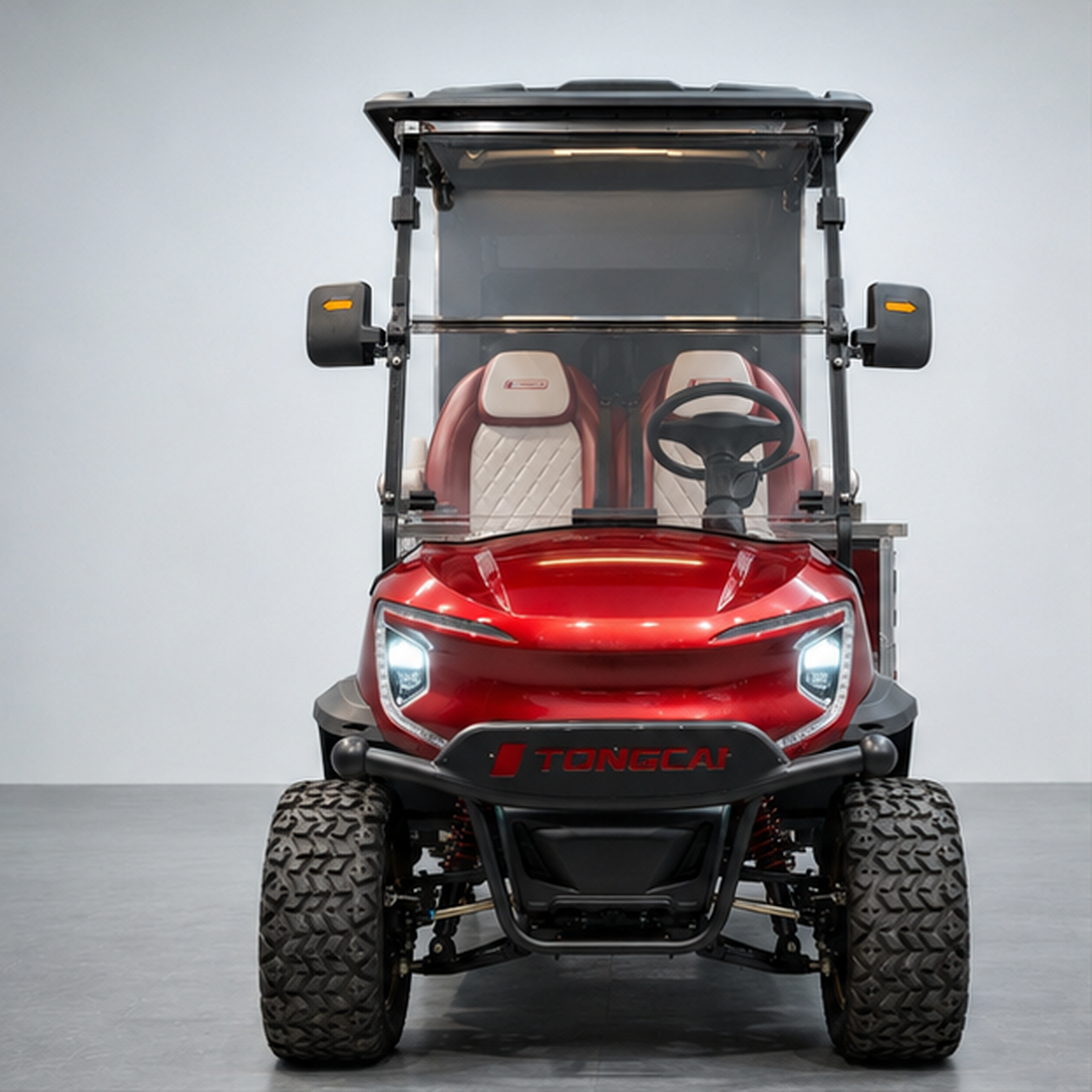
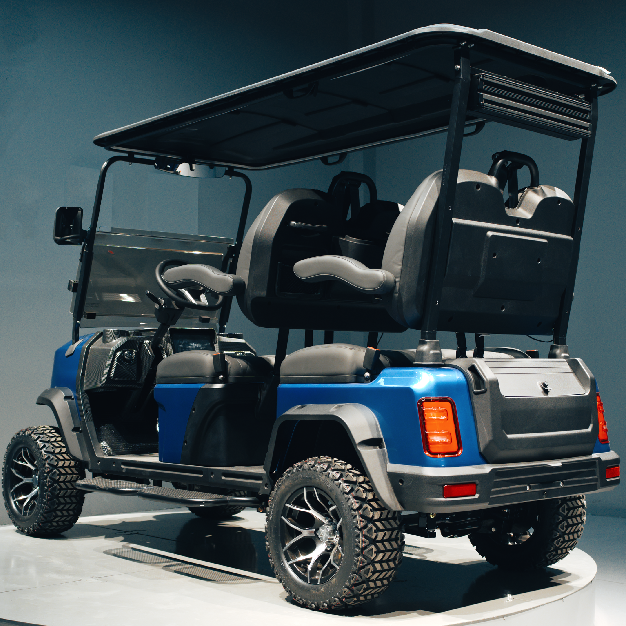
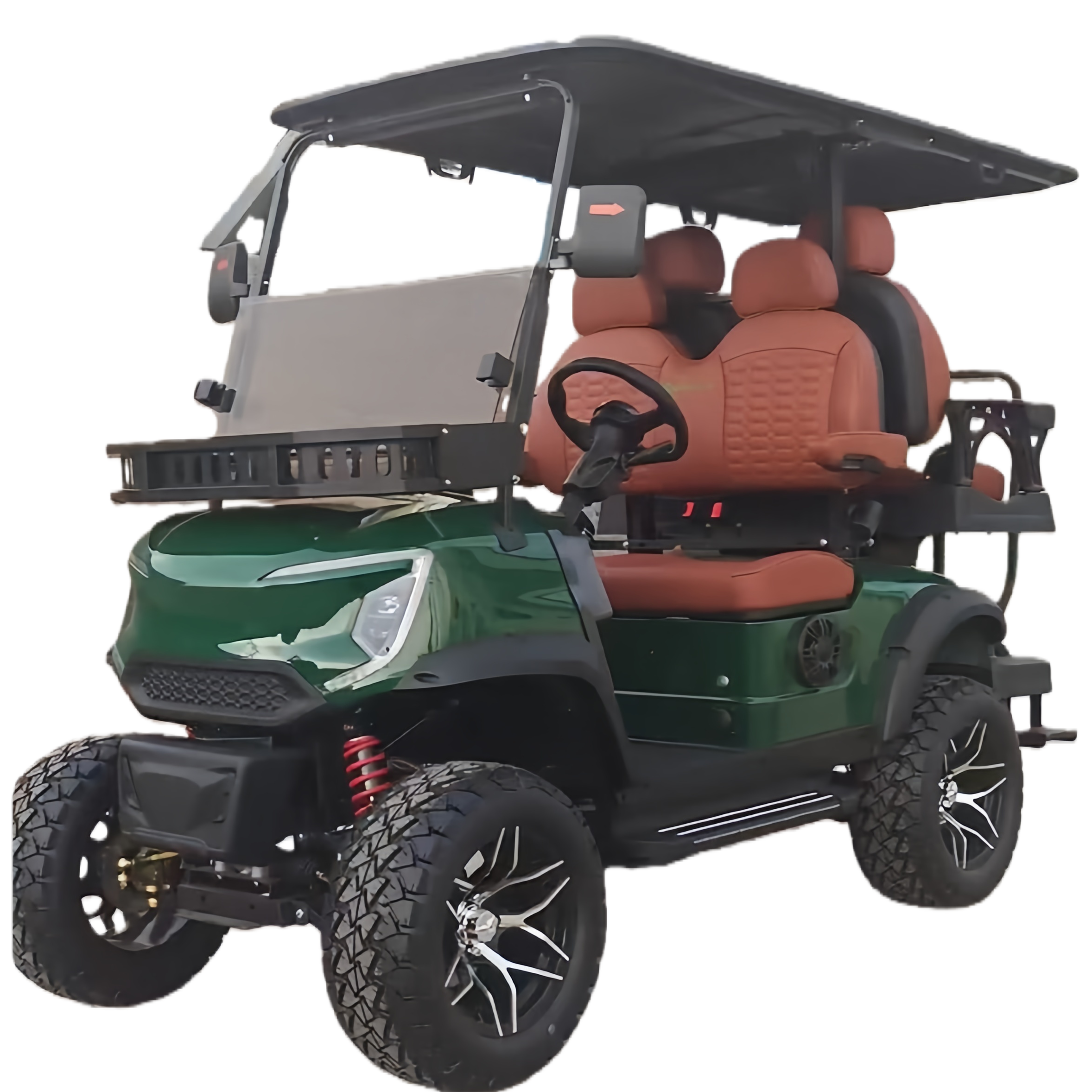
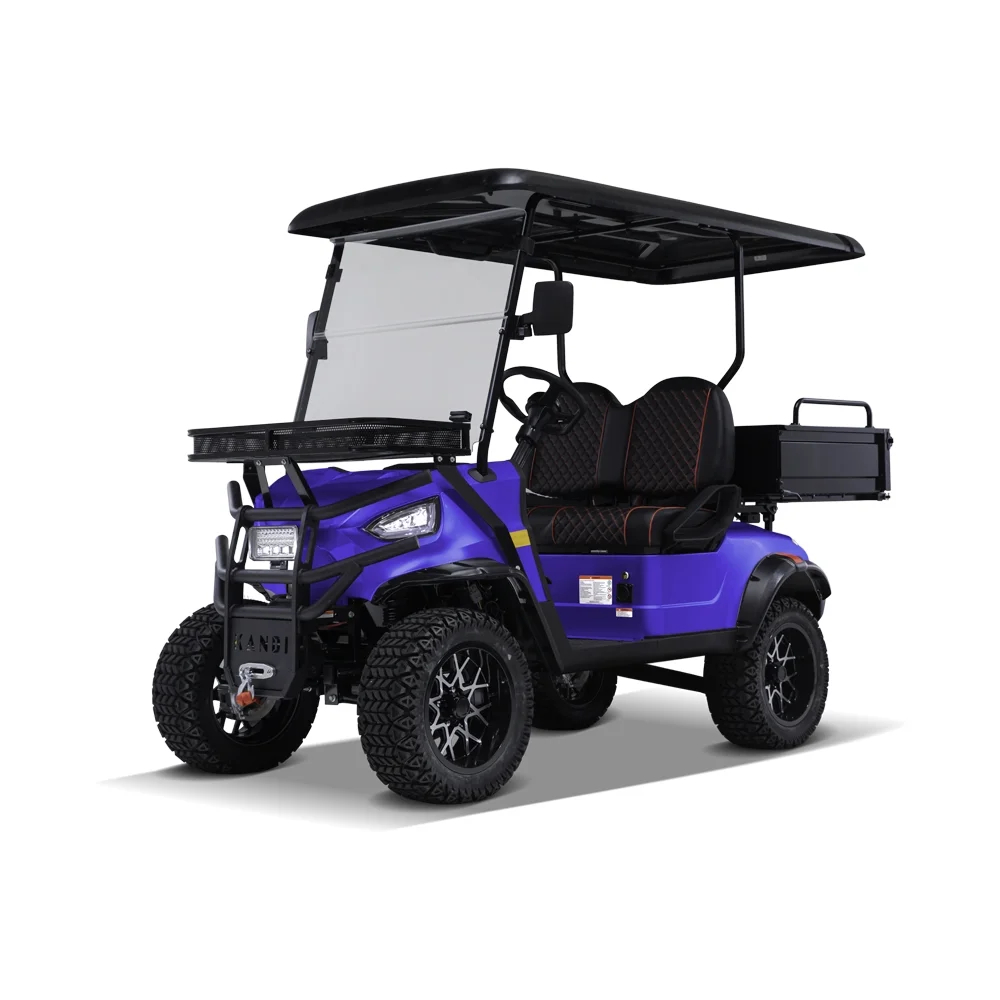
- Modular Versatility: Direct chassis adaptation for utility cargo beds, beverage dispatch units, or lifted all-terrain systems.
Technological & Procurement Trends (2025–2030)
Emerging vehicle architectures, powertrain evolutions, and strategic considerations for commercial procurement executives.
1. LiFePO4 Migration & High-Voltage Efficiency
Legacy flooded lead-acid batteries are obsolete for commercial utility fleets due to high maintenance downtime and acid fumes. Modern procurement mandates 48V and 72V Lithium Iron Phosphate (LiFePO4) systems offering 3,500+ deep discharge cycles, zero water replenishing, rapid 2-hour opportunistic charging, and a 60% gross vehicle weight reduction that drastically reduces motor and brake wear.
2. Integrated Smart Telematics & Fleet IoT
Large-scale resort, municipal, and campus operators are demanding vehicle tracking modules. Integrated 4G telematics provide real-time GPS boundary geofencing, remote battery state-of-health (SoH) diagnostics, dynamic speed governing in pedestrian corridors, and predictive maintenance alerts that drastically reduce total cost of ownership (TCO) across 5-year operating cycles.
3. Multipurpose Modular Utility Upfitting
Fixed chassis platforms are giving way to quick-swap utility beds. Operators are procuring standardized 48V/72V rolling chassis equipped to alternate between guest passenger pods, heavy-duty hydraulic dump beds, insulated refrigerated food cargo, and emergency campus response configurations without structural re-engineering.
Q: How does CCB guarantee structural durability in corrosive seaside environments?
All chassis tubing undergoes high-precision automatic shot blasting to remove scale, followed by an advanced cathodic electrophoretic dipping (e-coat) and multi-layer automotive thermoset powder coating. Hardware is zinc-nickel plated or marine-grade stainless steel to resist salt-fog corrosion.
Q: Can vehicles be customized for specific Low-Speed Vehicle (LSV) street legal status?
Yes. We engineer complete street-legal packages compliant with regional Low-Speed Vehicle (LSV) and Neighborhood Electric Vehicle (NEV) standards, including AS4/DOT-approved laminated windshields with wipers, 3-point retractable seatbelts, automotive LED headlamps with high/low beams, daytime running lights, and integrated horn/turn signal assemblies.
Q: What is the lifecycle advantage of LiFePO4 over deep-cycle lead acid?
While lead-acid packs provide a lower initial purchase price, LiFePO4 offers 4 to 5 times greater cycle life (3,500+ cycles at 80% DoD vs. 600-800 cycles), faster charging without thermal degradation, and zero fluid servicing requirements. Overall commercial ROI is typically achieved within 14–18 months of intensive fleet use.
Q: What is the factory MOQ and typical container loading configuration?
We accept initial trial orders starting from 1 unit to allow dealers and fleet directors to evaluate build fit, finish, and road performance. For bulk container freight, we optimize loading via bespoke steel stacking cradles—allowing up to 18 units (SKD) per 40ft HQ container depending on seat layout and lift kit dimensions.
Ready to Upgrade Your Commercial Fleet with Factory-Direct Engineering?
Connect with our technical export desk to request customized engineering drawings, factory test audit certificates, container loading calculations, and full wholesale catalogs.
 Deutsch
 Português
 Español
 Français
 Italiano
 Русский
 한국어
 日本語
 العربية
 ไทย
 Tiếng Việt
 Türkçe
 Nederlands
 Indonesia
 עברית
 हिन्दी