The Industrial Landscape: Engineering Excellence at CCB New Energy
The global low-speed electric vehicle (LSV) and commercial golf cart market has experienced a fundamental paradigm shift. What once was regarded as a lightweight recreational utility has now transformed into a core operational asset for eco-resorts, large-scale industrial complexes, planned communities, municipal airports, and commercial hospitality syndicates. Shandong CCB New Energy Machinery Co., Ltd. (operating its premier production base in Tianqu Industrial Park, Dezhou, Shandong, China) stands at the forefront of this industrial revolution. As an on-site verified manufacturer by TÜV Rheinland and a premier Custom Manufacturer, CCB has dismantled the conventional third-party assembly model by establishing a self-contained, vertically integrated manufacturing framework.
Unlike regional assembly workshops that merely bolt prefabricated brackets onto generic off-the-shelf tubular frames, CCB commands end-to-end metallurgical fabrication, structural engineering, powertrain calibration, and digitalized quality assurance within our 14,200 m² state-of-the-art facility. From initial structural steel laser cutting, CNC precision pipe bending, and automated robotic fixture welding to immersion electrodeposition anti-corrosion coating, electrical architecture integration, and dyno-load testing, every single vehicle that rolls off our production line is engineered to withstand grueling continuous duty cycles.
Automotive Electrocoating
Frames undergo advanced multi-stage cathodic electrophoretic deposition (ED coating) and thermal baking, delivering unmatched salt-spray resistance (1000+ hours ASTM B117) essential for coastal resorts, humid island climates, and fertilizer-rich agricultural environments.
High-Torque AC Powertrains
Equipped with maintenance-free 48V, 60V, and 72V AC induction or Permanent Magnet Synchronous Motors (PMSM) paired with intelligent Curtis or Enpower vector controllers, ensuring smooth start-up torque, efficient hill climb up to 30% grades, and optimized regenerative braking.
Telemetry & Smart CAN-Bus
Integrated automotive CAN-bus 2.0B protocols enable real-time telemetry, geofencing capabilities, battery state-of-charge (SoC) remote analytics, electronic speed governing, and rapid digital diagnostics for multi-vehicle commercial fleet managers.
Industry Whitepaper: Commercial Golf Cart Sourcing & Engineering Trends (2025–2030)
As global corporate decarbonization targets tighten and total lifecycle costs become the defining KPI for corporate procurement officers, the specifications of commercial utility vehicles are evolving rapidly. Understanding these market dynamics is vital for overseas dealers, rental operators, and facility management firms seeking to preserve asset residual value and minimize fleet maintenance downtime.
1. The Irreversible Migration to Modular LiFePO4 Lithium Chemistries
Historically, lead-acid flooded and AGM battery configurations dominated commercial golf buggy fleets due to low upfront capital costs. However, empirical fleet data over 5-year operating horizons reveals that lead-acid arrays impose immense hidden operational burdens: catastrophic capacity degradation after 400-600 cycles, constant distilled water replenishment schedules, heavy chassis weight causing accelerated tire/bushing wear, and terminal acid vapor corrosion. Modern commercial operations now overwhelmingly specify Lithium Iron Phosphate (LiFePO4) chemistry.
LiFePO4 prismatic cell architectures offer deep-discharge tolerance (80-100% DoD), deliver upwards of 3,500 to 5,000 full lifecycle charges, and maintain thermal stability in ambient temperatures spanning -20°C to 55°C. At CCB, our proprietary smart Battery Management Systems (BMS) integrate multi-point thermal monitoring, cell balancing circuits, and low-voltage disconnect safeties, yielding zero required daily maintenance and enabling rapid opportunity charging during shift changeovers without inducing memory-effect degradation.
2. Transition from Low-Voltage 48V Systems to 72V Architecture
While traditional golf courses with flat fairways could operate adequately on 48V DC powerplants, modern commercial utility operations demand higher torque curves, heavier payload capacities (exceeding 800 kg for cargo and passenger shuttles), and sustained hill-climbing endurance. The transition to 72V AC drivetrains reduces current draw by approximately 33% for an identical mechanical power output compared to 48V platforms. Reduced amperage directly translates into substantially cooler operating temperatures in wire harnesses and motor controllers, drastically reduced thermal resistive losses, improved vehicle range efficiency by up to 18%, and instant throttle response under full GVWR payloads.
3. LSV Homologation and Municipal Street-Legal Compliance
The boundary separating closed-compound golf carts from street-legal Low-Speed Vehicles (LSV) is dissolving. Municipalities across North America, Europe, and Australasia are passing micro-mobility statutes allowing LSVs with top speeds of 25 mph (40 km/h) to share public roads with speed limits under 35 mph. Sourcing vehicles from a factory that designs frames with integrated DOT-certified shatterproof AS1 laminated windshields, three-point inertia-reel seatbelts, illuminated automotive hazard/turn indicators, dual LED projector headlights, side mirrors, and FMVSS 500-compliant chassis identifiers ensures frictionless regional type-approval and end-user licensing.
Strategic Buyer Advisory: Sourcing managers must guard against "assembled carts" lacking standardized CAN-bus protocols. Without standardized CAN-bus communication, integrating third-party telematics, keyless RFID fleet access, and remote battery diagnostics becomes prohibitively expensive, leading to isolated asset tracking and operational inefficiencies.
4. Multi-Purpose Modular Chassis Engineering
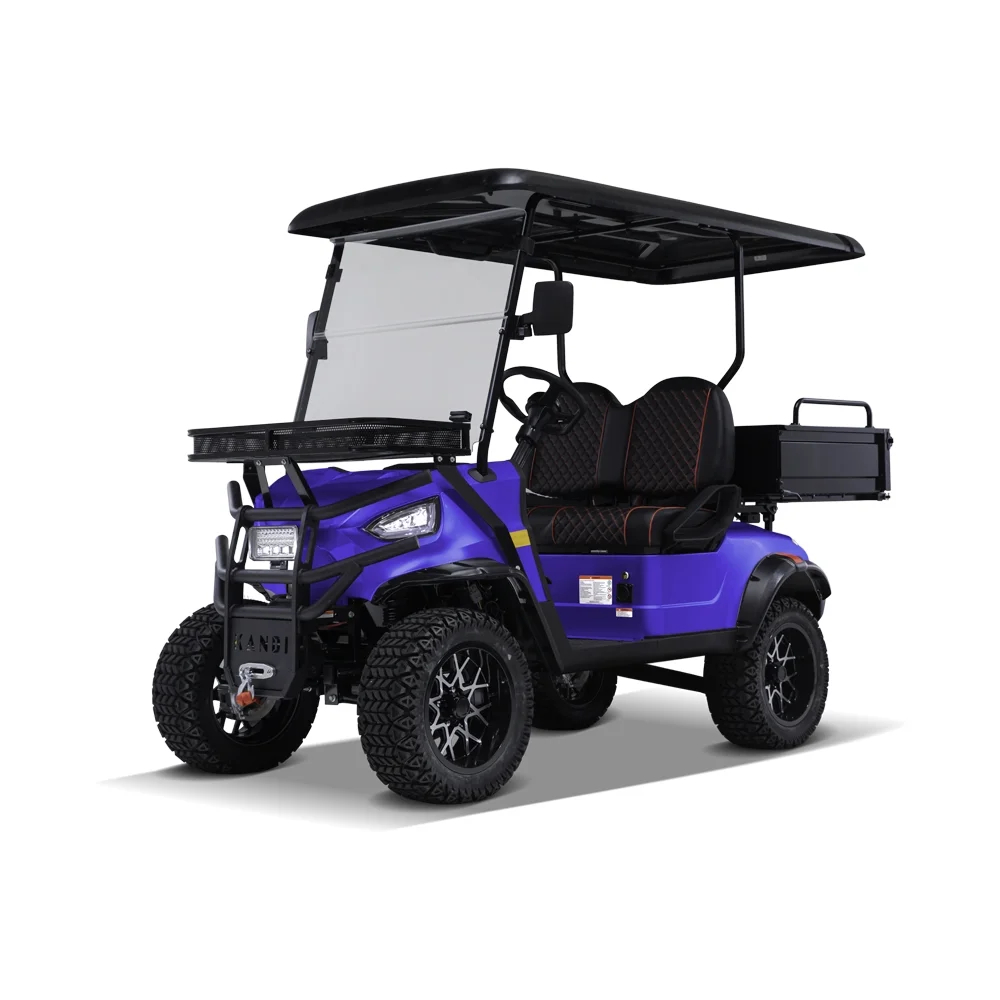
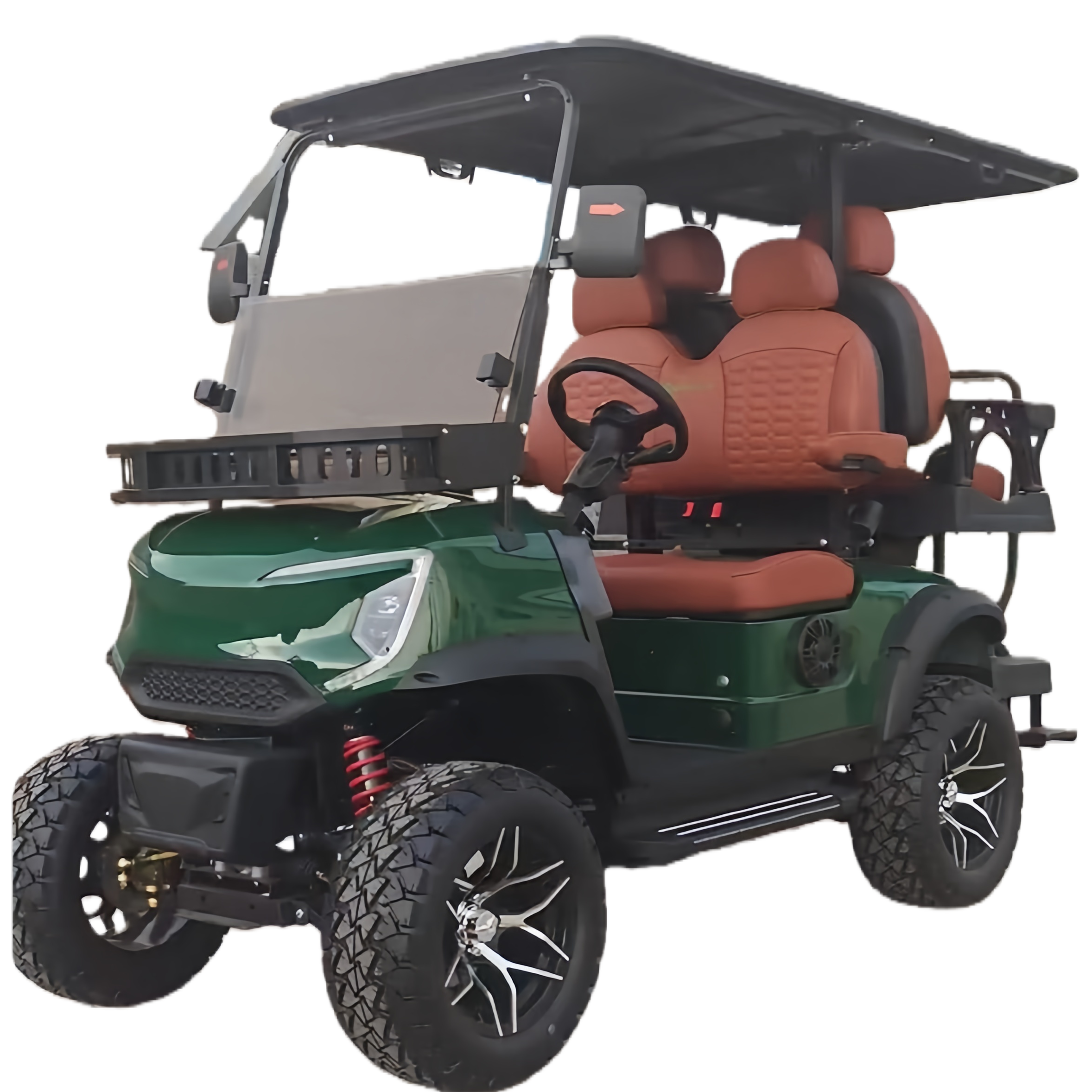
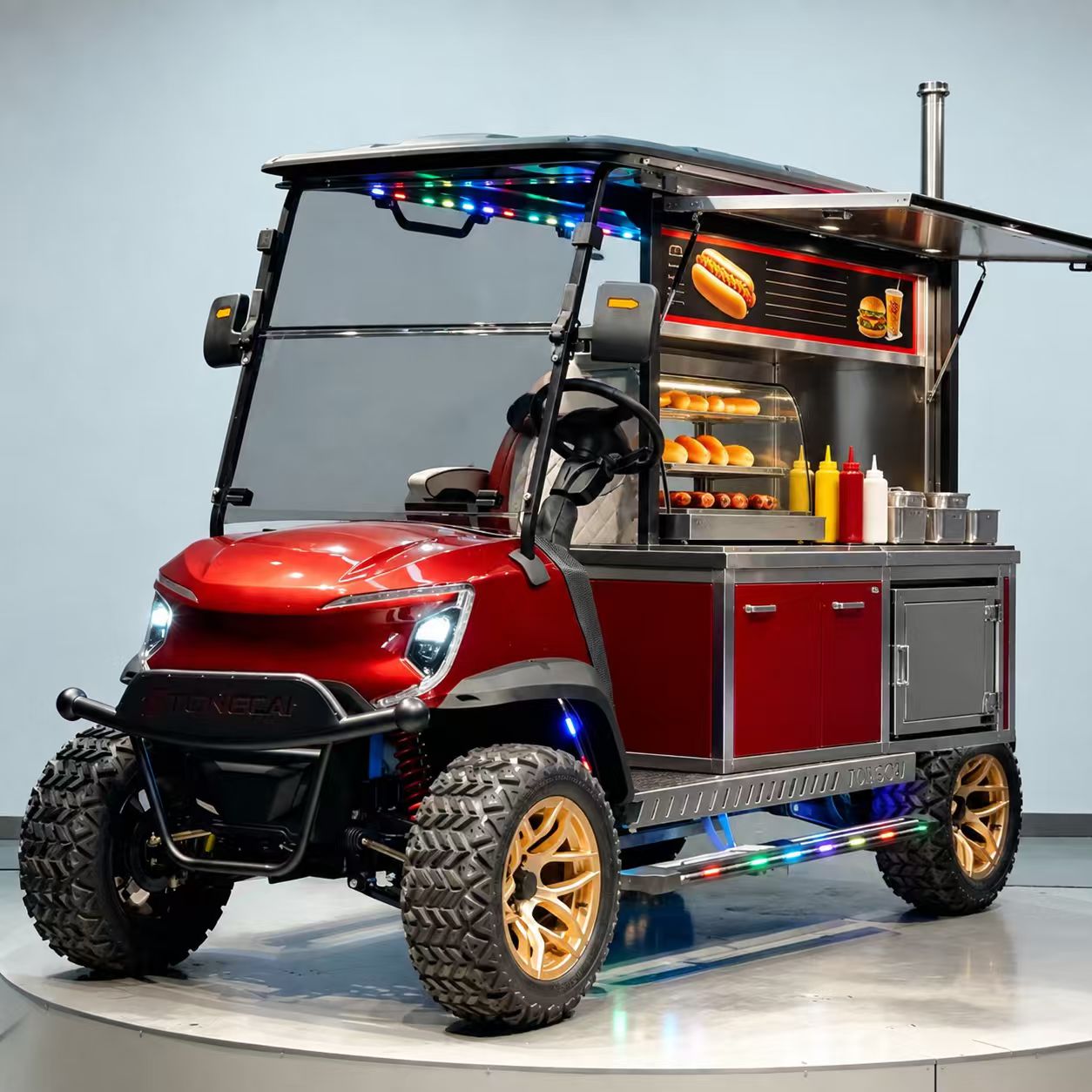
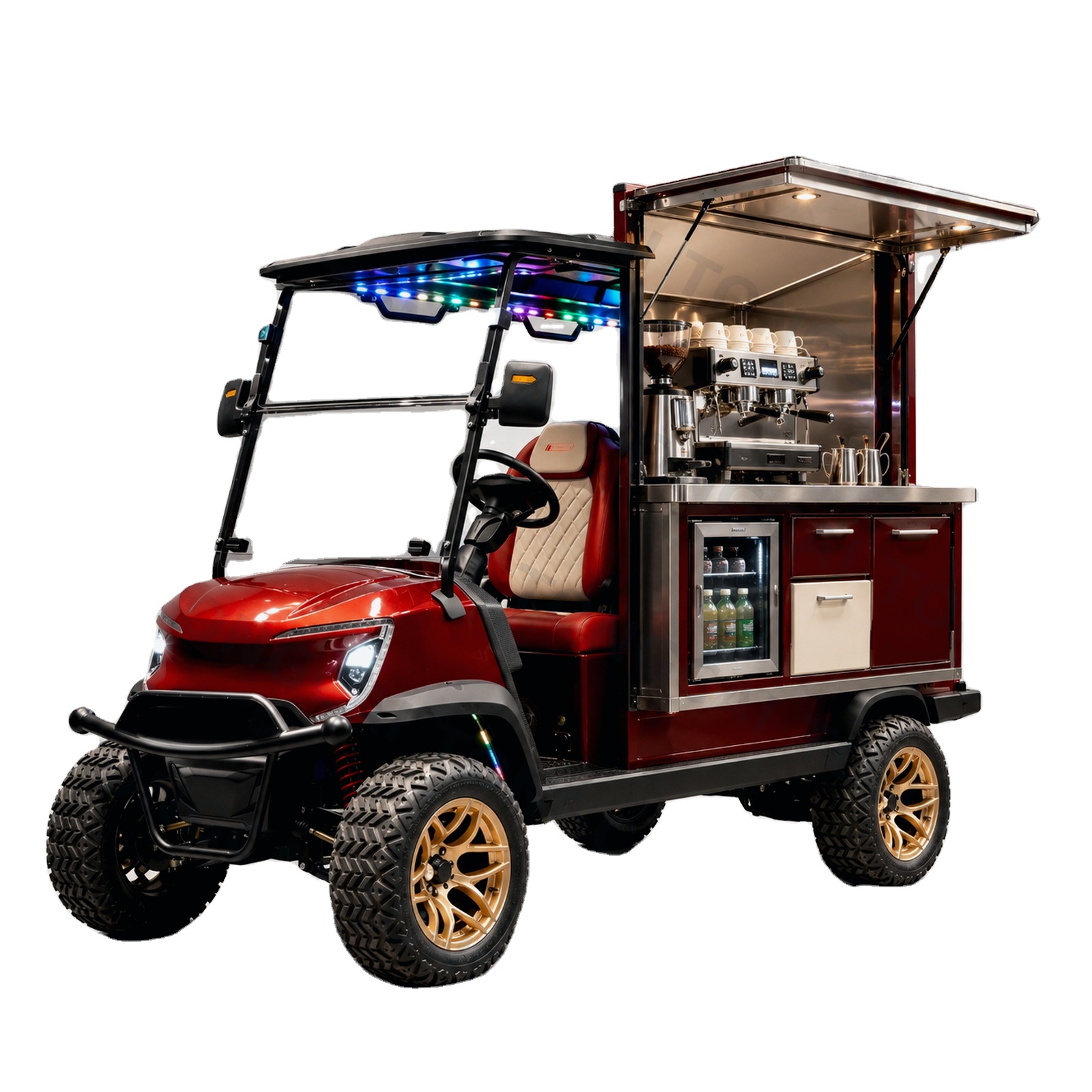
Capital expenditure efficiency dictates that fleet platforms must serve fluid commercial roles. Modern chassis designs, such as CCB's proprietary modular platforms, utilize commonized mounting points allowing rapid fleet conversion. A standard 4-passenger resort vehicle can be transitioned within hours to a cargo flatbed utility transporter, an enclosed mobile security buggy, or a customized mobile retail and beverage vending station. This modular agility empowers distributors to maintain lean inventory while addressing divergent commercial client requests.
The 12-Stage Manufacturing Protocol: Inside CCB's Dezhou Production Facility
Quality is not inspected into a vehicle; it is systematically engineered through disciplined, repeatable workstation operations. At Shandong CCB New Energy Machinery Co., Ltd., our 61+ seasoned technical specialists and certified mechanical engineers execute an unbroken 12-stage manufacturing and verification regime that surpasses standard commercial assembly benchmarks:
Stage 01-03
Material Shaping
Raw structural steel laser cut to ±0.2mm tolerances, followed by CNC multi-axis precision machining and hydraulic mandrel pipe bending.
Stage 04-05
Robotic Fabrication
Fixtured MIG/TIG chassis welding with continuous seam grinding, followed by full-immersion cathodic electrocoating and powder curing.
Stage 06-08
Subsystem Assembly
Precision installation of transaxles, independent A-arm suspensions, hydraulic braking manifolds, steering assemblies, and wire harnesses.
Stage 09-12
FQC & Validation
LiFePO4 battery integration, injection-molded body fitment, dyno rolling-road brake calibration, and high-pressure water spray hermeticity testing.
B2B Commercial Procurement FAQ
Direct technical and logistical insights addressing the most critical concerns of international fleet importers, government contractors, and commercial distribution syndicates.
What is the minimum order quantity (MOQ) and production lead time?
For standard catalog configurations, we support a minimum order quantity (MOQ) of just 1 unit to facilitate engineering evaluation, homologation testing, and regional distributor verification. Standard container-volume production cycles (10 to 40 units) are executed within 15 to 25 business days from CAD freeze and deposit confirmation.
What specific advantages does CCB's 72V LiFePO4 architecture offer over lead-acid?
Our automotive-grade 72V LiFePO4 systems slash curb weight by up to 140 kg, drastically improving vehicle payload and hill-climbing acceleration. They achieve an exceptional lifespan of over 3,500 charge cycles (compared to 500 for lead-acid), zero maintenance downtime, rapid 2-3 hour recharging, and an unmatched 5-year factory-backed battery warranty.
Can CCB accommodate full private-label OEM branding and custom utility coachwork?
Yes. As a verified Custom Manufacturer, we specialize in comprehensive OEM/ODM programs. We offer Pantone-matched UV-resistant body molding, custom-embroidered seating, bespoke dash consoles, extended chassis wheelbases (2 to 10 passenger layouts), integrated solar roof charging arrays, and application-specific utility beds or vending structures.
How does CCB manage shipping density and international freight damage mitigation?
To drastically compress maritime freight expenses, we engineer bespoke steel nesting shipping racks supporting Semi-Knocked-Down (SKD) and Completely-Knocked-Down (CKD) logistics. A standard 40ft High Cube container can securely accommodate up to 18 units in SKD formation or 30+ units in CKD configuration, accompanied by comprehensive illustrated re-assembly documentation.
Which safety and regulatory certifications accompany CCB vehicle shipments?
CCB vehicles are manufactured under ISO 9001 quality management parameters. Our export lines feature comprehensive European CE conformity, TÜV Rheinland on-site factory audit verification, and selected model configurations engineered to comply with US DOT / FMVSS 500 LSV regulations and EEC homologation requirements.
What technical post-sale support and spare parts provisioning does the factory supply?
Every commercial distributor is paired directly with a dedicated factory service engineer. We provide complete electrical schematics, exploded-view component catalogues, OBD diagnostic handheld scanners, and maintain guaranteed dispatch of critical drivetrain and chassis wear parts within 48 hours via international express freight.
Strategic Factory Advantages: Why Partner with CCB New Energy?
In an international procurement landscape congested with trading brokers and non-integrated assembly shops, Shandong CCB New Energy Machinery Co., Ltd. delivers direct factory transparency, engineering precision, and enduring commercial viability.
TÜV On-Site Verified Facility
Audited by TÜV Rheinland for production integrity, worker safety, mechanical tooling accuracy, and documented QA/QC track records, eliminating operational and financial risks for overseas corporate procurement teams.
Direct Engineering Access
No intermediaries, sales brokers, or third-party commission tiers. Global buyers collaborate directly with our internal mechanical, electrical, and CAD design teams to configure drivetrains, suspensions, and chassis dimensions suited to exact operational needs.
Multilingual Global Export
With an established export track record across 16+ core international markets including North America, Europe, Australia, the Middle East, and Southeast Asia, our logistics department seamlessly manages all maritime bookings, bills of lading, and export compliance.
Initiate Your Commercial Fleet Customization
Connect directly with CCB's engineering desk to request comprehensive CAD dimensions, factory pricing matrices, container loading plans, and formal sample evaluations.
 Deutsch
 Português
 Español
 Français
 Italiano
 Русский
 한국어
 日本語
 العربية
 ไทย
 Tiếng Việt
 Türkçe
 Nederlands
 Indonesia
 עברית
 हिन्दी