Precision Engineering, Automotive-Grade LiFePO4 Drivetrains, and Industrial OEM/ODM Assembly for Global Commercial Fleets, Golf Resorts, and Utility Transport.
Commercial Product Portfolio
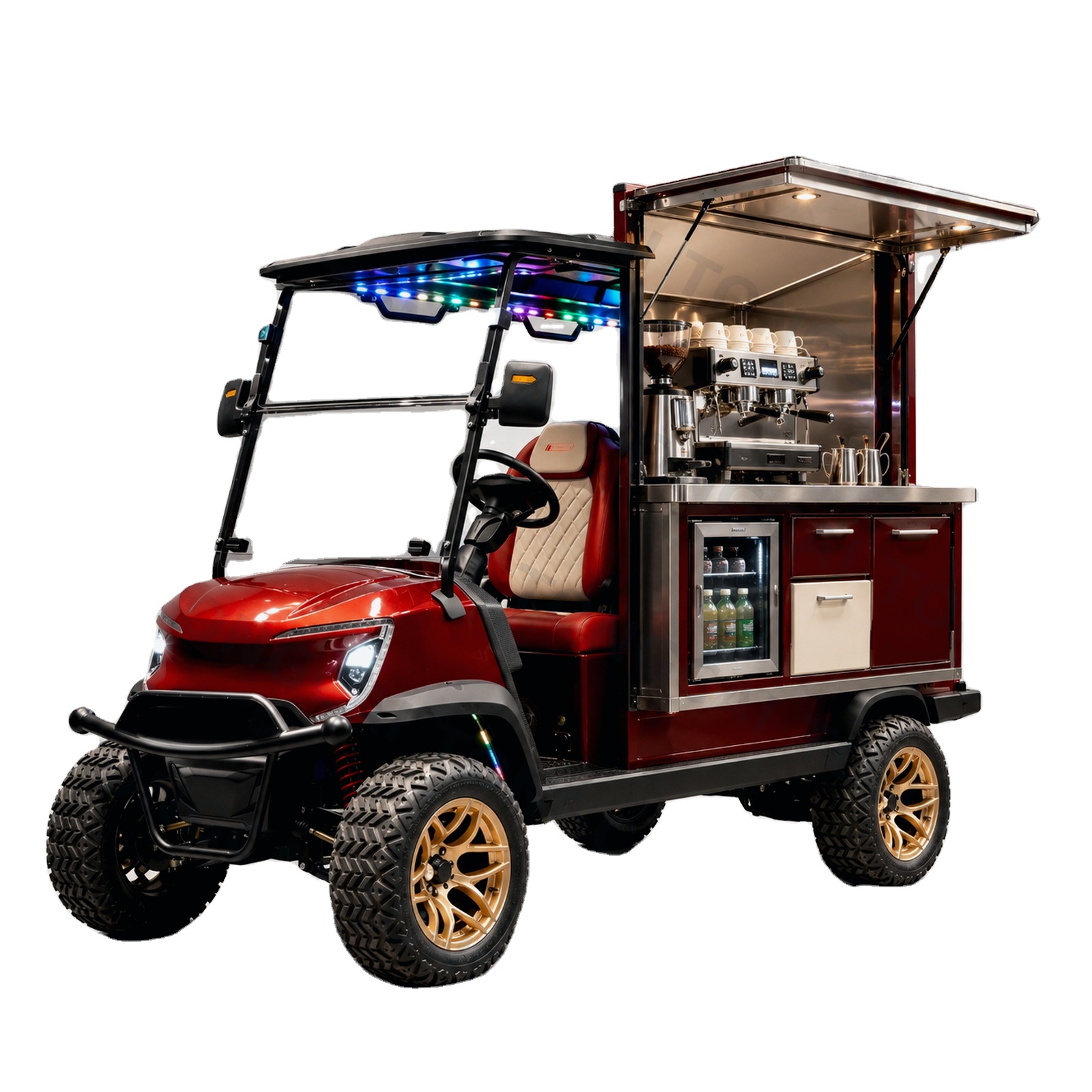
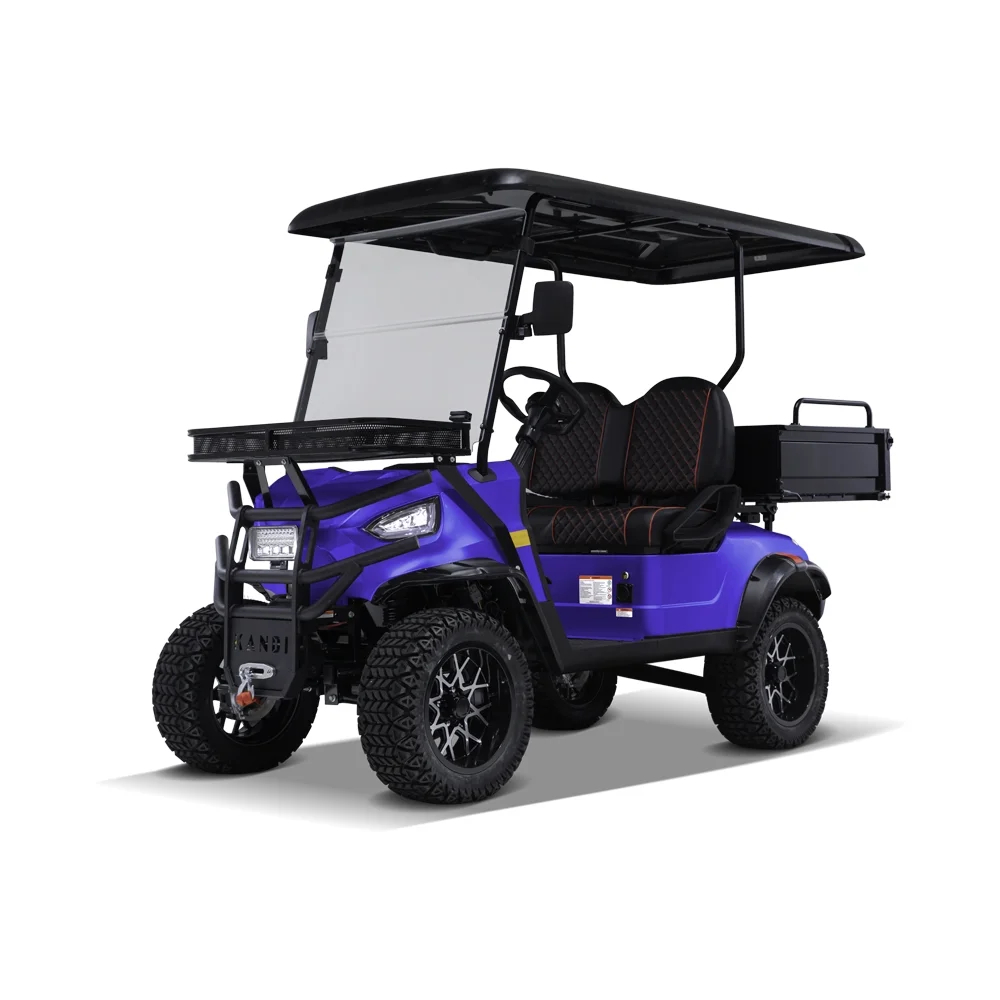
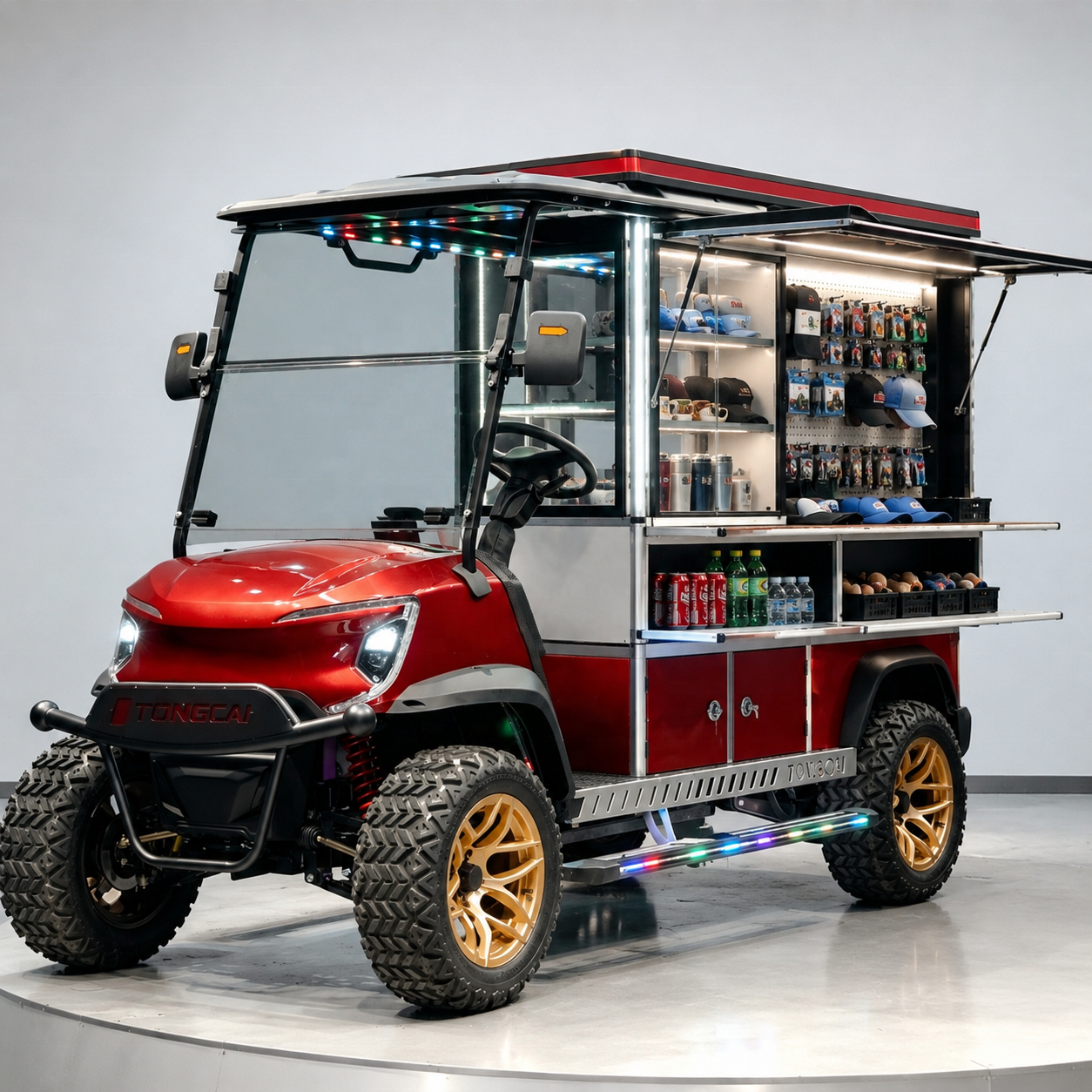
Featured Lithium Golf Carts & Specialized Commercial Electric Vehicles
Engineered for commercial resilience, resort mobility, low-speed road utility (LSV), and retail applications. Direct factory pricing with sample orders starting from 1 unit.
The global low-speed vehicle (LSV) and electric golf cart sector is undergoing a profound technological transformation. For decades, commercial fleet operators, municipal utility managers, and resort directors accepted the structural handicaps of deep-cycle Flooded Lead-Acid (FLA) and Absorbed Glass Mat (AGM) battery configurations. These limitations included severe terminal sulfation, extreme degradation under high-temperature ambient conditions, excessive curb weight leading to turf compaction, prolonged charging windows (8 to 11 hours), and the perpetual maintenance burden of electrolyte balancing.
As the leading Chinese original equipment manufacturer (OEM), Shandong CCB New Energy Machinery Co., Ltd. (operating our advanced manufacturing complex in Tianqu Industrial Park, Dezhou, Shandong) has spearheaded the integration of high-density Lithium Iron Phosphate (LiFePO4) chemistry directly into commercial vehicle platforms. LiFePO4 cells deliver an unmatched thermal decomposition threshold of approximately 270°C (compared to 150°C for traditional lithium ternary NCM chemistries), eliminating thermal runaway risks in commercial applications while guaranteeing over 3,500 continuous charging cycles at 80% Depth of Discharge (DoD).
Fleet TCO Economic Reality: While an initial lithium-equipped golf cart fleet presents an upfront equipment cost premium of approximately 18% to 24% over legacy lead-acid vehicles, the total cost of ownership (TCO) drops by 42.6% over a standard 6-year commercial operating horizon. This savings is achieved through zero battery watering labor, 35% higher energy conversion efficiency, and zero mid-lifecycle battery pack replacements.
Total Cost of Ownership (TCO) & Mechanical Comparison: 72V Lithium vs. 48V Lead-Acid Fleet
When engineering fleet economics, global distributors must evaluate core mechanical and electrochemical metrics across the complete asset lifecycle:
Performance Parameter
Traditional Lead-Acid Fleet (48V)
CCB Industrial LiFePO4 System (72V / 105Ah)
Procurement Strategic Advantage
Cycle Life Expectancy (80% DoD)
500 – 750 cycles (18–24 months)
3,500 – 4,500 cycles (8–10 years)
5x Asset Longevity
Pack Weight & Curb Impact
160 kg – 210 kg (Heavy ballast)
42 kg – 58 kg (Lightweight)
Reduced Chassis & Turf Stress
Charge Acceleration Curve
8 to 10 hours (Requires cool-down)
2 to 3 hours (Opportunity charging)
Continuous Multi-Shift Fleet Utility
Volumetric Energy Efficiency
~70% (Significant thermal dissipation)
>96% (Negligible internal resistance)
30% Monthly Utility Bill Reduction
Daily Voltage Stability
Steep voltage drop under 40% SoC
Flat discharge plateau (Constant torque)
Consistent Hill-Climbing Power
BMS Protection & Telematics
None (Blind cell degradation)
Active CAN-Bus smart BMS with IoT
Remote Cellular Diagnostics
Proprietary Battery Management Systems (BMS) and Active Thermal Regulation
A golf cart is only as reliable as its battery management system. CCB's proprietary lithium power trains integrate dual-microprocessor automotive BMS modules communicating via CAN 2.0B protocols. This system continuously monitors individual cell voltages, milliohm internal impedance variations, and multi-point pack temperatures. If an over-current event, short-circuit anomaly, or thermal gradient exceeding 5°C between interior cells is detected, solid-state contactors isolate the power bank in under 12 milliseconds, safeguarding both vehicle operators and facility infrastructure.
Enterprise Advantages: Integrated In-House Manufacturing at Our Dezhou Plant
Unlike regional trading intermediaries or assembly-only workshops that outsource chassis fabrication to disparate third-party job shops, Shandong CCB New Energy Machinery Co., Ltd. maintains absolute vertical integration across our 14,200 square meter Dezhou manufacturing plant. Every structural chassis, protective roll bar, suspension arm, and electrical wiring harness is produced, coated, and inspected under our direct ISO9001 and TÜV Rheinland-audited manufacturing protocols.
TÜV Rheinland Audited Facility
Our complete workshop operations, weld integrity logs, and export testing stations undergo strict on-site verification, assuring international distributors of factory-direct compliance.
Automated CNC Laser Cutting
High-precision fiber laser cutting systems ensure structural steel tubing and aluminum subframes achieve dimensional tolerances within ±0.05mm across all production runs.
Cathodic Electrophoresis (E-Coat)
To resist coastal salt air, island humidity, and harsh golf fertilizers, all steel frames undergo automated multi-stage immersion electrophoresis and electrostatic powder baking.
Robotic Fixture Welding
Automated multi-axis welding robots execute uniform bead penetration on critical suspension and chassis anchor points, eliminating human structural fatigue variances.
Tier-1 Powertrain Sourcing
Equipped exclusively with world-class Curtis or Enpower AC vector controllers paired with high-torque Mahle or KDS brushless AC induction motors up to 7.5kW peak rating.
100% Dynamometer Testing
Every cart rolling off our final assembly track undergoes 100% dynamometer load testing, 30% incline brake holding tests, and waterproof deluge electrical verification.
The 12-Stage Factory Quality Protocol
Our factory operates according to a strict 12-stage sequential quality validation workflow. This ensures complete component traceability from the raw steel tubing yard to ocean container lashing:
Future Procurement Trends: Where the Global Electric Utility Cart Market is Heading
Professional B2B buyers, resort developers, and equipment leasing firms must anticipate market shifts before locking in multi-year capital expenditure contracts. Over the 2025 to 2030 horizon, the golf cart and LSV landscape is separating itself from consumer recreational toys into highly engineered, connected light commercial assets. The key technological and regulatory trends shaping this transition include:
1. The Transition from 48V to 72V Standard Architecture
While 48-volt architectures have long served basic 2-passenger fairway use, commercial operators increasingly demand 72-volt drivetrains. By elevating nominal bus voltage to 72V, electrical current draw is reduced by 33% for an identical mechanical power output (P = V × I). Lower current flow drastically reduces I²R resistive heat generation within the motor windings, controller, and wiring loom, resulting in a cooler-running powertrain, heightened hill-climbing torque for elevated topography, and extended vehicle range under full passenger loads.
2. Cloud Fleet Telematics, Remote Diagnostics, and Geofencing (IoT)
Modern golf resorts, university campuses, and gated communities demand full real-time visibility over their mobile inventory. Our next-generation carts integrate 4G LTE IoT telematics gateways directly into the controller's CAN-bus network. Fleet supervisors can establish virtual GPS geofencing boundaries, automatically reducing speed or disabling vehicles that stray outside authorized resort paths. Crucially, engineering teams can monitor battery health indices, cycle histories, and system error codes remotely from any web dashboard, enabling proactive maintenance before roadside component failures occur.
3. Homologation Compliance: FMVSS 500 LSV and European L7e Certification
Municipal zoning updates across the United States, Europe, and the Middle East are expanding the legal privileges of Low-Speed Vehicles (LSVs) on public roadways with posted speed limits up to 35 mph (56 km/h). Procurement specialists must verify whether suppliers can manufacture compliant platforms equipped with DOT-certified laminated glass windshields, automotive wipers, three-point inertia seatbelts, side rearview mirrors, illuminated turn signals, and dual-split hydraulic disc braking circuits required under Federal Motor Vehicle Safety Standard 500 (FMVSS 500) and European Regulation (EU) No 168/2013 (L7e-A2 category).
4. Solar Roof Integration for Range Extension
Integrated flexible monocrystalline solar roofs (150W to 300W peak output) are shifting from high-end novelties to essential commercial upgrades. With integrated MPPT (Maximum Power Point Tracking) step-up charge controllers, rooftop solar captures 0.8 to 1.5 kWh of clean auxiliary power daily under typical sunlight conditions. In resort and rental operations, this provides 8 to 15 kilometers of free daily operational range while keeping lithium cells balanced during prolonged outdoor idle periods.
B2B Sourcing Guide: How to Safely Import Lithium Golf Carts from China
Importing light electric vehicles requires strategic planning spanning engineering specifications, ocean freight packing efficiency, and customs clearance procedures. To safeguard your investment and maximize container freight margins, follow our factory engineering recommendations:
Optimizing Container Stuffing: SKD vs. CKD Configurations
Ocean freight represents a major component of landed unit costs. When ordering from Shandong CCB New Energy Machinery Co., Ltd., international distributors can choose between two packaging paradigms:
Semi-Knocked Down (SKD): Vehicles arrive with the chassis, motor, suspension, and wiring pre-assembled. The roof struts, roof canopy, windshield, and steering wheel are stowed within a reinforced steel outer crate. A standard 40-foot High Cube (40HQ) maritime container accommodates 16 to 18 units of standard 4-passenger models. SKD allows local dealerships to commission each cart in under 45 minutes using standard shop hand tools.
Completely Knocked Down (CKD): For high-volume regional distributors with local assembly facilities and favorable import tariff differentials on vehicle components, CKD packing allows up to 30 to 36 units to be packed within a single 40HQ container. We provide step-by-step video assembly documentation, standardized wiring schematics, and color-coded harnesses.
Lithium battery systems shipped by sea must strictly comply with International Maritime Dangerous Goods (IMDG) Class 9 standards. CCB ensures all lithium golf carts ship with genuine UN38.3 vibration/shock/thermal testing reports, Material Safety Data Sheets (MSDS), and sea freight container seaworthiness inspection certifications. Our export desk coordinates directly with major ocean carriers (Maersk, MSC, COSCO) to ensure hassle-free customs clearance at entry ports across North America, Europe, Australia, and Latin America.
Procurement Direct Answers
Frequently Asked Questions by Commercial Buyers
Clear, engineering-backed answers addressing the most common technical, logistics, and customization questions from overseas golf cart distributors.
What is the Minimum Order Quantity (MOQ) for custom OEM orders?
To support market testing and dealer evaluations, our factory accepts sample orders starting from 1 single unit for standard catalog configurations. For complete OEM private-label production (including custom injection mold colors, laser-cut dealer logos, custom embroidery, and specialized speed/acceleration controller tuning), full container-level orders (20GP or 40HQ) unlock zero-surcharge OEM branding services.
How does CCB handle after-sales engineering and warranty claims for overseas fleets?
We back our commercial vehicles with a standard 5-year warranty on LiFePO4 battery packs and a 2-year warranty on chassis frames, AC motors, and electronic controllers. For routine maintenance, we provide a designated percentage of critical wear items (brake pads, relays, bushings, LED lenses) directly inside the container delivery. In case of complex technical faults, our bilingual electrical engineers provide remote CAN-bus diagnostic readouts and dispatch replacement modular components via DHL/FedEx within 48 hours.
Can CCB configure lifted suspension systems for rough terrain and hunting use?
Yes. We engineer heavy-duty lifted chassis variants featuring double A-arm independent front suspension, heavy-duty rear trailing arms, hydraulic coil-over shock absorbers, and 23-inch all-terrain tires mounted on 12-inch or 14-inch aluminum alloy wheels. These configurations provide up to 210mm of ground clearance, making them ideal for hunting ranches, agricultural estates, and rugged coastal developments.
What is the standard production lead time for full container orders?
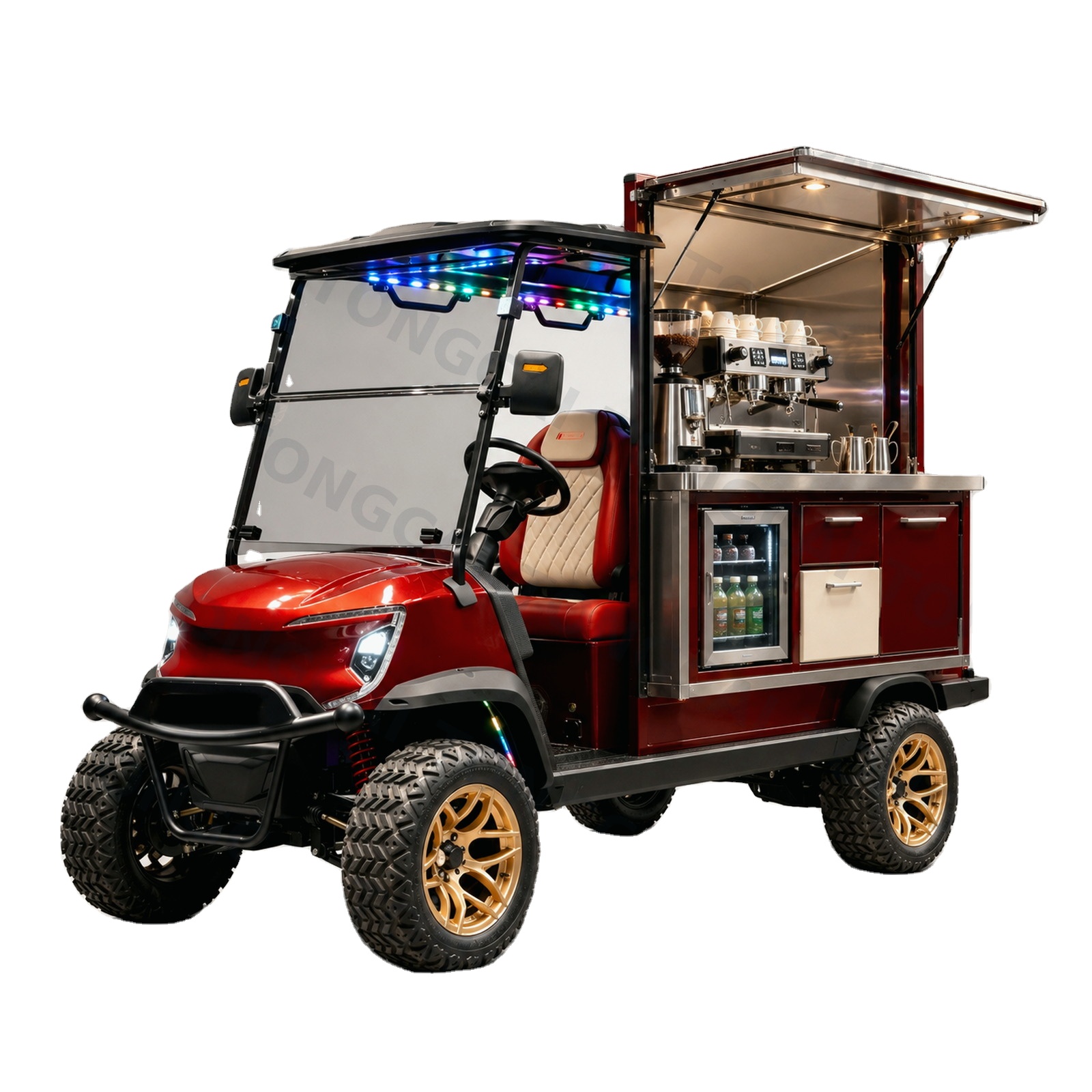
Standard production lead time for an SKD container load (typically 16 to 18 vehicles) is 20 to 25 calendar days from the receipt of down payment and final configuration sign-off. For customized private-mold projects or custom-designed commercial vending vehicle fleets requiring bespoke cabinetry, lead times range between 30 and 40 days.
Are CCB electric golf carts certified for export to the US, EU, and Australia?
Yes. Our core product lines carry CE certification, ISO9001 quality management adherence, and our factory has undergone on-site physical auditing by TÜV Rheinland. For North American buyers, we configure models compliant with FMVSS 500 low-speed vehicle guidelines with VIN generation capabilities. For European clients, EEC homologated options are available upon specification review.
Connect Directly with Our Dezhou Factory Engineering Team
Accelerate your dealership expansion or resort fleet upgrade. Request our comprehensive 2025 engineering catalog, full factory price list, container stuffing plans, and warranty terms.
 Deutsch
 Português
 Español
 Français
 Italiano
 Русский
 한국어
 日本語
 العربية
 ไทย
 Tiếng Việt
 Türkçe
 Nederlands
 Indonesia
 עברית
 हिन्दी