TÜV Rheinland Audited Facility • ISO 9001 Certified OEM
China Best Golf Buggy Manufacturers & Exporter
Global B2B Sourcing Authority: Commercial LSV Engineering, LiFePO4 Automotive Powertrain Integration, and Turnkey Export Logistics
Export-Grade Fleet Solutions
Engineered Electric Golf Buggies & Commercial Utility Fleets
Direct factory manufacturing featuring automotive-grade controllers, modular aluminum chassis configurations, and long-range lithium iron phosphate (LiFePO4) systems built for extreme resort, municipal, and institutional duty cycles.
Why Global Fleet Importers Partner with Shandong CCB
Unlike trading brokers assembling low-cost outsourced sub-frames, Shandong CCB New Energy Machinery Co., Ltd. operates a fully integrated, on-site verified production plant in Dezhou, Shandong. We maintain comprehensive control from metallurgical tube forming to proprietary CAN-bus programming.
In-House Structural Fabrication
We engineer our chassis from heavy-wall Q235 structural steel and 6061-T6 aerospace aluminum alloys. In-house CNC laser cutting, multi-axis automated pipe bending, and continuous robotic MIG welding prevent stress cracking on undulating off-road terrain.
Every structural weld undergoes ultrasonic flaw testing. Frames are treated through an automated 8-stage cathodic electrodeposition (e-coating) dipping tank, delivering over 1,000 hours of ASTM B117 salt spray resistance for coastal resort deployments.
Automotive-Grade Powertrain Calibration
We standardize on high-torque AC induction and Permanent Magnet Synchronous Motors (PMSM) manufactured to IP67 ingress protection. Coupled with industry-standard Curtis and Enpower programmable solid-state controllers, our systems yield 94% motor efficiency.
Our software engineering desk customizes acceleration profiles, regenerative braking torque, maximum velocity governors, and ramp hold-off characteristics directly through CAN-bus interface protocols to meet distinct municipal and country-specific LSV mandates.
TÜV Rheinland Audited Quality Management
Operating under strict ISO 9001:2015 frameworks, our facility welcomes overseas factory audits and third-party inspection agencies (SGS, TÜV, Bureau Veritas). Quality checkpoints are hardcoded into every stage of production.
From incoming raw cell testing via automated battery cyclers to dyno chassis load tests, rain-chamber water intrusion tests, and brake stopping distance validation, zero defects pass to the crating department.
Manufacturing Traceability
The 12-Stage In-House Production & QC Architecture
B2B fleet buyers require absolute repeatability. We trace every chassis serial number through a 12-step serialized manufacturing process, guaranteeing that the 500th golf buggy matches the initial pre-production engineering prototype.
PHASE 01
Fiber Laser Tube Cutting
High-speed automated CNC laser cutting ensures raw tube profiles, joint notches, and bolt pass-throughs achieve ±0.1mm dimensional tolerance.
PHASE 02
Precision CNC Machining
Suspension knuckle mounts, spindle receivers, and kingpin brackets are milled on 4-axis machining centers to eliminate wheel alignment drift.
PHASE 03
Hydraulic Multi-Radius Bending
CNC roll-cage and canopy frame bending preserves metal tensile integrity along compound radii without structural necking or crimping.
PHASE 04
Fixture Robotic Welding
Heavy pneumatic clamp jigs maintain frame geometry under robotic shielding gas arc welding, eliminating thermal deformation across structural axes.
PHASE 05
Cathodic Electro-Coating (E-Coat)
Total immersion dip-tank application deposits an even 25μm anti-corrosive primer layer across exterior surfaces and inside hollow tubing cavities.
PHASE 06
Electrostatic Powder Topcoat
Automotive polyurethane curing ovens create UV-stabilized exterior body finishes resistant to fairway chemicals, coastal salt air, and scuffing.
PHASE 07
Drivetrain & Transaxle Assembly
Integration of low-noise helical-cut transaxles, heavy-duty independent double A-arm front wishbones, and automotive hydraulic dampers.
Selecting the appropriate voltage, transaxle, and battery chemistry is critical for fleet longevity. Review our comparative engineering matrix to align your sourcing order with regional terrain and usage profiles.
Theme Parks, International Airports, Hotel Transfers
CE • Commercial LSV
Strategic Sourcing Intelligence
Product Development & Global Procurement Trends (2025–2030)
The low-speed electric vehicle (LSV) and golf buggy export sector is experiencing structural technological shifts. Commercial fleet buyers who adapt to these emerging realities capture distinct operational cost advantages.
1. The Sunset of Deep-Cycle Lead-Acid Batteries
Over 88% of current B2B enterprise procurement tenders mandate Lithium Iron Phosphate (LiFePO4) over flooded lead-acid chemistry. The mathematical justification is undeniable: while initial acquisition cost sits 18% higher, lithium delivers 3,500+ cycles at 80% Depth of Discharge (DoD) compared to 600 cycles for lead-acid.
Furthermore, the 130kg chassis weight reduction extends motor brush life, reduces fairway soil compaction, cuts terminal charging kilowatt consumption by 32%, and eliminates expensive dedicated acid-ventilation charging shed infrastructure.
2. Fleet Telematics, IoT & Geofencing Control
Commercial course managers and resort groups are moving away from disconnected analog golf carts. Future-ready procurement contracts specify 4G/GPS telematics modules integrated directly with the vehicle's electronic controller.
Our latest models support real-time digital geofencing (automatically limiting speed or braking if buggies enter sensitive green areas), continuous state-of-health (SoH) battery diagnostics, remote over-the-air (OTA) firmware tuning, and automated maintenance scheduling alert systems.
3. Solar Roof Trickle Systems & Green Energy Mandates
With global resort conglomerates committing to Net-Zero ESG metrics, integrated monocrystalline photovoltaic solar roofs are transitioning from an eccentric gimmick to a high-ROI fleet standard.
CCB's advanced 200W-350W walk-on flex-cell solar canopies generate 1.2kWh to 1.8kWh of continuous supplementary energy during sunny operating hours. This solar trickle architecture extends everyday runtime by 15-22km, buffering fleet availability during peak tourist turnaround hours.
4. Modular Dual-Purpose Utility Configurations
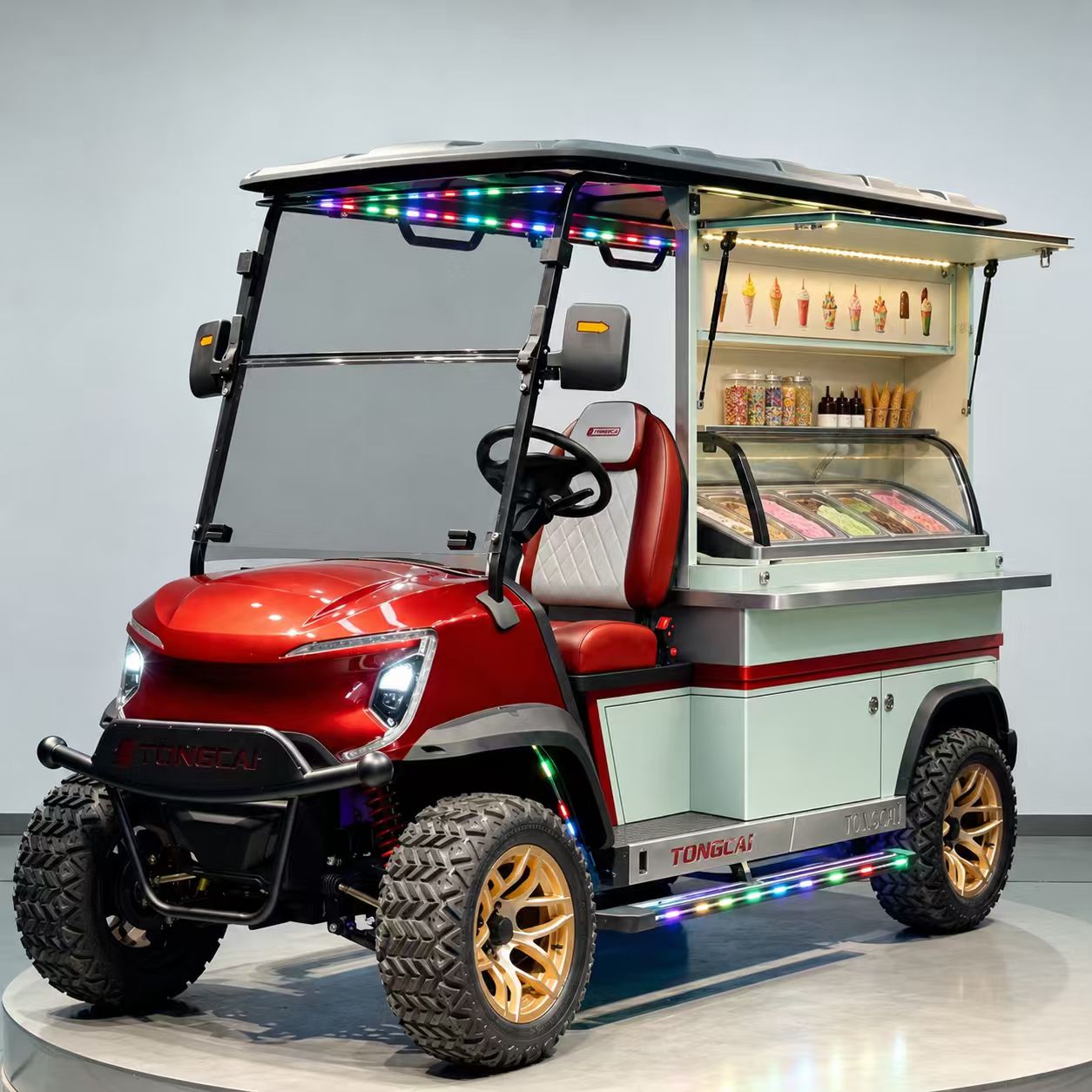
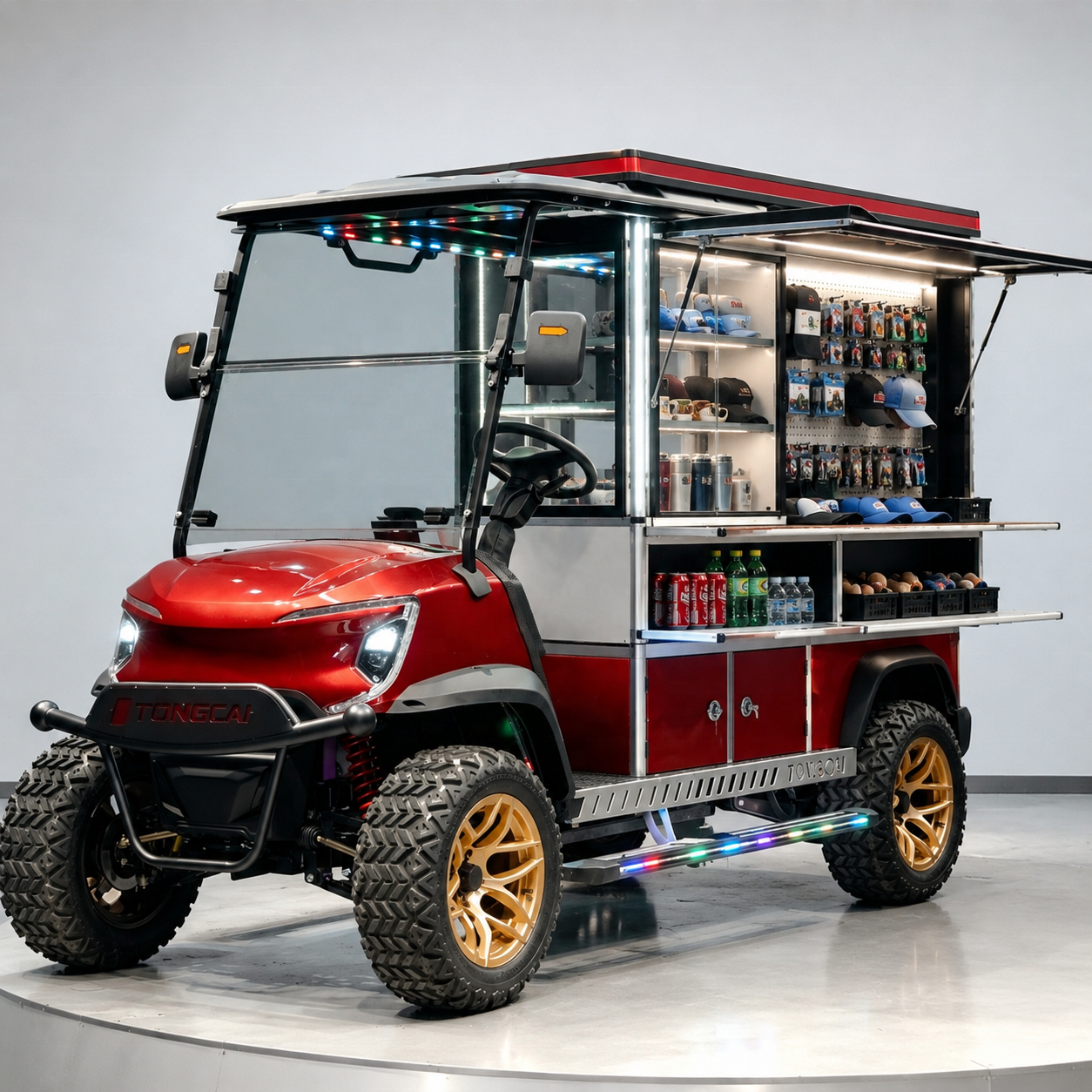
Municipalities and hospitality venues increasingly avoid single-function assets. Sourcing trends highlight quick-release modular rear sub-frames that transform a 4-passenger cart into a flatbed cargo carrier, hospitality beverage station, or campus maintenance vehicle within five minutes.
By procuring multi-purpose modular chassis, fleet buyers achieve 40% higher fleet utilization during off-peak seasonal months without purchasing duplicate rolling chassis platforms.
5. Strict Shipping Logistics & SKD Optimization
Skyrocketing ocean container freight demands engineering solutions at the factory dock. Traditional CBU (Completely Built Up) shipping allows only 4-6 golf buggies inside a standard 40-foot High Cube (40HQ) maritime container.
Shandong CCB has perfected our proprietary SKD (Semi-Knocked Down) steel racking system. By unbolting roof canopies and wheels into specialized jigs, we safely pack 18-24 units per 40HQ container, slashing per-unit ocean freight expenditures by over 60%.
6. LSV Street-Legal Homologation Convergence
Distributors in North America and the European Union are prioritizing street-legal Low Speed Vehicle (LSV) certification. Vehicles require DOT-certified seat belts, AS1 automotive safety glass, integrated side mirrors with turn signals, and VIN plates.
Partnering with a manufacturer experienced with EEC L7e and US FMVSS 500 regulations ensures vehicles clear destination customs effortlessly and qualify for regional green vehicle registration subsidies.
Clear, definitive answers to the most common legal, mechanical, financial, and logistical inquiries submitted by commercial golf cart importers and fleet managers.
What is the Minimum Order Quantity (MOQ) and lead time for OEM custom orders?
To assist global distributors with initial market homologation and fleet sampling, our catalog golf buggy models can be ordered starting from a single unit (1 sample). For customized OEM branding (custom custom corporate colorways, embroidered seat logos, customized front cowl styling, and unique dashboard electronics), the standard MOQ is 4 to 8 units (one 20ft container equivalent). Lead time for sample orders is 7–15 business days; containerized production runs typically ship within 20–30 days following engineering specification sign-off.
How does LiFePO4 compare against traditional Lead-Acid for golf resort fleets?
Lithium Iron Phosphate (LiFePO4) offers substantial operational advantages over lead-acid batteries. While lead-acid batteries degrade after 500-700 charge cycles and demand continual distilled water maintenance, terminal cleaning, and heavy ventilation, our automotive-grade LiFePO4 packs achieve 3,500+ full charge-discharge cycles with zero maintenance. They accept fast partial opportunity charging without cell memory degradation, shave over 100kg of dead weight off the vehicle, and maintain consistent motor speed and torque down to the final 5% of battery charge.
Can CCB manufacture golf buggies compliant with US DOT FMVSS 500 and EU L7e LSV regulations?
Yes. We engineer dedicated LSV packages equipped with DOT-approved laminated glass windscreens with wipers, three-point inertia-reel seatbelts, automotive LED headlights with high/low beams, turn signals, hazard lights, illuminated license plate brackets, horn, dual exterior rearview mirrors, and four-wheel hydraulic disc braking. We provide full 17-digit ISO VIN generation support and complete export documentation necessary for local Department of Motor Vehicles (DMV) registration and EU road homologation.
What anti-corrosion protection is applied to vehicles destined for seaside and tropical island resorts?
Coastal environments are brutal on standard metal frames. For island, seaside, and high-humidity golf resorts, we offer aircraft-grade 6061-T6 aluminum chassis systems that are naturally impervious to rust. For steel chassis models, we utilize an automated 8-stage cathodic electrodeposition (e-coating) dipping process that chemically coats inside hollow tubing, followed by an electrostatic thermosetting polyester powder topcoat tested to 1,000+ hours in ASTM B117 salt spray chambers. Fasteners and hardware are upgraded to grade 304 or 316 stainless steel, and electrical harnesses use IP67 sealed connectors.
How are warranty claims, field diagnostics, and replacement parts handled overseas?
We provide a 5-year structural warranty on chassis frames, a 3-year replacement warranty on lithium battery packs, and a 2-year warranty on AC motors and electronic controllers. Every container order includes a complimentary 2% critical spare parts consumable package (relays, switches, brake pads, bushings, and fuses). Our engineering desk provides 24/7 remote video diagnostic support, detailed wiring schematics, and controller diagnostic handheld units. In the rare event of a component failure, express DHL/FedEx air freight replacement parts are dispatched directly from our factory within 48 hours.
What container packing configurations (CBU vs SKD) do you offer to optimize ocean freight?
We offer two packing methodologies depending on your destination labor capabilities. Completely Built Up (CBU) vehicles arrive fully assembled in heavy iron protective cages; you simply unbox and roll the buggy out, fitting 6 units inside a 40HQ container. Alternatively, our Semi-Knocked Down (SKD) modular packing disassembles the wheels, steering wheel, and canopy roof supports, securing vehicles into stackable dual-tier steel modular racks. SKD packing dramatically increases 40HQ capacity up to 18-24 units, lowering international per-unit freight overhead by as much as 65%.
Connect Directly with Our Commercial Engineering Desk
Bypassing trading intermediaries saves up to 25% on fleet procurement capital expenditures. Request direct factory pricing, full technical CAD spec sheets, or custom OEM branding options today.
 Deutsch
 Português
 Español
 Français
 Italiano
 Русский
 한국어
 日本語
 العربية
 ไทย
 Tiếng Việt
 Türkçe
 Nederlands
 Indonesia
 עברית
 हिन्दी