Strategic Overview: The Evolution of Community Fleet Sourcing in 2025
The global community golf cart and low-speed electric mobility sector has shifted decisively from simple recreational fairway carts to purpose-engineered neighborhood electric vehicles (NEVs), multi-passenger hospitality shuttles, and electrified mobile commerce pods. For municipal planners, master-planned community (MPC) developers, luxury resort managers, and corporate fleet buyers, selecting a verified manufacturing partner in China requires looking beyond cosmetic chassis styling to evaluate structural welding standards, cathodic electrodeposition coatings, CAN-bus automotive architecture, and international low-speed motor vehicle (LSV) regulatory compliance.
Shandong CCB New Energy Machinery Co., Ltd., based in Tianqu Industrial Park, Dezhou, Shandong, operates at the forefront of this industrial transformation. Spanning a verified 14,200 m² modern manufacturing footprint audited on-site by TÜV Rheinland, CCB integrates complete in-house metal fabrication, CNC tube bending, robotic welding, electro-coating, and electrical subsystem integration. This report breaks down recommended OEM/ODM community vehicle models, macro purchasing trends, engineering benchmarks, and technical risk mitigations for international procurement directors.
High-torque closed-circuit community recreational kart featuring 75 km/h top capability, 200 kg payload chassis, and programmable acceleration curves for tracks and resort entertainment.
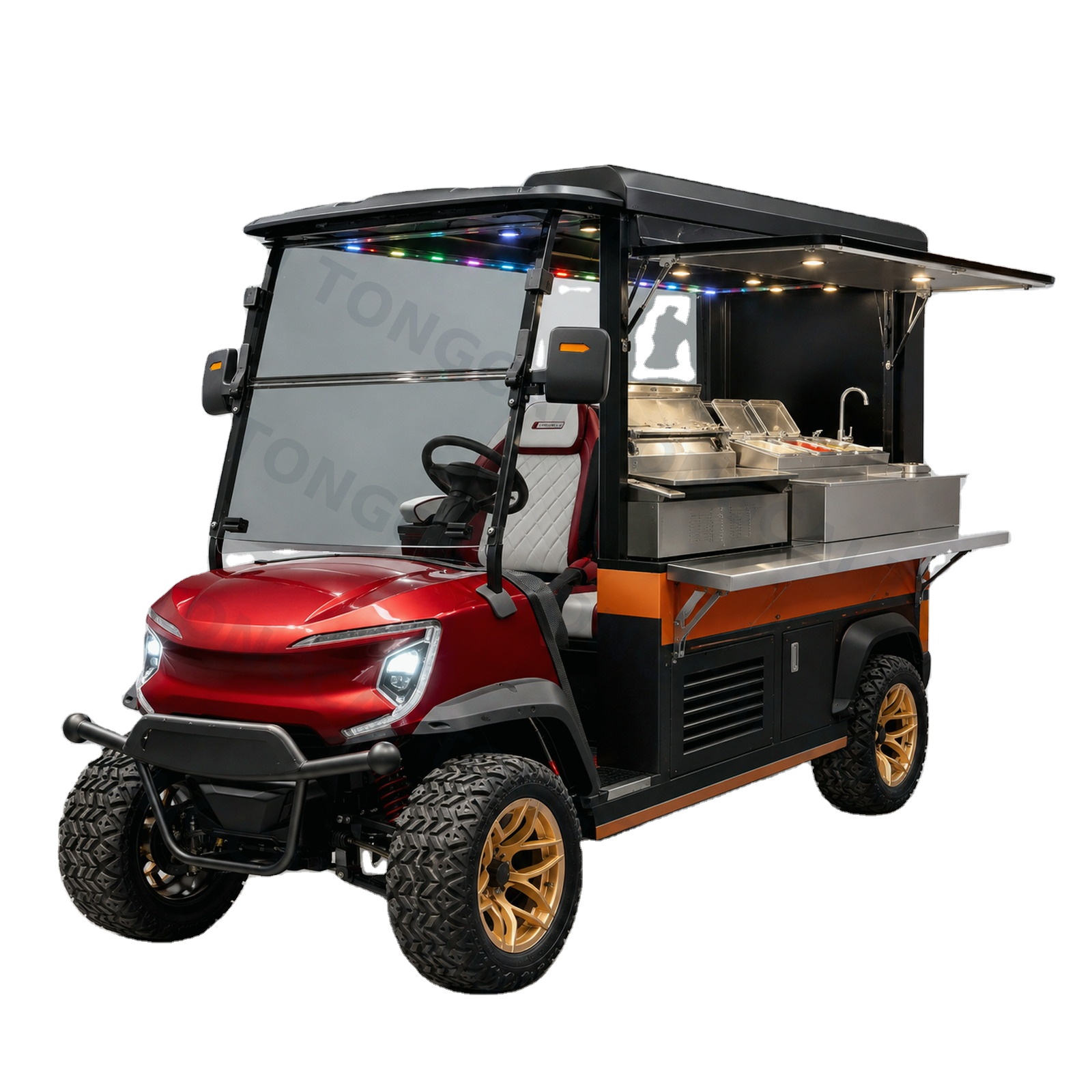
Integrated 48V/72V food-grade stainless mobile bakery truck for gated communities and pedestrian promenades, equipped with auxiliary battery outputs for commercial refrigeration.
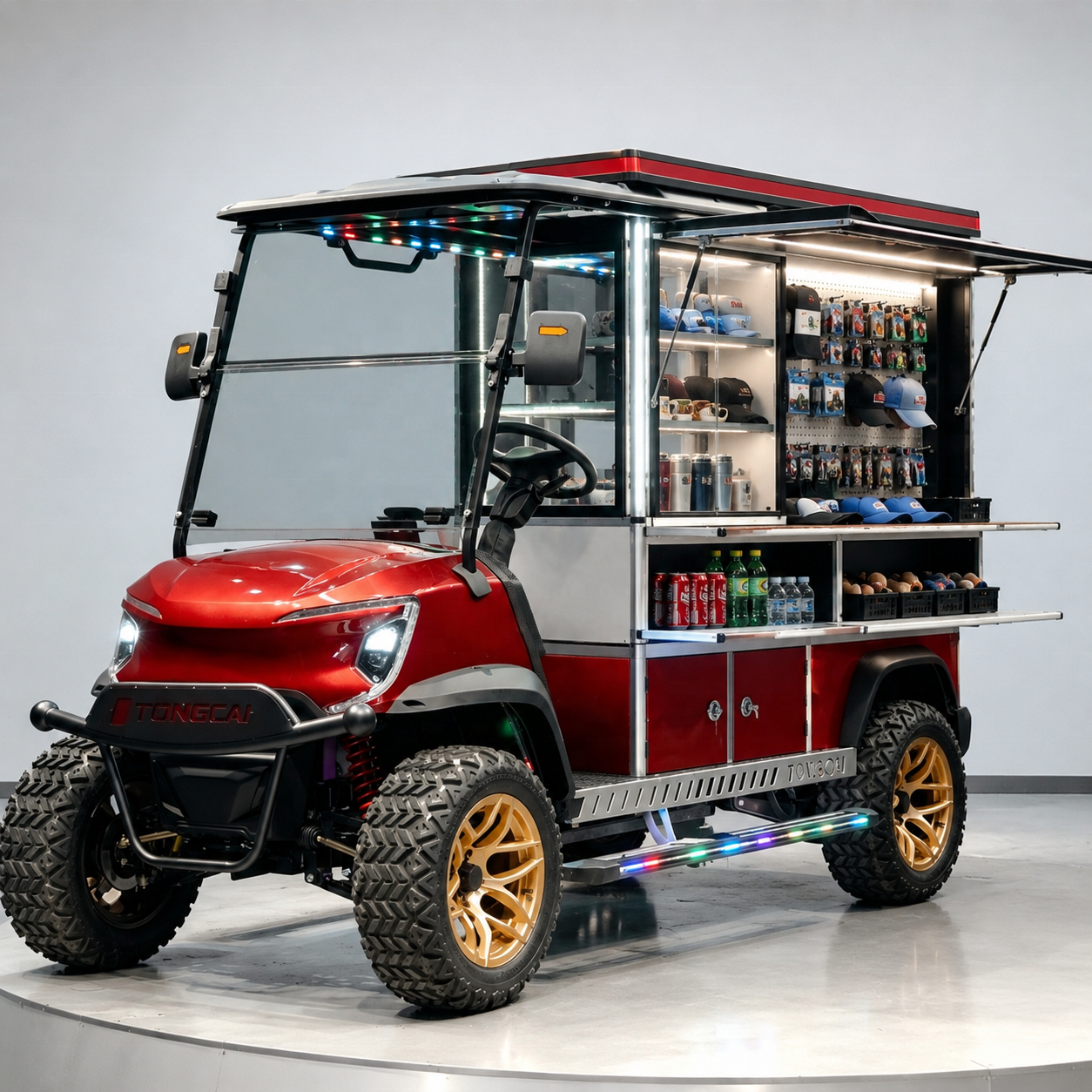
All-weather community market vehicle fitted with retractable side awnings, on-board 220V inverter system, reinforced dual suspension, and high-efficiency LED ambient merchandising displays.
Ergonomic low-speed vehicle engineered for retirement villages and active-adult communities. Delivers 30-50 km operating range, electromagnetic auto-parking brakes, and anti-tip suspension.
Street-legal retro estate carriage crafted with hand-stitched marine vinyl upholstery, independent hydraulic front brakes, and high-capacity AC controller for VIP guest transfers.
Modular service cart optimized for beachfront resorts, sports parks, and educational campuses. Anti-corrosion powder-coated chassis with integrated fast-charging battery rack.
Compact neighborhood vendor featuring customized insulated display cases, dual battery isolators, silent brushless motor technology, and zero-emission micro-retail utility.
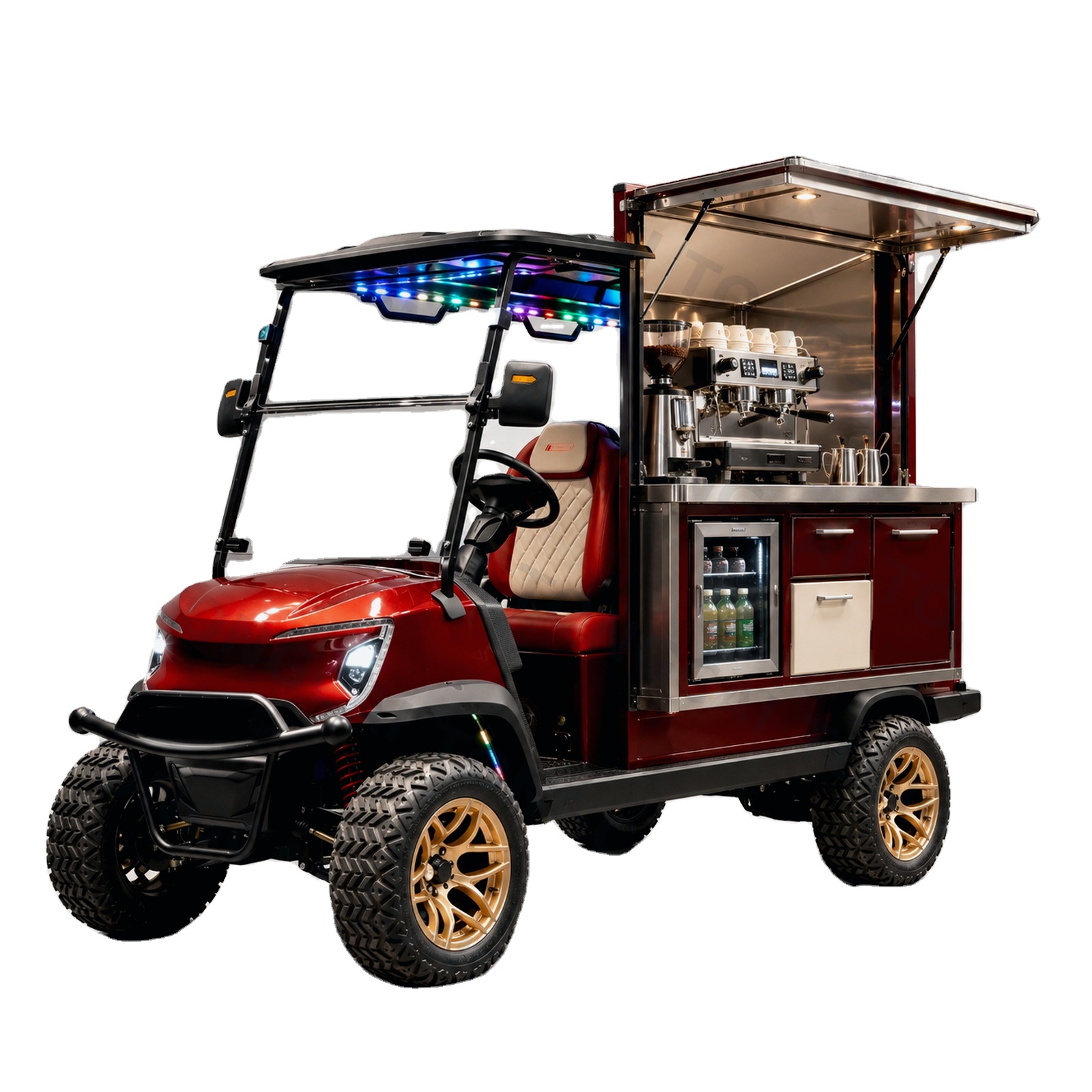
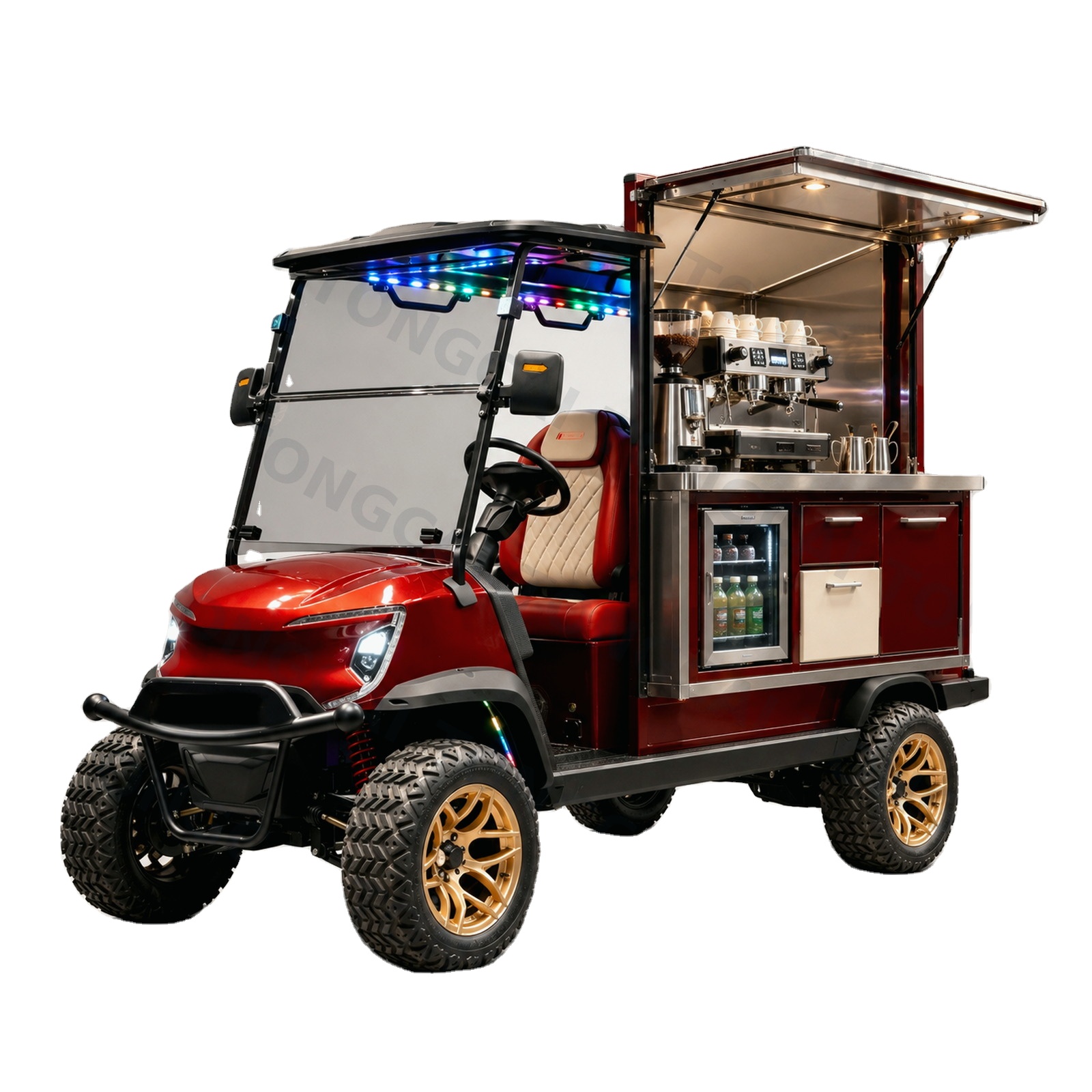
Golf-cart platform combined with a walk-up cafe kiosk back box. 48V LiFePO4 battery pack, Curtis motor controller, and reinforced aluminum canopy for community event operations.
14,200 m²
Dedicated Production Facility
140+
Certified Supply Chain Partners
100%
On-Site Dyno & Road Tested
4.8 / 5.0
Global Distributor Satisfaction
TÜV Rheinland Audited Facility
Our Dezhou plant in Shandong is independently verified on-site by TÜV Rheinland. We adhere strictly to ISO-compliant workshop management, ensuring traceable metallurgical quality and strict assembly line hygiene.
12-Stage In-House Quality Process
From raw seamless steel tube cutting, CNC pipe bending, robotic fixture welding, and cathodic electrophoresis to 2-stage assembly and final road dyno trials, every vehicle undergoes a rigid 12-stage internal FQC protocol.
Full OEM & ODM Customization
Distributors can configure custom battery voltages (48V / 60V / 72V), motor wattage (3kW to 7.5kW AC/PMSM), custom molded body shells, dual hydraulic front brakes, lifted suspension arms, and proprietary fleet branding.
Future Procurement Trends: What Fleet Buyers Must Anticipate
As the neighborhood electric vehicle (NEV) market grows at an estimated 8.4% CAGR through 2030, procurement criteria are evolving beyond entry-level unit pricing. Institutional purchasers must assess four primary procurement megatrends:
1. Complete Transition to LiFePO4 (Lithium Iron Phosphate) Chemistries: Traditional deep-cycle lead-acid batteries are rapidly being phased out due to hazardous material restrictions, excessive weight, and brief 500-cycle life spans. CCB's proprietary lithium integration uses Grade-A prismatic LiFePO4 cells with integrated Battery Management Systems (BMS), yielding over 3,500 charging cycles, zero maintenance overhead, and a 40% curb weight reduction that dramatically cuts lawn and pavement wear.
2. Smart Telematics & Fleet Management IoT: Modern community developments require remote vehicle tracking, geofencing speed limiters (e.g., auto-limiting speeds to 15 km/h in school or pedestrian zones), battery state-of-health (SoH) cloud monitoring, and remote CAN-bus diagnostics. CCB platforms offer optional 4G IoT telematics modules compatible with centralized fleet management dashboards.
3. Dual-Purpose Utility & Modular Cargo Architecture: Buyers increasingly demand transformable rear seating systems. Our rapid-flip rear seat kits convert a 4-passenger community runabout into a heavy-duty flatbed utility cart with an integrated poly cargo box in seconds, reducing total fleet capital expenditure for resort operations.
| Technical Parameter |
Conventional Lead-Acid Cart |
CCB LiFePO4 Standard Edition |
CCB Heavy-Duty 72V 4WD Edition |
| Battery Chemistry & Cycle Life |
Flooded / AGM Lead-Acid (400–600 cycles) |
Prismatic LiFePO4 (>3,500 cycles) |
Automotive-grade LiFePO4 (>4,000 cycles) |
| Motor & Controller Type |
DC Series Motor / Basic Analog Curtis |
3.0 kW – 5.0 kW AC Induction / Enpower AC |
5.0 kW – 7.5 kW AC Permanent Magnet |
| Full Recharging Duration |
8 to 10 Hours (Thermal dissipation loss) |
3 to 4.5 Hours (Smart BMS Fast Charge) |
2.5 to 3.5 Hours (High-current on-board) |
| Chassis & Anti-Corrosion |
Standard steel pipe / Spray painted |
Seamless hydraulic tube + Electrophoresis |
Heavy-gauge welded ladder frame + E-coat |
| Braking & Safety Systems |
Rear drum brakes only |
Rear mechanical drum + Auto Park Brake |
4-Wheel Hydraulic Disc + Regenerative Braking |
| Export Certifications |
Varies by trader |
CE Marked, ISO9001 certified plant |
CE, EEC (L6e/L7e selectable models) |
Industry Development Trends: Regulatory Integration & Sustainability
The boundary between pure golf carts and street-legal Low-Speed Vehicles (LSVs) is dissolving worldwide. Under standards such as the US Federal Motor Vehicle Safety Standard (FMVSS 500) and European Union Regulation (EU) No 168/2013 (L6e and L7e quadricycles), community carts increasingly require automotive glass windshields with wipers, DOT-rated 3-point seat belts, full road lighting (high/low beams, directional indicators, hazard flashers), rearview mirrors with integrated turn signals, and digital instrument clusters.
At the same time, solar-assisted extended-range roofs are moving from experimental novelties to viable commercial options. CCB’s integrated mono-crystalline solar canopy system delivers up to 15–25 km of supplementary passive range per day under standard solar radiation, minimizing grid charging frequency for municipal parks and resort security patrols.
What is the minimum order quantity (MOQ) for custom community golf carts?
+
Most catalog models support sample orders starting from 1 unit to allow dealers and fleet operators to inspect build quality, suspension compliance, and local driving suitability. For container-level orders (20GP or 40HQ), CCB unlocks complete OEM customization, including custom RAL paint codes, laser-etched brand logos, bespoke seat materials, and tailored mixed-model container packing.
How does CCB pack vehicles to maximize container space and avoid shipping damage?
+
We offer both SKD (Semi-Knocked Down) and CBU (Completely Built Up) shipping options. In SKD format, wheels, roofs, and rear seats are detached and packed into customized heavy-duty steel skeleton racks, allowing up to 18–24 units to fit into a 40HQ container (depending on the chassis length), substantially cutting per-unit sea freight costs. All fragile components, including windscreens and digital dashboards, are cushioned in marine-grade honeycomb export cartons.
How are batteries shipped and what certifications accompany hazardous goods transport?
+
All CCB LiFePO4 battery banks are certified under UN38.3, MSDS, and tested under strict sea freight safety protocols (IMO Class 9 Dangerous Goods compliance where mandated). Batteries are shipped with custom-designed disconnect isolators and heavy-gauge flame-retardant enclosures, accompanied by full customs clearance documentation.
What is the standard warranty coverage and how are spare parts supplied?
+
We provide a comprehensive 3-year factory warranty on our LiFePO4 lithium battery cells and BMS, and a 1-year bumper-to-bumper warranty on major electrical components, including the AC motor, controller, differential axle, and frame weld integrity. For warranty claims, replacement parts are dispatched via DHL/FedEx air freight within 48 business hours. We also supply a 1% wear-and-tear fast-moving parts kit with every container order.
Can CCB manufacture left-hand and right-hand drive steering configurations?
+
Yes. While standard carts feature center-biased or left-hand drive configurations, our in-house engineering team designs and manufactures dedicated Right-Hand Drive (RHD) rack-and-pinion steering layouts for markets such as the UK, Australia, South Africa, Japan, and the Caribbean.
Ready to Engineer or Expand Your Community Fleet?
Connect with CCB's engineering desk for detailed technical datasheets, container loading plans, and competitive wholesale pricing.
 Deutsch
 Português
 Español
 Français
 Italiano
 Русский
 한국어
 日本語
 العربية
 ไทย
 Tiếng Việt
 Türkçe
 Nederlands
 Indonesia
 עברית
 हिन्दी