Industry Whitepaper & Strategic Analysis
Santa Ana Micro-Mobility & Low-Speed Electric Vehicle Market Landscape
The city of Santa Ana, serving as the dense urban anchor and county seat of Orange County, California, is experiencing a fundamental transformation in its localized transportation architecture. Driven by rigorous state-level climate policies, municipal zero-emission directives, and an escalating demand for energy-efficient commercial fleet management, the market for electric golf cars, Low-Speed Vehicles (LSVs), and commercial electric micro-utility trucks has transitioned from niche recreational apparatus to mission-critical mobility infrastructure.
For commercial fleet operators, municipal contractors, resort managers, and golf course superintendents across the Santa Ana metro region—spanning key corridors along South Coast Metro, the historic Downtown Artists Village, Grand Avenue industrial hubs, and nearby recreational estates—selecting a qualified OEM exporter requires rigorous technical evaluation. Importers must evaluate drivetrain thermal efficiency under Southern California operating temperatures, anti-corrosive frame treatments designed for coastal salt-air exposure, and total compliance with California Vehicle Code (CVC) § 21250 regulations governing Neighborhood Electric Vehicles (NEVs).
Information Gain Insights: California Fleet Compliance & Coastal Engineering
Unlike standard recreational golf carts, commercial-grade electric vehicles operated within Santa Ana require specialized engineering safeguards: marine-grade triple-powder-coated electrophoretic chassis coating to withstand ambient salt humidity from the Pacific ocean (less than 10 miles away), high-torque AC synchronous motors paired with intelligent Curtis controllers to handle stop-and-go urban duty cycles, and Advanced Thermal Management Smart BMS for lithium battery longevity under high SoCal thermal loads.
14,200 m²
TÜV Verified Manufacturing Facility
12 Stages
In-House Precision QC Inspection
72V / 60V / 48V
High-Efficiency Drivetrain Architecture
3,500+ Cycles
LiFePO4 Lithium Battery Lifespan
Localized Application Scenarios across Santa Ana & Greater Orange County
The operational profile of electric golf cars in Santa Ana varies dramatically across distinct commercial, industrial, and municipal sectors. Understanding these localized deployment scenarios ensures optimal configuration of motor wattage, suspension geometry, and battery chemistry during the OEM customization phase.
⚡
1. Municipal & Corporate Campus Mobility
Deployment within Santa Ana Civic Center, government complexes, and tech hubs in South Coast Metro. Requires ultra-quiet operation, street-legal LSV lighting, FMVSS 500 compliance, seatbelts, and extended range (70–90 km per charge) for all-day administrative transit.
⛳
2. Country Clubs & Resort Logistics
Serving premium golf facilities such as Willowick Golf Course and regional private clubs. Demands turf-friendly 10-inch to 14-inch radial tires, independent front suspension with hydraulic damping for superior ride comfort, and silent AC induction motors to maintain serene ambient noise levels.
🏬
3. Urban Vending & Mobile Retail
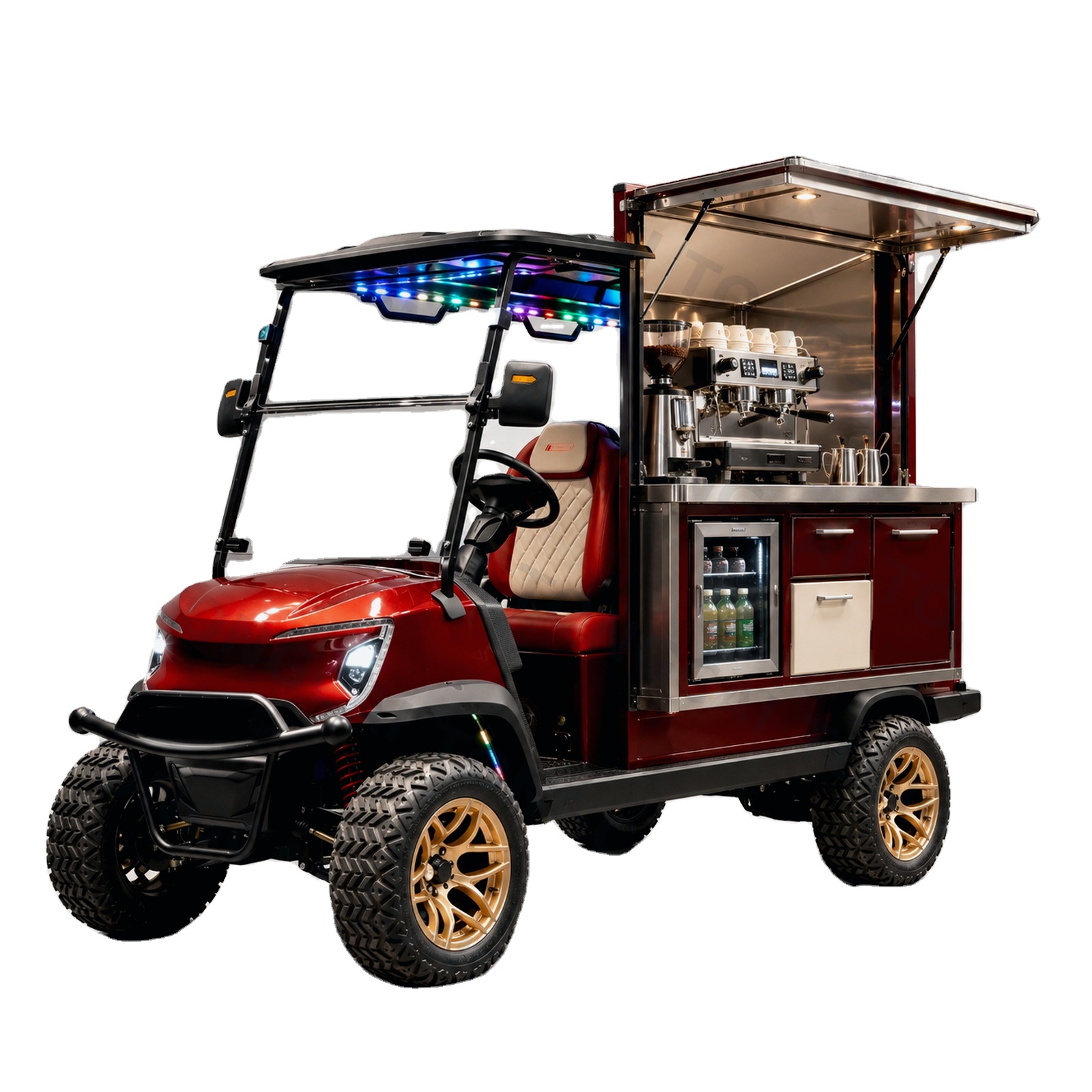
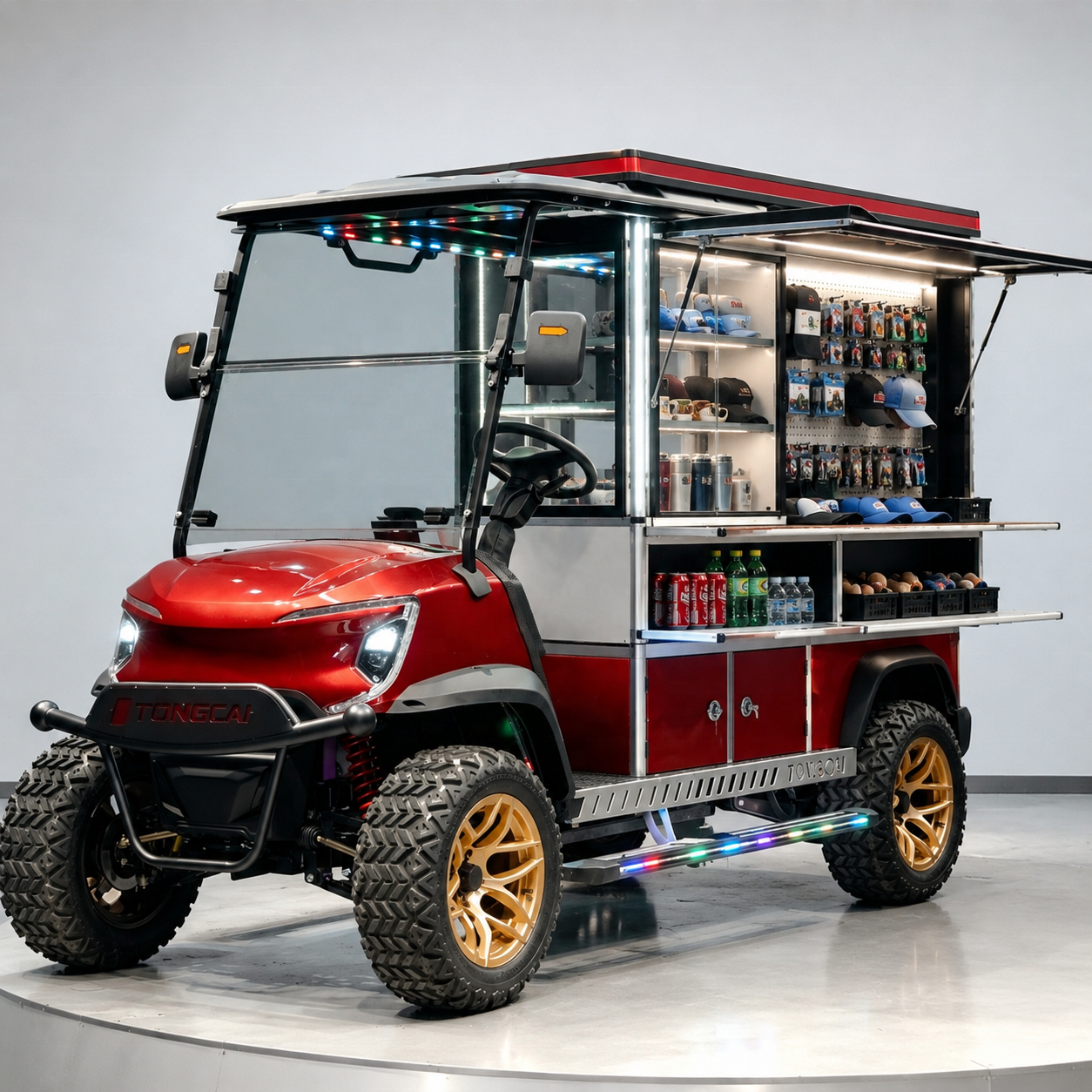
Custom mobile pastry, bakery, and beverage vending vehicles tailored for high-foot-traffic zones like 4th Street Market and outdoor event venues. Fully integrated with auxiliary battery taps to power commercial refrigeration, espresso machines, and digital point-of-sale systems.
🏭
4. Industrial & Logistics Logistics Parks
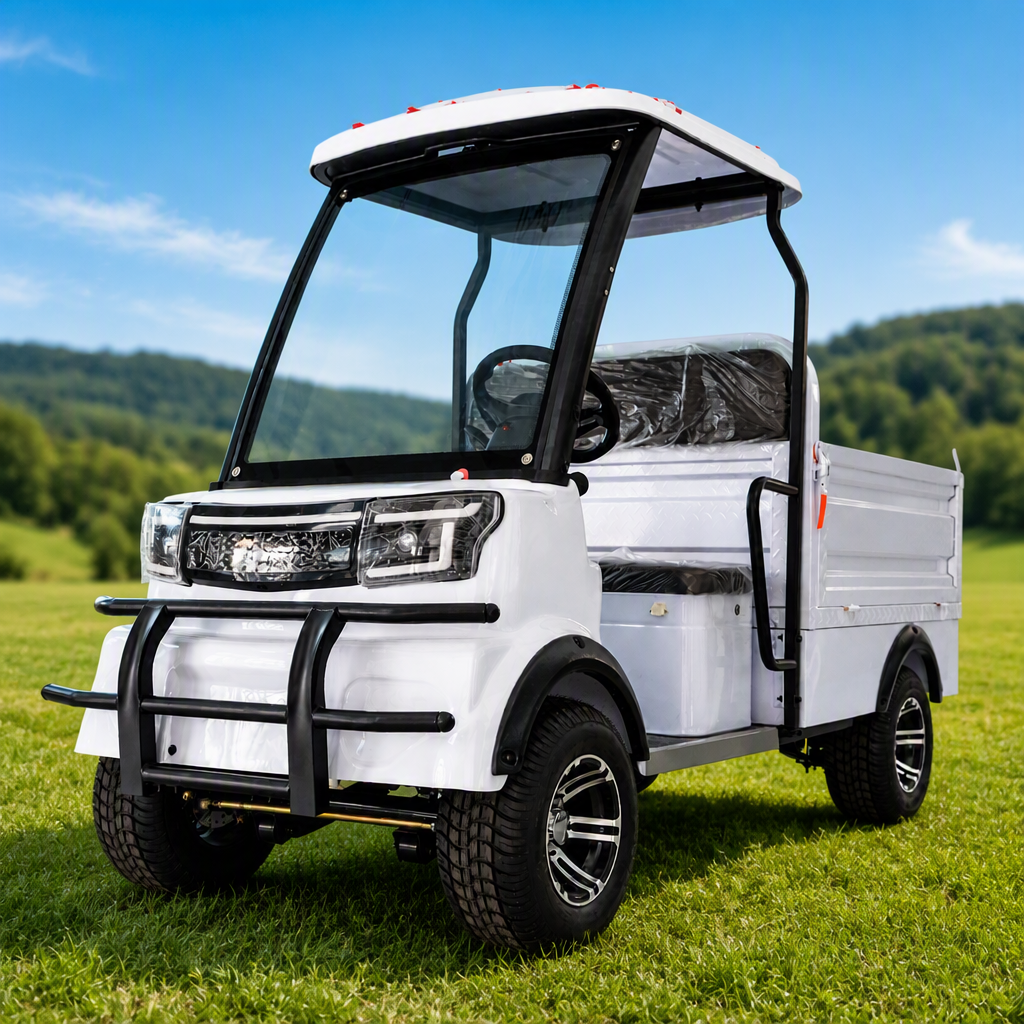
Heavy-duty freight vehicles with cargo canopies and flatbed attachments engineered for warehouses along Grand Ave and Harbor Blvd. Built with reinforced steel box-section chassis offering 200kg to 800kg payload capacities and 4WD options for heavy hauling.
🏡
5. Residential Master-Planned Enclaves
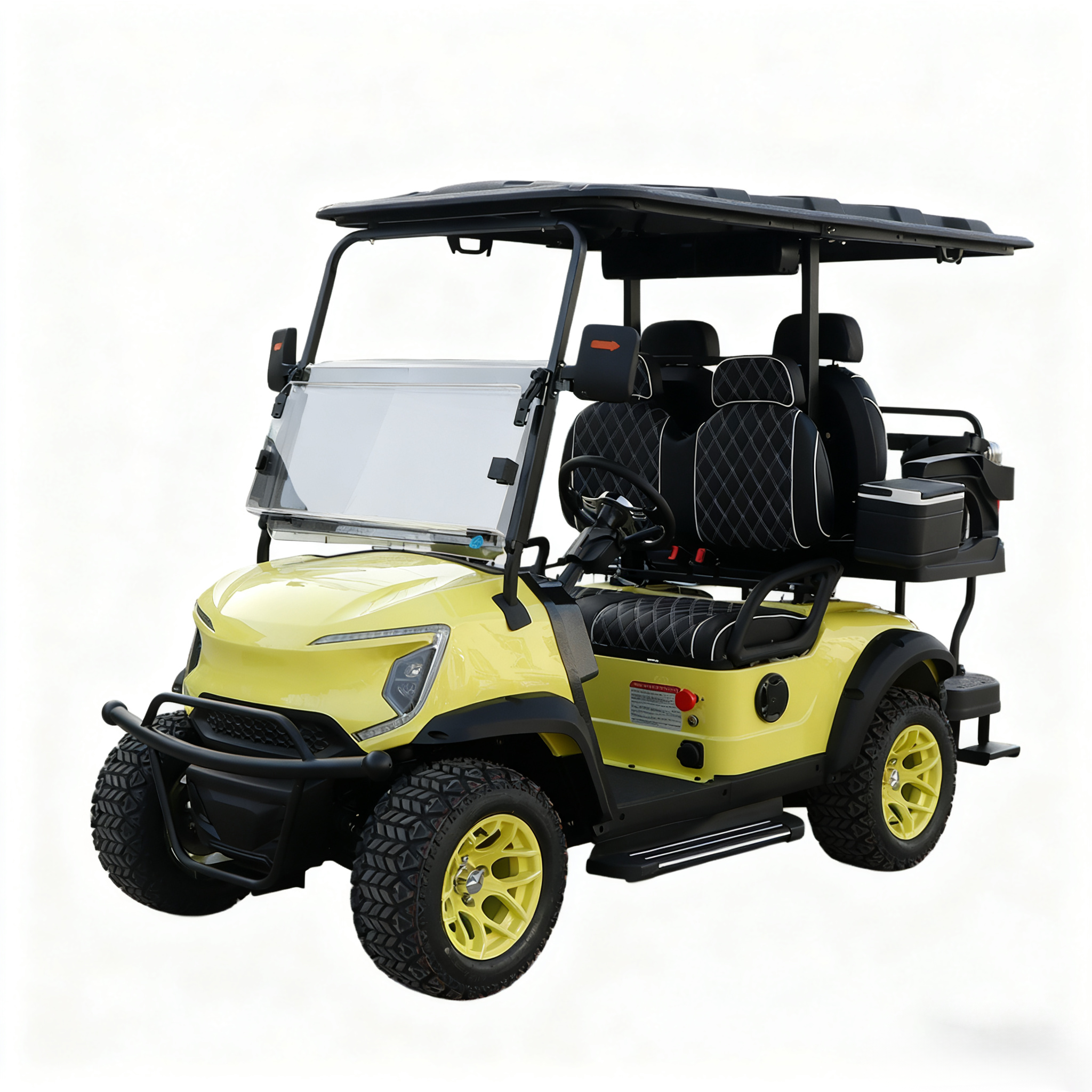
Gated community transport in Floral Park and nearby Irvine/Tustin residential border zones. Favored for 4-passenger and 6-passenger lifted configurations, equipped with modern LED halos, Bluetooth infotainment soundbars, and luxury marine-grade vinyl seating.
☀️
6. Solar-Assisted Fleet Operations
Equipped with monocrystalline roof-integrated solar panels providing continuous trickle charging. Highly effective under Santa Ana's ~280 annual sunny days, expanding overall daily operating range by up to 15-20% while extending battery cycle life.
Macro Trends Driving Electric Vehicle Adoption in Southern California
Analyzing the long-term micro-mobility market in Santa Ana reveals three critical macroeconomic and technological catalysts shaping buyer decisions:
1. Rapid Migration to Lithium Iron Phosphate (LiFePO4) Battery Chemistries
While traditional lead-acid golf carts served the industry for decades, commercial operators in Santa Ana are rapidly sunsetting lead-acid fleets. LiFePO4 chemistry provides substantial technological advantages: a weight reduction of over 60%, rapid charging capabilities (2-3 hours vs. 8-10 hours), zero water maintenance, and an operational lifespan exceeding 3,500 full charge-discharge cycles compared to 500-800 cycles for lead-acid alternatives.
2. Stringent Environmental Regulations & Zero-Emission Mandates
With the California Air Resources Board (CARB) enforcing aggressive zero-emission rules across off-road, commercial, and small utility fleets, businesses operating gas-powered utility carts face escalating regulatory penalties and restricted operational permits. Transitioning to factory-direct OEM electric platforms guarantees long-term regulatory compliance and aligns with state-wide decarbonization goals.
3. Total Cost of Ownership (TCO) Optimization
For fleet procurement managers, the initial acquisition cost represents less than 30% of total lifetime vehicle expenditure. Factory-direct sourcing from certified exporters like Shandong CCB New Energy Machinery Co., Ltd. slashes middleman markups while supplying high-reliability components (Curtis Controllers, KDS Motors, high-efficiency aluminum differentials) that drastically compress maintenance costs per mile.
Total Cost of Ownership (TCO) Comparison: Santa Ana Commercial Fleet (5-Year Cycle)
| Evaluation Parameter |
CCB LiFePO4 Electric Cart |
Standard Lead-Acid Golf Cart |
Gasoline-Powered Utility Vehicle |
| Initial Capital Expenditure (CapEx) |
Moderate (Factory Direct Value) |
Low Initial Cost |
High Initial Cost |
| Fuel / Energy Cost per 100 Miles |
~$1.80 (Off-peak electricity) |
~$2.90 (Inconsistent efficiency) |
~$16.50 (California Premium Fuel) |
| Scheduled Maintenance Requirement |
Minimal (Brakes, tires, inspection) |
High (Acid top-ups, terminal rust) |
Very High (Oil, filters, spark plugs) |
| Battery Replacement Frequency |
None (7-10 Year Lifespan) |
1-2 Times over 5 years |
N/A (Engine overhaul risks) |
| 5-Year Cumulative Savings |
Baseline Benchmark (Highest Savings) |
-$3,800 per vehicle |
-$9,200 per vehicle |
Enterprise Advantages: Shandong CCB New Energy Machinery Co., Ltd.
As a verified custom manufacturer certified on-site by TÜV Rheinland, Shandong CCB New Energy Machinery Co., Ltd. operates a state-of-the-art 14,200 m² production facility in Dezhou, Shandong. Unlike intermediary trading firms, CCB integrates the entire manufacturing lifecycle under a single quality control standard.
Integrated 12-Stage Precision Production Pipeline
Every electric vehicle produced for export to Santa Ana passes through 12 rigorous manufacturing stations: Steel Tube Cutting → Precision CNC Machining → Automated Pipe Bending → Robotic Fixture Welding → Anti-Corrosion Electrophoretic Spraying → Primary Drivetrain Assembly → Secondary Electrical Wiring → Functional Testing → Automated Sheet Bending → Structural Alignment → Final Quality Control (FQC) → Sealed Export Packing.
By controlling raw steel fabrication, chassis geometry, and electrical harness assembly in-house, CCB delivers unparalleled OEM/ODM customization options for Santa Ana buyers, including private-label logo branding, custom powder-coat color matching, customized seating layouts (2, 4, 6, 8, and 10 seats), custom lift-kit suspension clearances, and solar-panel roof integration.
 Deutsch
 Português
 Español
 Français
 Italiano
 Русский
 한국어
 日本語
 العربية
 ไทย
 Tiếng Việt
 Türkçe
 Nederlands
 Indonesia
 עברית
 हिन्दी