1. Executive Summary & Montreal LSV Market Dynamics
The Greater Montreal area and the Province of Quebec are undergoing an unprecedented shift toward micro-mobility and electrification within the urban transport sector. Driven by stringent municipal zero-emission targets, rising fuel logistics costs, and specialized urban zoning regulations, commercial operators, industrial facilities, educational institutions, and resort managers are actively seeking alternative vehicle architectures. Among these solutions, Low-Speed Vehicles (LSVs) have emerged as an essential middle-ground category bridging heavy automotive utility vehicles and traditional light utility carts.
An LSV is legally defined across North America as a four-wheeled motor vehicle with a top speed governed between 32 km/h (20 mph) and 40 km/h (25 mph), possessing a Gross Vehicle Weight Rating (GVWR) of less than 1,361 kg (3,000 lbs). In Montreal—where pedestrianized arterial roads such as Sainte-Catherine Street, high-density academic grounds like McGill University and Concordia University, industrial port zones along the St. Lawrence River, and vast park systems like Parc Jean-Drapeau demand quiet, non-polluting transportation—LSVs provide an optimal balance of footprint, efficiency, and operational safety.
Strategic Market Insight: Procuring LSVs in Quebec requires navigating specific regional conditions, including the SAAQ (Société de l'assurance automobile du Québec) registration framework, Transport Canada safety mandates, sub-zero battery thermal decay during harsh Canadian winters, and severe road-salt corrosion protection.
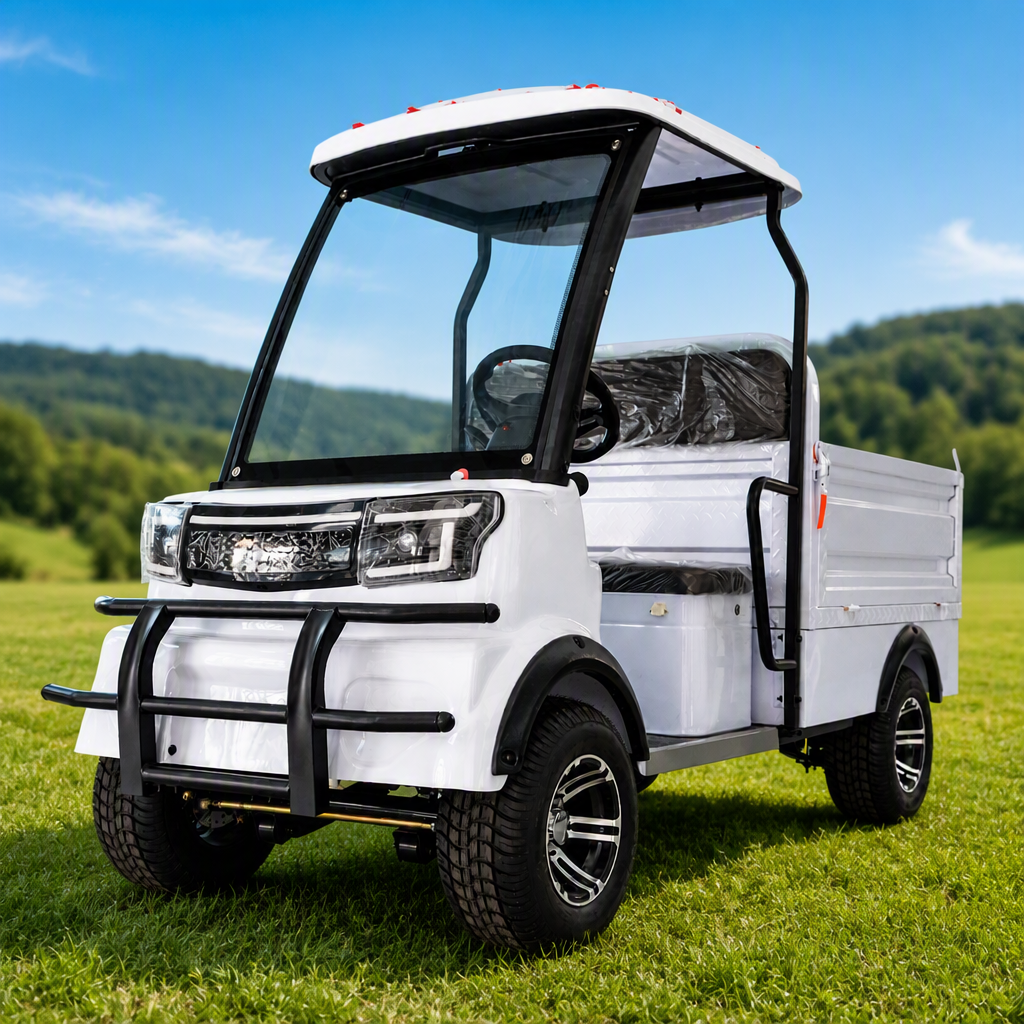
Urban Micro-Logistics
Replacing heavy internal combustion diesel vans with compact LSV freight platforms for last-mile urban deliveries in dense Montreal city cores.
SAAQ & CMVSS Compliance
Ensuring factory-installed safety packages satisfy Canadian Motor Vehicle Safety Standard 500 (CMVSS 500) and SAE J2358 street-legal parameters.
Cold-Weather Engineering
Deploying LiFePO4 battery system enclosures integrated with smart internal heating elements and cathodic E-coated frames against salt slurry.
2. Technical Standards & Regulatory Architecture for Quebec & Canada
To legally operate low-speed vehicles on public secondary roads or within designated municipal pilot zones in Quebec, imported vehicles must strictly adhere to federal safety standards established by Transport Canada under CMVSS 500, which aligns closely with US FMVSS 500 and SAE J2358 standards. Generic golf carts or uncertified utility buggies cannot meet these criteria without engineered structural and safety modifications performed at the factory level.
Mandatory Street-Legal Equipment Requirements
Every LSV supplied to Montreal distributors and municipal buyers must feature certified safety components. Factory customization options must incorporate:
Windshields: Automotive-grade AS1 or AS2 DOT-approved laminated glass equipped with a heavy-duty electric wiper motor system (acrylic or plastic windshields fail provincial street-legal audits).
Lighting & Signal Apparatus: High-intensity LED headlamps with high/low beam selector, brake lights, tail lamps, turn indicators, emergency hazard flashers, and retro-reflective side markers visible at 150 meters.
Restraint Systems: Three-point seatbelts (Type 2 integrated lap and shoulder belts) installed for all seating positions anchored directly to the vehicle chassis frame.
Braking Performance: Four-wheel hydraulic disc brakes or dual-circuit hydraulic brake systems capable of bringing a fully loaded LSV to a complete stop within 8 meters from a speed of 40 km/h.
Rearview Mirrors & VIN: Left-side and right-side exterior rearview mirrors plus an interior rearview mirror, accompanied by a 17-digit physical Vehicle Identification Number (VIN) stamped on the steel frame.
14,200 m²
Factory Floor Space
72V LiFePO4
High-Voltage Powertrain
IP67
Water & Dust Ingress Rating
TÜV Rheinland
On-Site Verified Audit
3. Specialized Local Application Scenarios in Montreal
Procurement intent across Montreal is diverse, ranging from heavy material hauling in industrial sectors to specialized mobile commercial retail carts operating during festival seasons. Understanding these micro-scenarios enables fleet managers to specify exact powertrain ratios, battery chemistries, and frame configurations directly to manufacturing plants.
Port of Montreal & Industrial Hubs
In industrial logistics centers near Saint-Laurent, Anjou, and the Port of Montreal, heavy-duty 4WD electric freight vehicles are essential. These units transport tooling, container parts, and maintenance crews across indoor warehouses and exposed outdoor yards. A minimum payload capacity of 800 kg to 1,000 kg, dual AC motors, and off-road pneumatic tires are required to handle asphalt transitions, railway crossings, and unpaved staging grounds.
Institutional Campuses & Historic Districts
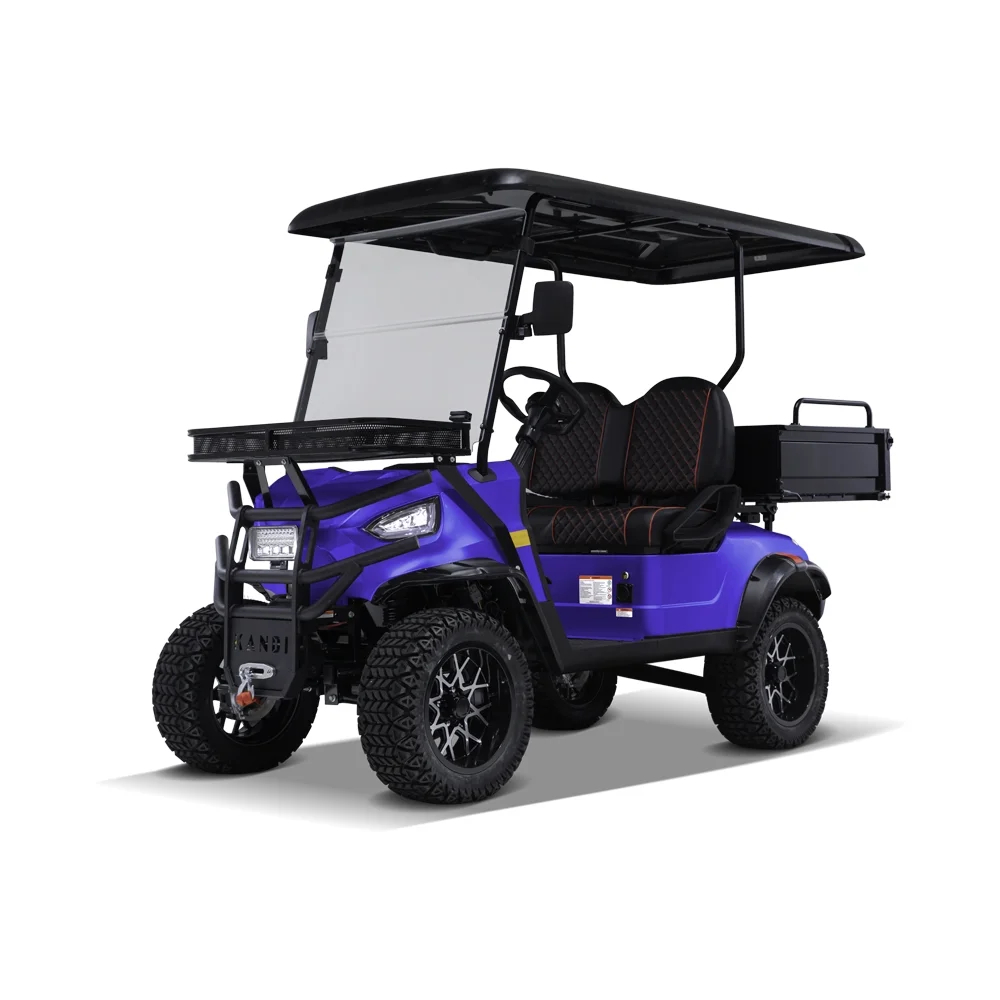
Locations like Old Montreal (Vieux-Montréal) feature narrow cobble-paved streets, strict noise restrictions, and heavy pedestrian traffic. Low-speed 4-seater and 6-seater shuttle LSVs provide quiet, zero-emission transportation for tourists, facility supervisors, and private security teams. Compact wheelbases prevent traffic congestion while providing zero local carbon output aligned with the city’s green corridor initiatives.
Festival Vending & Mobile Culinary Fleets
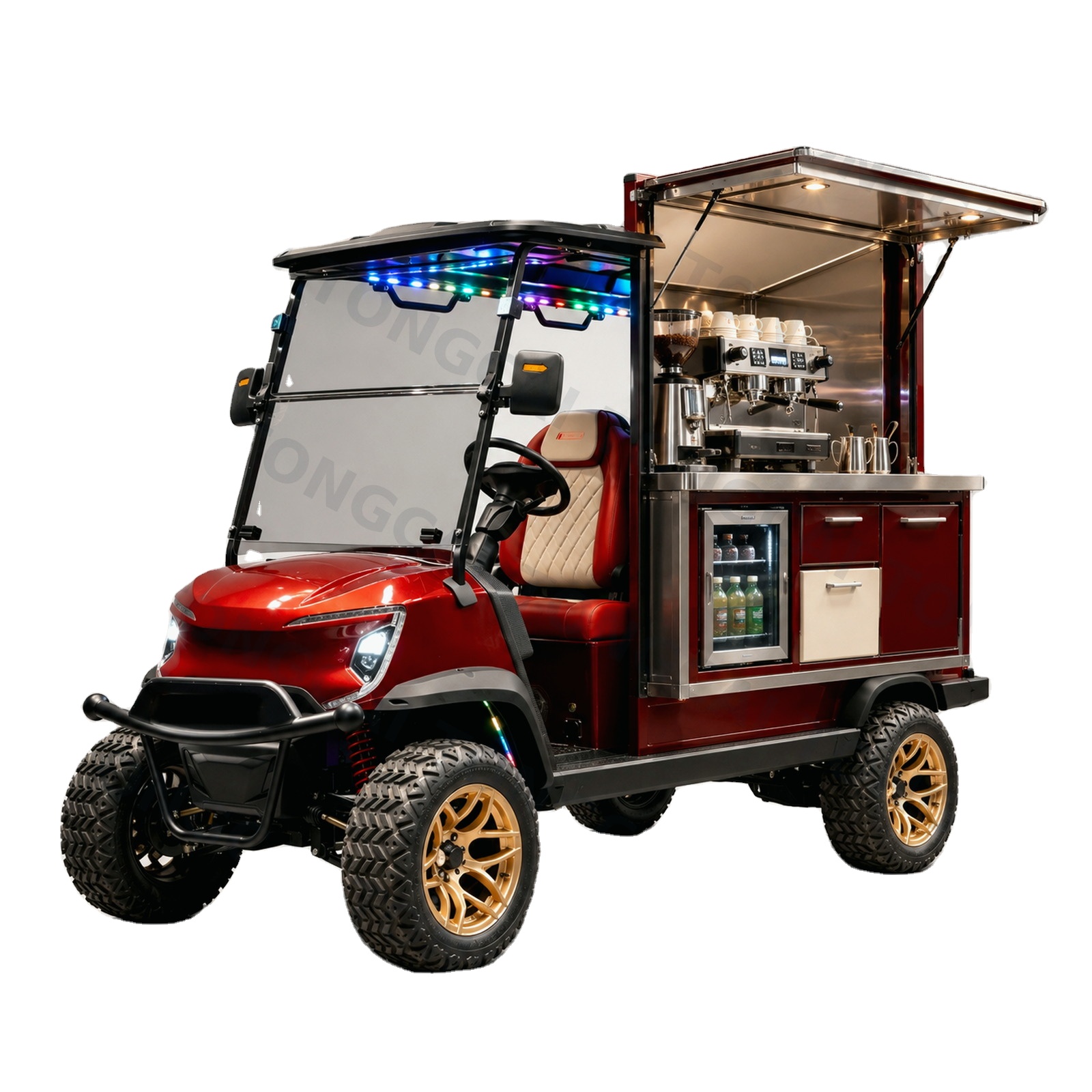
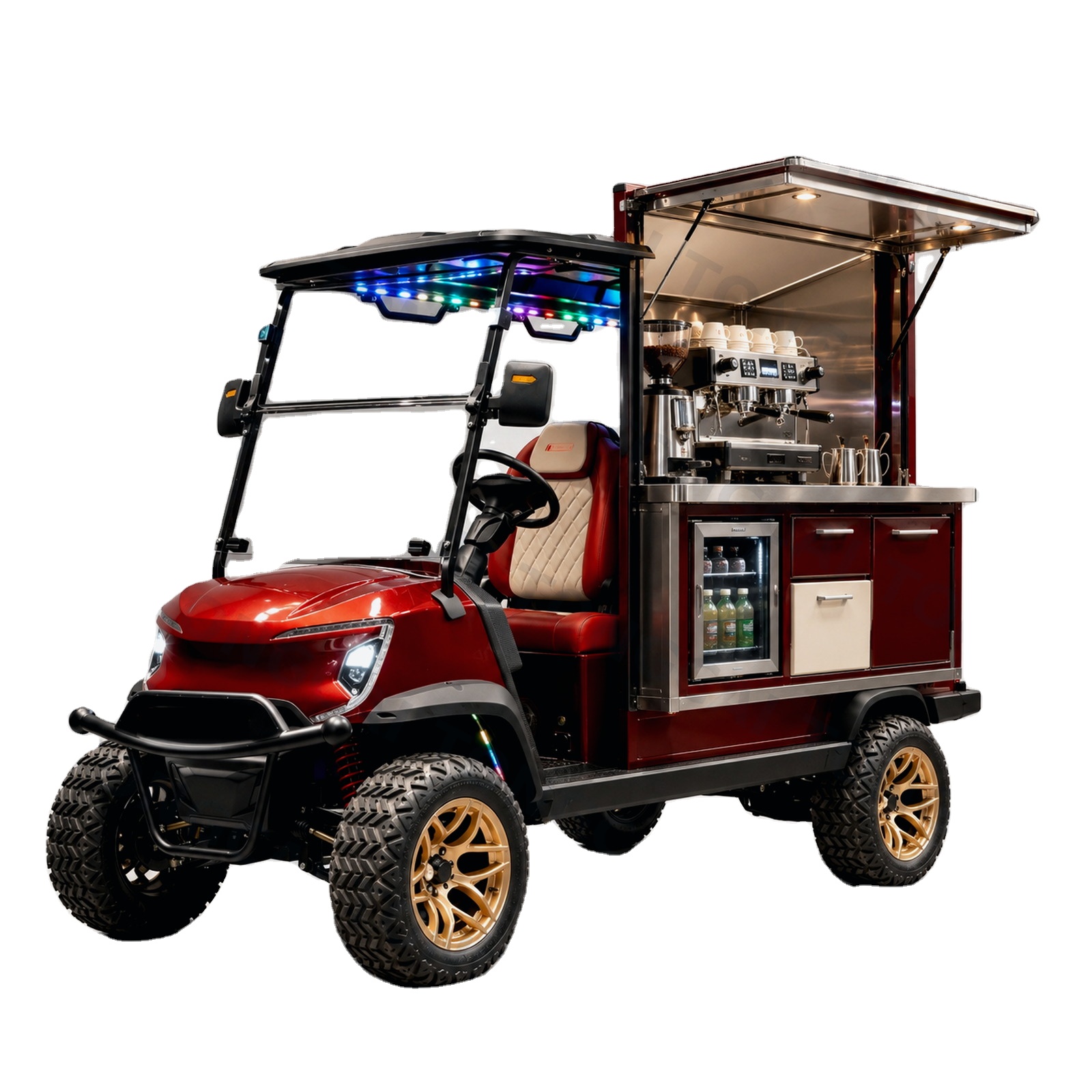
Montreal is world-renowned for major summer cultural events, including the Montreal International Jazz Festival, Just for Laughs, and Francos de Montréal. Specialized mobile bakery trucks, waffle carts, and coffee trucks built on customized electric LSV chassis offer mobile entrepreneurs turnkey retail capabilities. Integrated lithium auxiliary power banks eliminate noisy, polluting gas generators.
4. Technical Comparison Matrix: Lead-Acid vs. Advanced 72V LiFePO4 Systems
When ordering LSVs from overseas factories for cold-climate operation in Quebec, battery engineering represents the single most critical decision impacting total cost of ownership, operational uptime, and safety. Below is a detailed technical matrix comparing traditional deep-cycle flooded lead-acid batteries with high-performance Lithium Iron Phosphate (LiFePO4) systems engineered with internal thermal management.
Shandong CCB New Energy Machinery Co., Ltd. (CCB) is a TÜV Rheinland on-site verified custom manufacturer located in the Tianqu Industrial Park of Dezhou, Shandong, China. Spanning a state-of-the-art 14,200 m² production facility, CCB operates complete in-house manufacturing lines, eliminating reliance on third-party chassis assemblers.
Unlike trading intermediaries or simple assembly shops, CCB maintains total vertical control over steel tube cutting, precision machining, automated CNC pipe bending, robotic MIG welding, cathodic electro-coating (E-coating), surface powder spraying, drivetrain integration, and final road-testing. This integrated production model allows CCB to tailor every vehicle to exact customer requirements, satisfying North American municipal and commercial standards.
Cathodic E-Coating Line
Frame structures undergo full immersion cathodic electro-coating. This creates a rust-resistant layer capable of enduring over 1,000 hours of continuous salt-spray testing, essential for surviving Montreal winter road-salt slurries.
Private Mold Customization
Equipped with specialized body tooling and composite panel presses, CCB offers proprietary body designs, private-label branding, customized seating configurations (2 to 10 seats), and bespoke commercial vending enclosures.
Custom CAN-Bus Electronics
Advanced AC induction and Permanent Magnet Synchronous Motors (PMSM) controlled via programmable Enpower or Curtis CAN-bus systems enable precision torque mapping, speed governing, and hill-descent braking control.
6. Total Cost of Ownership (TCO) & Fleet ROI Analysis for Montreal Operators
For commercial fleet buyers evaluating low-speed transport solutions, comparing initial capital expenditure (CapEx) against long-term operational expenditure (OpEx) highlights the overwhelming economic advantage of 72V Lithium electric LSVs over internal combustion engine (ICE) utility vehicles.
5-Year Fleet Economics Summary (Per 10 Vehicles): Transitioning from gas utility buggies to CCB 72V Lithium LSVs saves approximately $42,000 CAD in fuel costs, eliminates over $18,000 CAD in engine maintenance (oil filters, belts, spark plugs), and reduces municipal carbon levies across a typical 5-year operating cycle in Quebec.
With Hydro-Québec providing some of the most competitive clean hydroelectric power rates in North America, the cost to fully charge a 72V 105Ah LiFePO4 battery pack (7.5 kWh capacity) in Montreal averages less than $0.75 CAD per vehicle charge. This provides an operational energy cost of roughly $0.012 CAD per kilometer driven, compared to $0.14 CAD per kilometer for gas-powered utility carts.
7. Local Procurement & Import Compliance FAQs
Navigating international factory procurement, custom freight logistics, and Canadian entry requirements can raise complex questions for fleet managers and vehicle distributors in Quebec. Below are expert answers to common inquiries.
How do CCB LSVs satisfy SAAQ registration parameters for street-legal use in Quebec?
CCB supplies factory-configured street-legal packages compliant with Canadian Motor Vehicle Safety Standard 500 (CMVSS 500). This includes DOT-certified AS1 laminated glass windshields with electric wipers, Type 2 three-point seatbelts, complete LED lighting systems, 17-digit VIN physical engraving, exterior mirrors, and governed top speeds capped at 40 km/h. Local buyers receive full manufacturer origin documentation (NVIS/MSO) to support SAAQ registration.
How do lithium battery systems perform during Montreal’s severe sub-zero winters?
Standard unheated lithium batteries experience severe charge degradation below 0°C. CCB solves this by offering intelligent thermal BMS modules paired with internal silicon heating pads. When connected to a charger in winter conditions, the BMS automatically routes current to heat the battery cell matrix up to optimal operating temperature before initiating charge cycles, preventing lithium plating and maintaining rated range.
What is the Minimum Order Quantity (MOQ) and lead time for factory-direct shipping to Montreal?
For evaluation and fleet sampling, CCB accepts sample orders starting from 1 unit. For full OEM/ODM branding, custom colors, and optimized ocean freight, 20-foot (2 to 4 units) and 40-foot HQ containers (8 to 12 units) are recommended. Manufacturing lead time typically ranges from 15 to 25 days, followed by direct ocean transit from Qingdao/Qingdao port to the Port of Montreal or local rail ramps.
Can CCB supply customized mobile vending vehicles for Montreal food street franchises?
Yes. CCB specializes in custom mobile vending trucks, bakery carts, and beverage units. We engineer custom stainless steel interior countertops, water supply/drainage systems, integrated AC power sockets, LED awnings, and exterior illuminated signage directly on certified low-speed electric chassis platforms.
How are spare parts and technical service handled post-delivery?
Every vehicle shipment includes complete wiring schematics, explosive component diagrams, and a recommended 2-year maintenance spare parts package (brake pads, relays, switches, LED light assemblies). In addition, CCB engineering provides direct video technical support and rapid air-express replacement parts delivery for dealership service networks.
What chassis protection measures prevent corrosion from Quebec road salt?
CCB utilizes a dual-defense corrosion barrier. First, high-strength steel tubing undergoes automated robot MIG welding followed by full cathodic electro-dip coating (E-coating) that coats internal and external tube walls. Second, a heavy thermoplastic powder coat is baked onto the frame. For severe maritime or salt exposure, full aluminum alloy chassis options are also available.
8. Strategic Fleet Procurement Framework & Next Steps
Selecting the right manufacturing partner is pivotal to building a reliable, cost-effective, and fully compliant low-speed electric vehicle fleet in Montreal. Shandong CCB New Energy Machinery Co., Ltd. combines rigorous factory engineering, verified TÜV Rheinland quality control, and flexible OEM/ODM capabilities to deliver vehicles engineered specifically for North American operating environments.
Whether you are expanding a municipal public works fleet, developing an eco-resort transportation network, launching a franchise of mobile street-food vending trucks, or establishing an exclusive regional LSV dealership in Quebec, our engineering team is ready to consult on your exact technical specifications.
Connect Directly with Our OEM Engineering & Export Desk
Request comprehensive technical spec sheets, factory audit reports, custom branding options, and container CIF pricing for Montreal.
 Deutsch
 Português
 Español
 Français
 Italiano
 Русский
 한국어
 日本語
 العربية
 ไทย
 Tiếng Việt
 Türkçe
 Nederlands
 Indonesia
 עברית
 हिन्दी