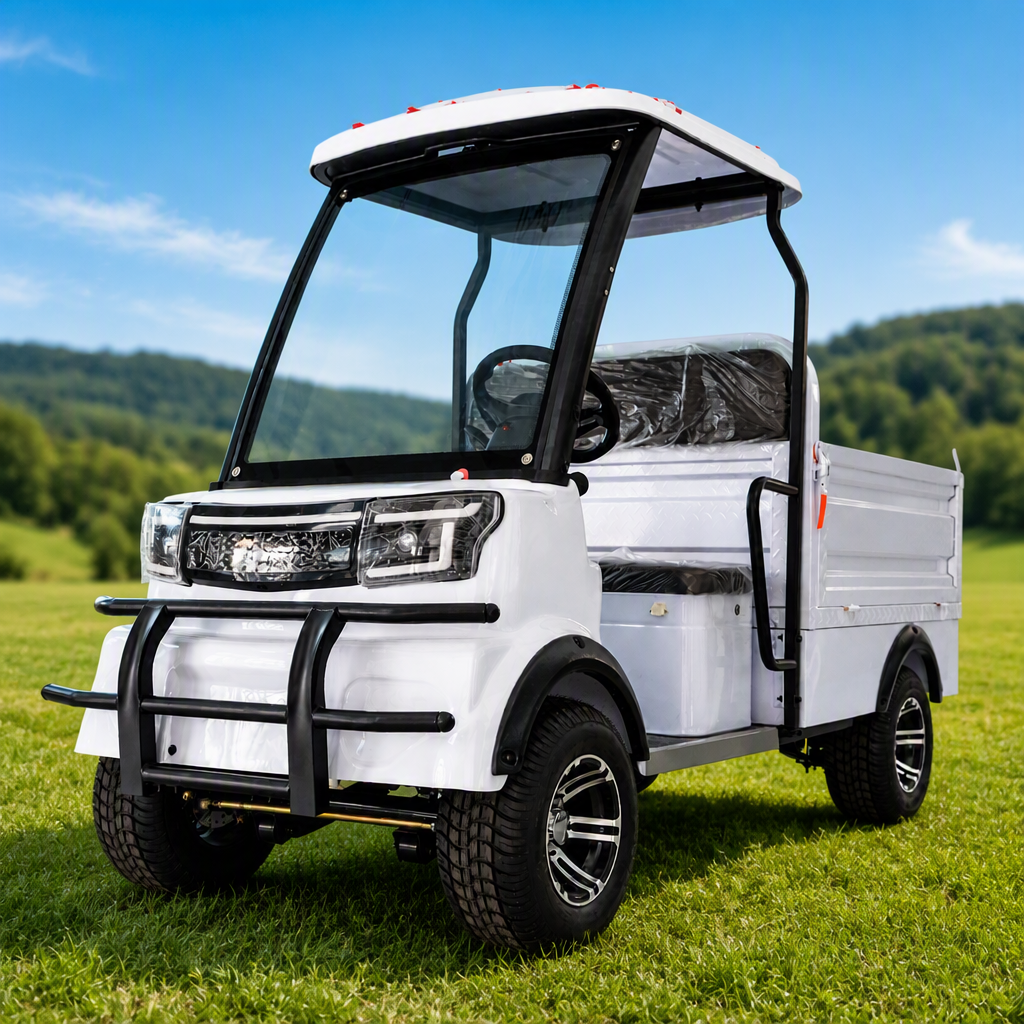
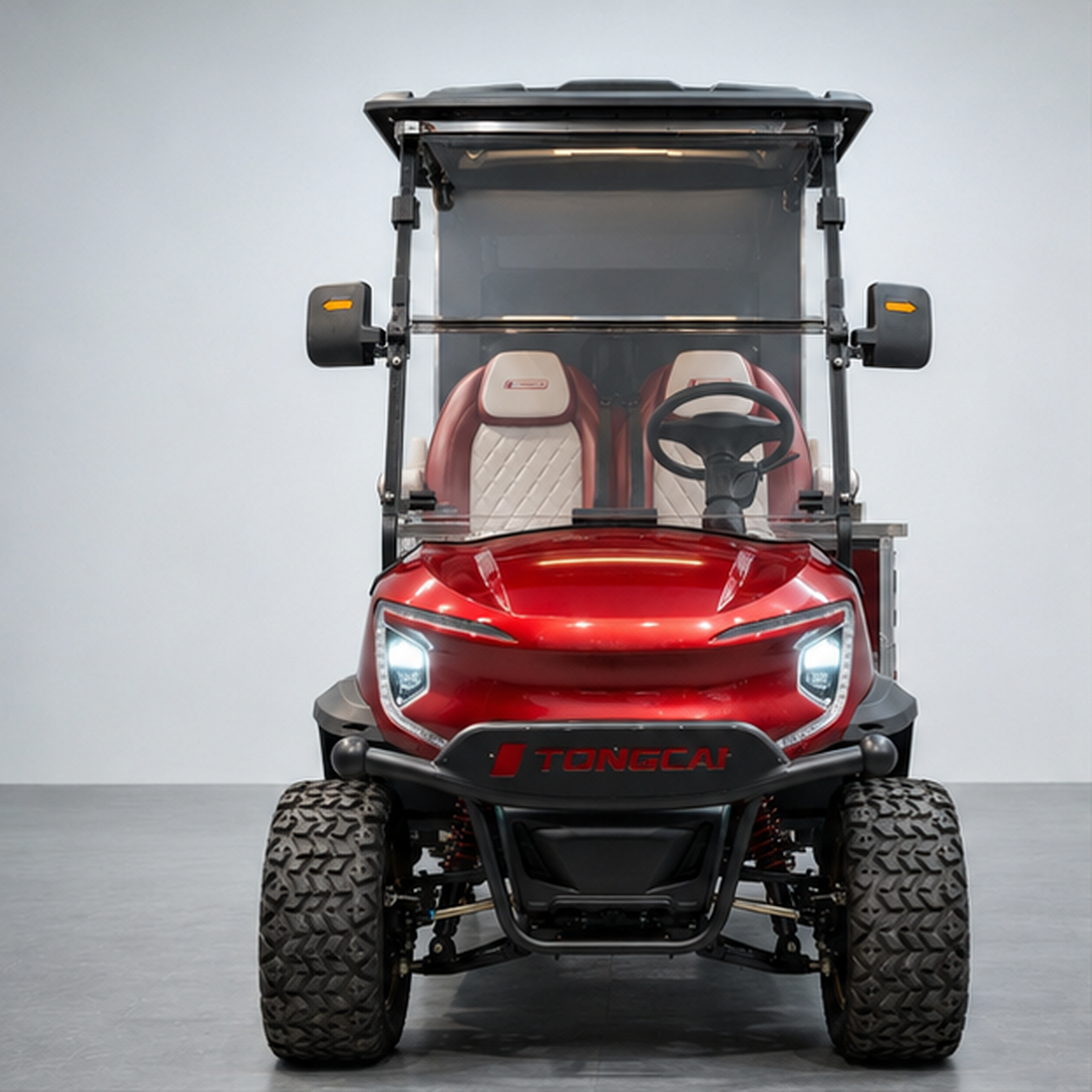
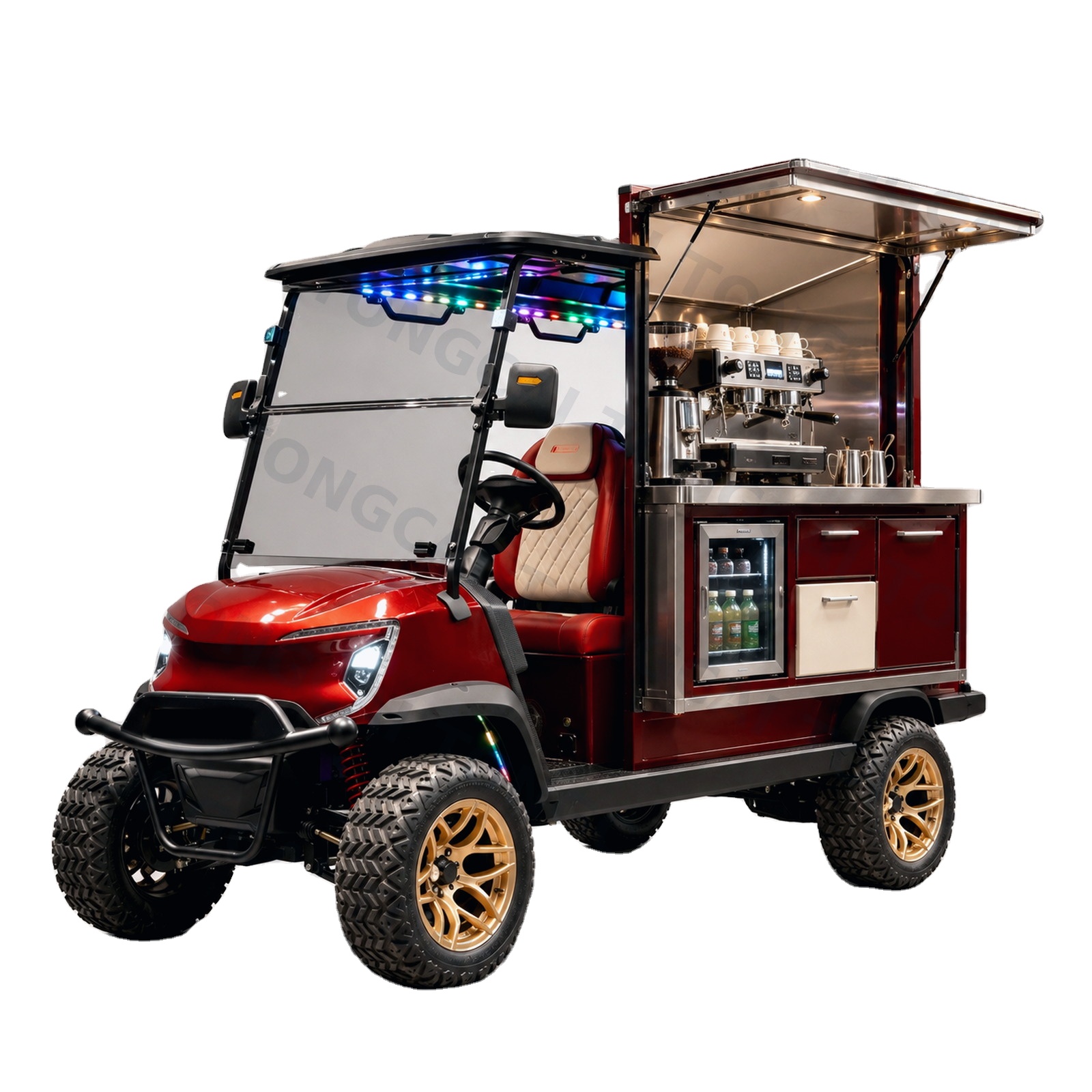
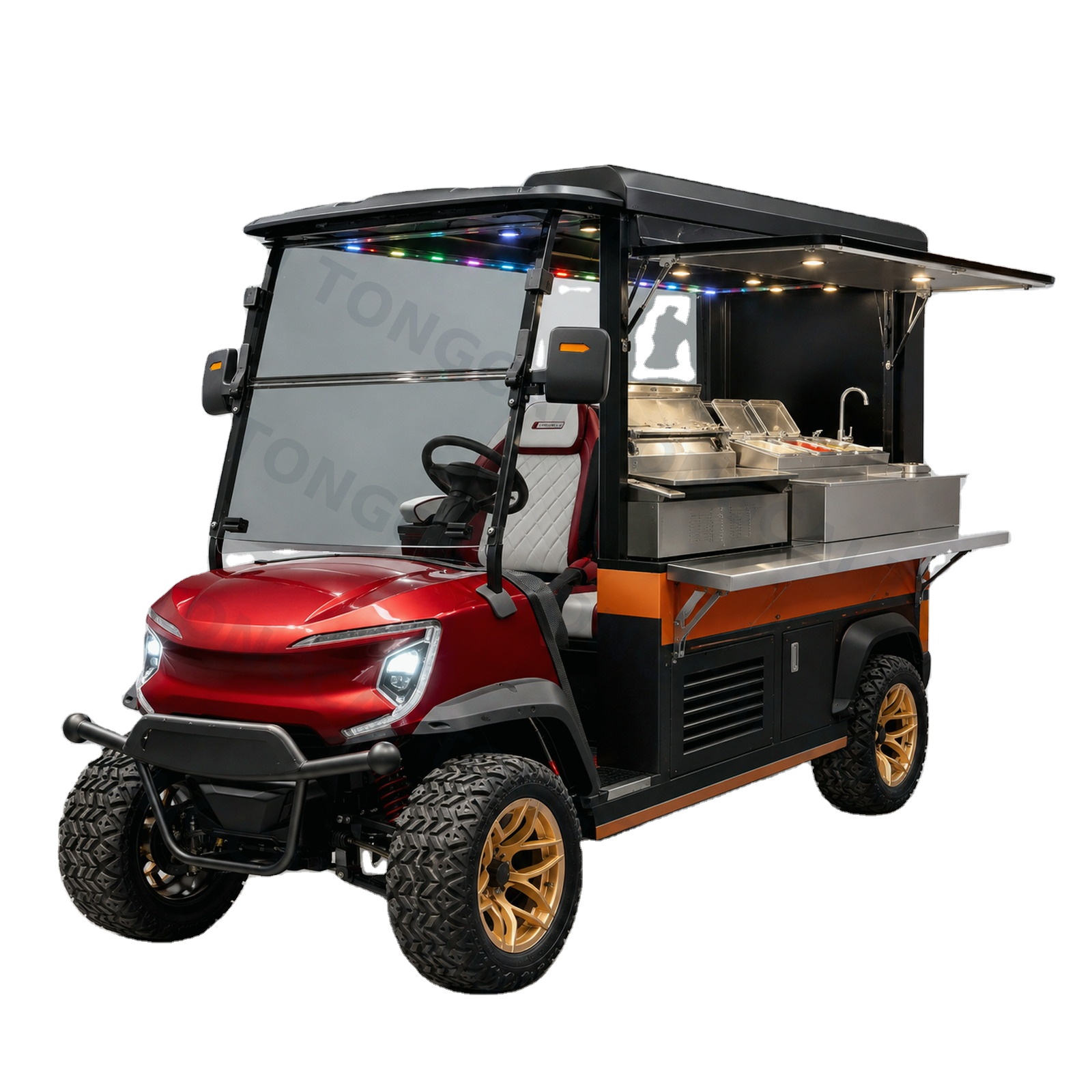
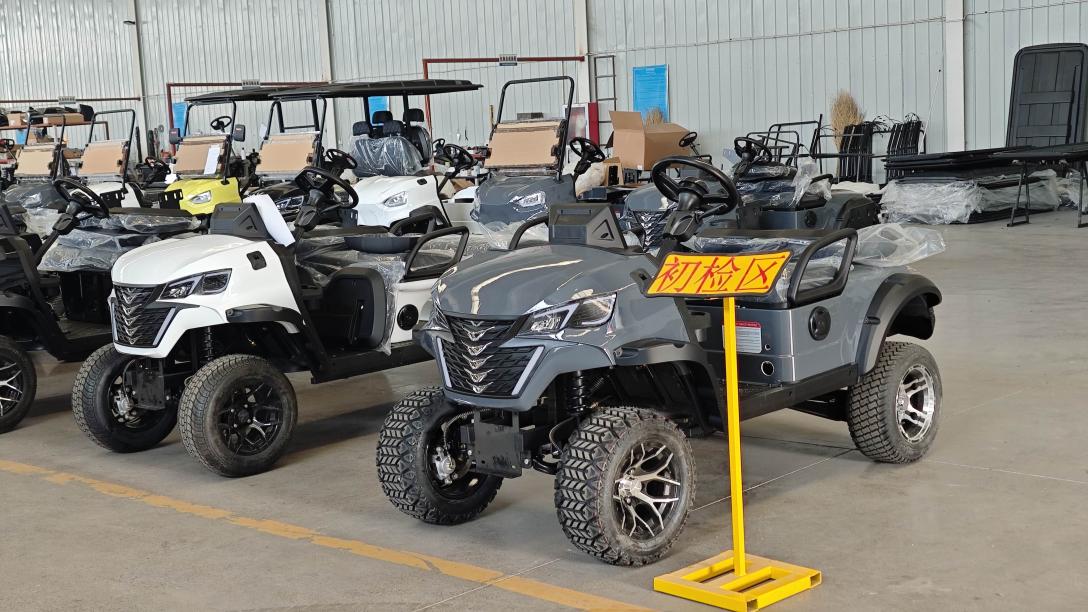
Engineered for all-terrain utility, hospitality circuits, golf club estates, and specialty retail mobility with high-efficiency drivetrains.
A technical examination of powertrain transitions, chassis metallurgy, autonomous telemetry, and international compliance architectures.
The transition from 48V legacy lead-acid batteries to integrated 60V and 72V Lithium Iron Phosphate (LiFePO4) systems has transformed the 2-passenger electric cart segment. High-voltage drivetrains reduce operating currents, minimizing heat dissipation in wire harnesses and improving thermodynamic safety across intensive 18-hole cycles or resort utility operations. Smart Battery Management Systems (BMS) with CAN bus telemetry deliver real-time cell balancing, cycle logging, and predictive maintenance protocols that safeguard fleet uptime.
Legacy series-wound DC motors have been predominantly replaced by 3.3kW to 5.0kW AC Induction and Permanent Magnet Synchronous Motors (PMSM). When paired with Curtis or EnPower intelligent controllers, PMSM units achieve energy conversion efficiencies above 92%. This mechanical upgrade provides superior low-end torque for 25% inclines, smooth low-speed modulation on manicured turf, and robust hill-hold electromagnetic locking that eliminates rollback on steep golf course cart paths.
Modern golf vehicle longevity is governed by metallurgical processing. Tier-one Chinese manufacturers employ automated CNC pipe bending and robotic gas metal arc welding (GMAW) on high-tensile steel or 6061-T6 aluminum alloys. Cathodic electrophoretic deposition (e-coating) combined with thermosetting powder paint guarantees 1,000+ hours of ASTM B117 salt spray resistance—essential for fleets serving oceanfront resorts, island communities, and humid tropical climates.
In-depth hardware comparison for commercial fleet managers and overseas import distributors.
| Engineering Parameter | Conventional Commercial Cart | Next-Gen CCB Export Standard | Operational Impact for Importers |
|---|---|---|---|
| Powertrain Platform | 48V Lead-Acid / 3kW DC Motor | 60V/72V LiFePO4 / 4kW-5kW AC/PMSM | 35% higher energy density; zero maintenance cycles. |
| Chassis Metallurgical Treatment | Standard Prime Spray Paint | Cathodic Electrophoresis + Zinc Phosphate | Immunity to rust in marine environments; 10+ year structural life. |
| Suspension Architecture | Leaf Spring Front & Rear | Double A-Arm Independent MacPherson Front | Eliminates body roll; reduces turf stress and rider fatigue. |
| Braking Subsystem | Mechanical Drum Cable Actuated | Four-Wheel Hydraulic Disc + Electro-Brake | 40% shorter stopping distance; automatic slope immobilization. |
| Body Shell Substrate | Recycled ABS Plastic Shell | High-Impact Automotive PP / Pure Resin | UV resistance against cracking, fading, and chipping. |
| Regulatory Certification | Uncertified Domestic Build | CE Machinery Directive / TÜV Verified Facility | Seamless customs clearance across EU, North America, and GCC. |
Operating out of a modern 14,200 m² integrated production plant in Tianqu Industrial Park, Dezhou, Shandong, China, Shandong CCB New Energy Machinery Co., Ltd. sets the benchmark for electric vehicle fabrication. Certified on-site by TÜV Rheinland and recognized as an audited premier custom manufacturer, the factory integrates the entire manufacturing continuum under single-roof operational control.
Unlike trading assemblers relying on outsourced rolling chassis kits, CCB executes structural cutting, CNC tube forming, precision robotic welding, automated phosphate dipping, e-coating, and comprehensive mechanical sub-assembly in-house. Supported by over 140 Tier-1 component vendors, our vehicles adhere strictly to ISO9001 quality systems and CE conformity benchmarks.
With dedicated export desks serving clients in over 16 languages, CCB delivers end-to-end foreign trade logistics: customized packaging frame design, container load optimization (CKD/SKD), spare part bundling, and direct engineering documentation.

Key technological and regulatory shifts dictating procurement decisions for 2025 through 2030.
Monocrystalline photovoltaic roofs are transforming fleet duty cycles. Integrated 150W-300W rooftop arrays deliver 15-25% auxiliary daily range replenishment under normal ambient daylight, decreasing shore-power grid draw and extending lithium battery cycle longevity in sunny resort environments.
Fleet operators are mandating 4G/GPS telematics integration directly onto the controller bus. Municipalities and golf course managers demand automated boundary speed-limiting, geo-fenced cart lockdown, real-time SOC monitoring, and impact sensors to reduce insurance liability and maintenance costs.
Procurement is diverging away from non-regulated fairway carts toward street-legal Low-Speed Vehicles (LSV/NEV conforming to FMVSS 500 in the USA or L6e/L7e in Europe). Vehicles require DOT-certified windshields with wipers, 3-point seatbelts, side mirrors, and full turn-signal LED clusters straight from the factory.
Skyrocketing ocean freight rates have made optimized container packing paramount. Importers increasingly procure semi-knocked-down (SKD) or completely-knocked-down (CKD) modular units, doubling or tripling 40-foot HQ container capacity from 6 built units up to 18-24 packaged vehicle sets with simple bolt-together jigs.
From metallurgical cold-cutting to wet-weather brake dyno testing, each 2-passenger vehicle follows a verified production protocol.
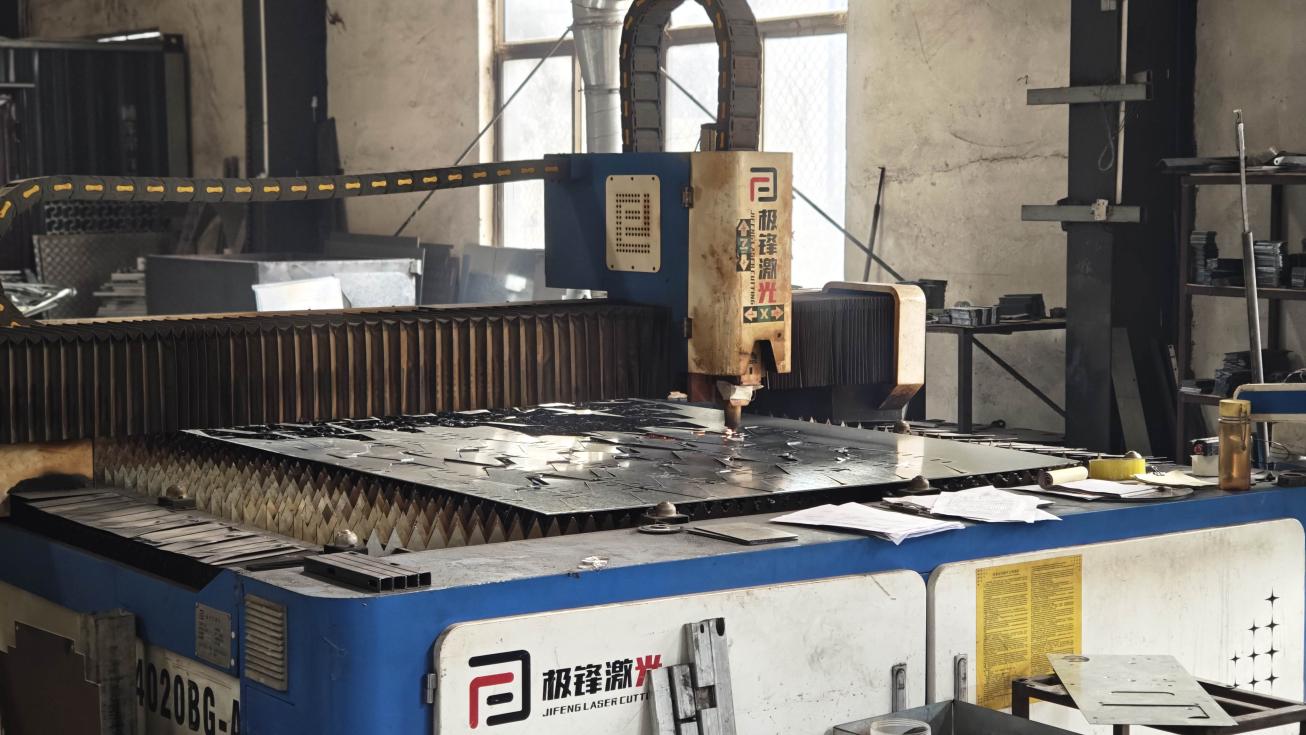
High-precision CNC fiber lasers cut structural steel tubing to sub-millimeter tolerances, ensuring joint integrity before fixturing.
Billet suspension arms and axle hubs undergo multi-axis CNC milling to ensure accurate bearing seating and steering geometry.
Computer-controlled mandrel bending forms roll-over protection structure (ROPS) tubing without wall thinning or cross-sectional collapse.
Frame jigs lock chassis tubing in place while certified technicians apply gas metal arc welding with 100% seam penetration checks.
Submersion in electro-deposition bath followed by high-bake powder painting creates an impenetrable anti-corrosive barrier.
Installation of front independent A-arms, rear differential transaxle, disc brakes, and hydraulic fluid circuits.
Automotive-grade flame-retardant wiring harnesses, Curtis controllers, and DC-DC step-down converters are routed and loomed.
LiFePO4 modules are mounted with vibration-damping isolators and wired to central CAN-bus monitoring interfaces.
High-density PP injected panels, ergonomic polyurethane marine-grade seats, and polycarbonate windscreens are precision-attached.
Full software diagnostic scan verifying throttle mapping, regenerative braking curves, headlamp lux, and warning signal states.
Each unit completes a simulated hill-climb on our indoor test track to evaluate torque hold, braking balance, and motor thermals.
Detailed 65-point aesthetic and fastener torque inspection prior to strapping inside heavy-gauge steel export frames.
Direct technical and logistical answers compiled by our international trade engineering desk.
We accept sample trial orders starting from 1 complete unit for testing, homologation, and market demonstration. For commercial dealer discounts, customized OEM branding, private label livery, and tailored chassis setups, container-load volumes (such as a 20ft or 40ft HQ container) are recommended to maximize logistics freight savings.
LiFePO4 chemistry provides more than 3,500 charging cycles at 80% Depth of Discharge compared to 500-700 cycles for lead-acid. Additionally, lithium packs weigh roughly one-third of equivalent lead-acid banks, cutting vehicle curb weight, expanding range up to 90 km, and eliminating acidic vapor emissions and distilled water topping maintenance.
Vehicles are secured inside reinforced structural steel skeletal frames or treated fumigation-free wooden crates. The wheels and roofs can be detached for SKD packing, with moisture-barrier film and desiccant packs applied to sensitive electronics. Every 40ft HQ container loading layout is digitally simulated to ensure zero shifting during oceanic transport.
Yes. We offer Low Speed Vehicle (LSV) specification packages including 17-digit VIN stamping, DOT/ECE approved shatterproof safety windshields, 3-point seatbelts, electronic side-view mirrors with integrated indicators, dual headlamp high/low beams, and CE-marked horn and wiring systems compliant with local road-traffic authorities.
We provide a comprehensive 3-year warranty on lithium battery packs and structural chassis frames, alongside a 1-year warranty on electronic controllers and transaxles. Overseas dealers receive complete wiring schematics, parts exploded diagrams, troubleshooting software, and an initial wear-and-tear replacement parts consignment with their container shipment.
Beyond standard body colors, we engineer lifted suspension packages with high-clearance 12-inch or 14-inch off-road turf tires, fold-down 2-in-1 rear cargo conversion seats, aluminum flatbed boxes, enclosed weatherproof roll-up curtains, police patrol light bars, and public address siren systems.
Accelerate your business with TÜV Rheinland verified manufacturing. Request factory direct pricing, technical CAD schematics, and container shipping quotes today.
Get a Quote