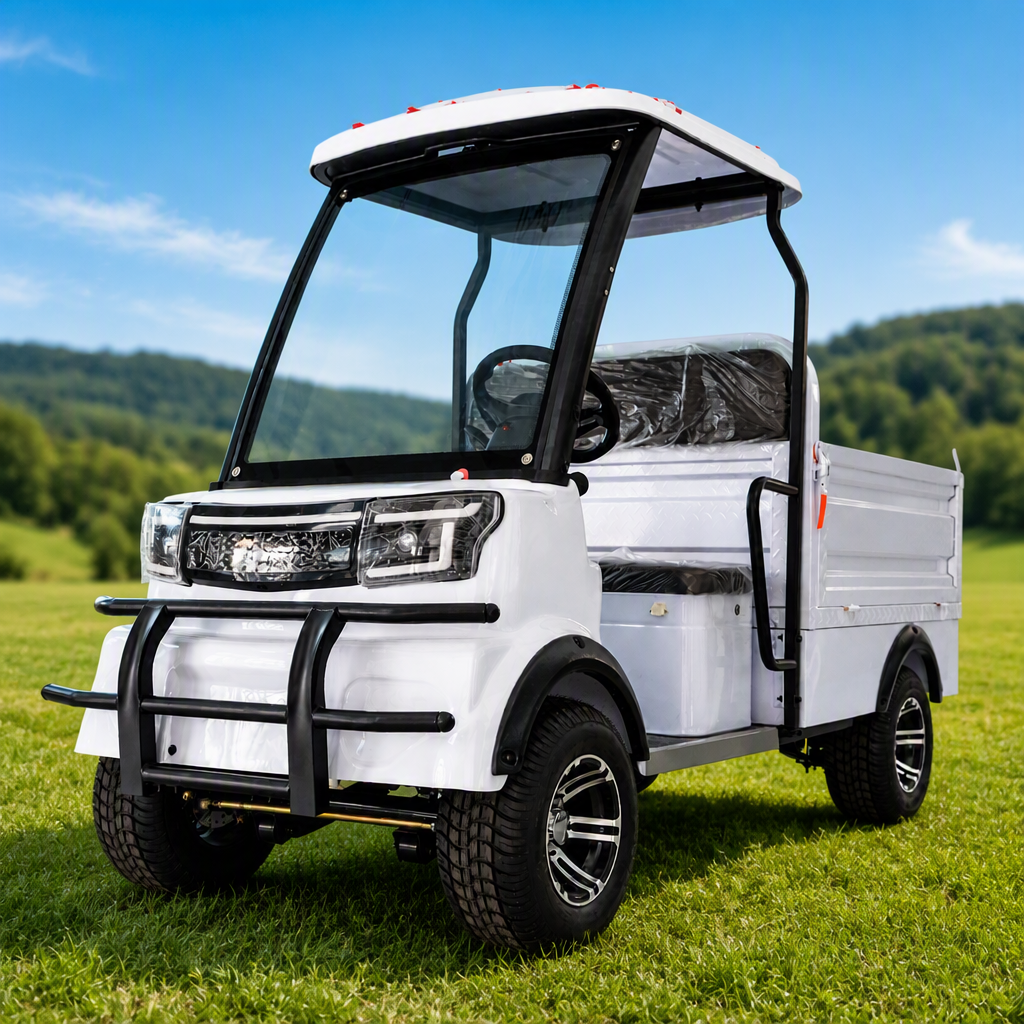
China Top Four Wheel Drive Golf Cart Factories & Supplier
Engineering insights, dual-motor powertrain architectures, total cost of ownership (TCO) benchmarks, and turnkey fleet procurement standards for international distributors and commercial resort operators.
Precision Factory Engineering
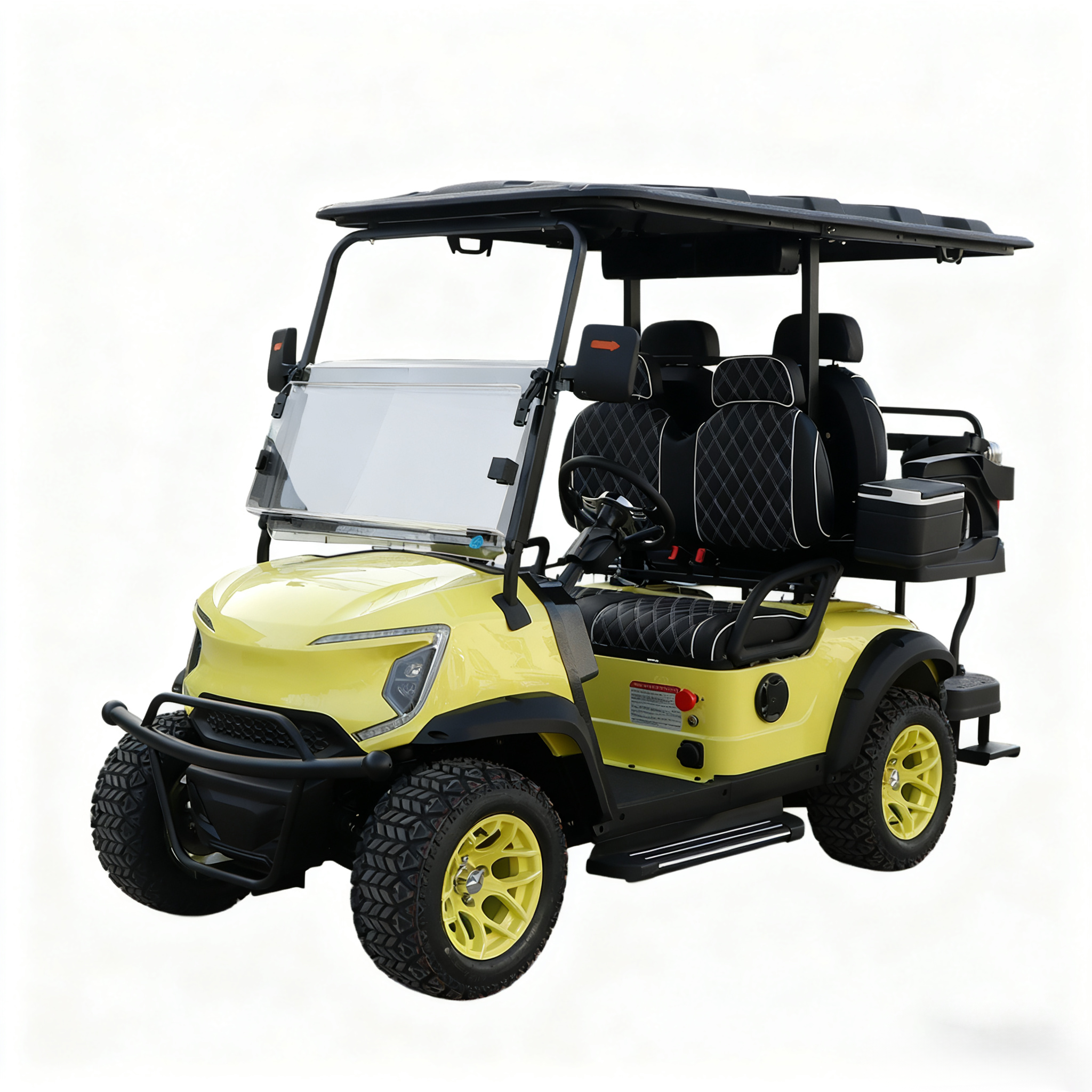
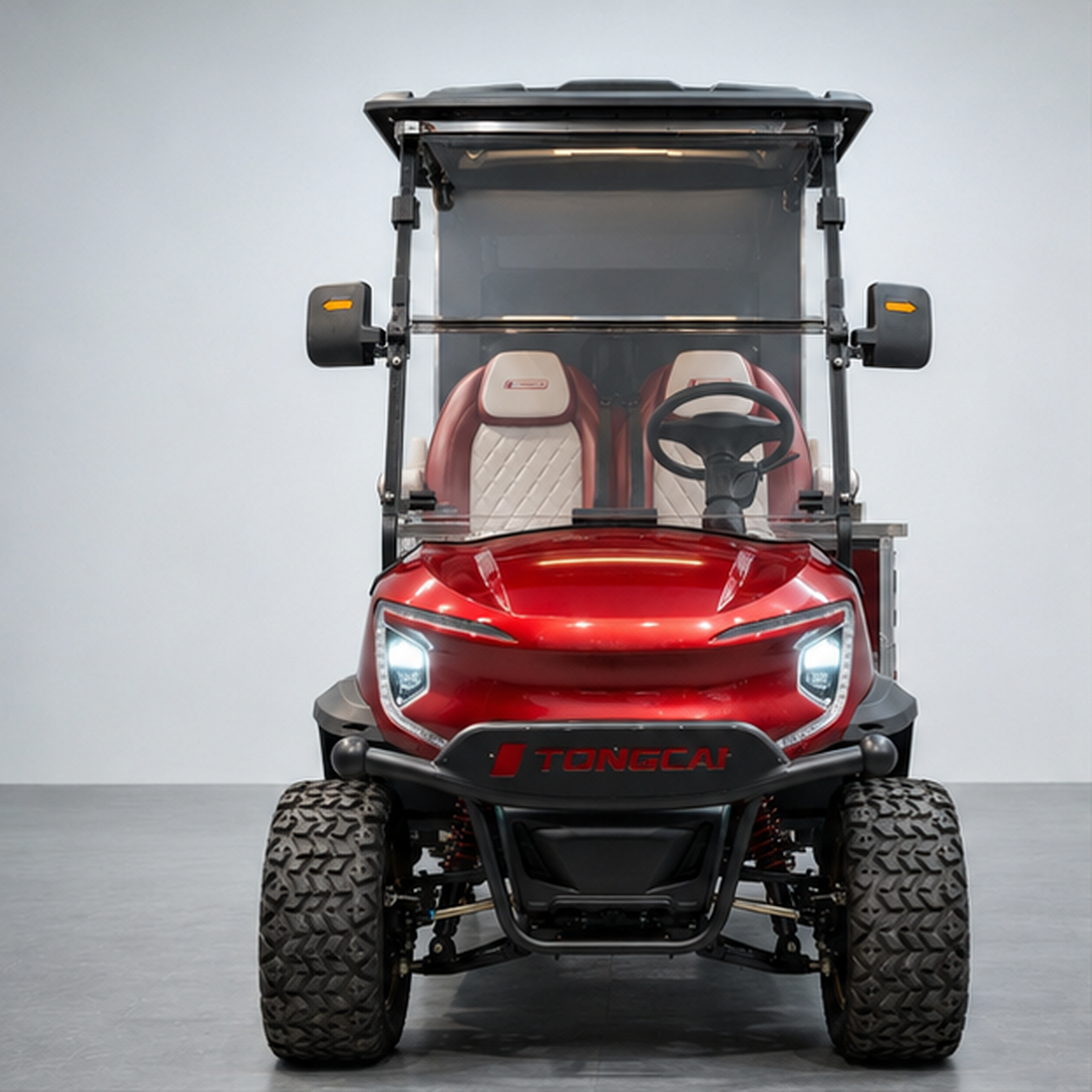
Verified 4WD & Utility Golf Cart Model Lineup
Direct supply from Shandong CCB New Energy Machinery Co., Ltd. — TÜV Rheinland on-site verified production facility featuring 48V, 60V, and 72V commercial chassis.
The Technical Anatomy of Four-Wheel Drive (4WD) Electric Golf Carts
Traditional two-wheel drive (2WD) golf carts, originally engineered for manicured, low-gradient turf, consistently encounter catastrophic limitations when deployed across rugged terrain, steep inclinations exceeding 25%, sandy coastal resorts, and muddy agricultural estates. As international golf cart usage transitions from purely leisure fairways into versatile Low-Speed Vehicles (LSV), Utility Task Vehicles (UTV), and passenger resort runabouts, four-wheel drive (4WD) architectures have emerged as an uncompromising requirement. Sourcing from top-tier Chinese manufacturers such as Shandong CCB New Energy Machinery Co., Ltd. (Tongcai) delivers profound engineering advantages over secondary assemblers by integrating proprietary dual-motor synchronized drivetrains, high-tensile hot-dip galvanized chassis, and smart battery management systems (BMS).
Dual AC Motor Dynamic Distribution
Unlike mechanical transfer cases that inflict friction losses and maintenance penalties, modern Chinese 4WD carts utilize dual asynchronous AC or Permanent Magnet Synchronous Motors (PMSM) independently driving front and rear transaxles with zero mechanical drag when operating in eco-mode.
Closed-Loop Controller Calibration
Equipped with dual Curtis or EnPower electronic controllers communicating over a high-speed CAN-bus network, torque is dynamically modulated within milliseconds to prevent wheel slippage on loose gravel, wet slopes, and uneven muddy roads.
Hill Descent & Active Regenerative Braking
Safety is fortified via integrated electro-magnetic electromagnetic parking brakes (EMB) paired with four-wheel hydraulic disc systems. Regenerative braking captures kinetic energy on downhills, restoring up to 14% state-of-charge while preventing thermal brake fade.
Drivetrain Comparison: Traditional 2WD vs. Dual-Motor Industrial 4WD
When fleet procurement teams evaluate tender bids, assessing raw hardware specifications ensures long-term operational viability. Below is an engineering comparison illustrating the architectural divergence between standard golf resort fleet carts and Shandong CCB’s heavy-duty 4WD models.
Performance Parameter
Standard Commercial 2WD Cart
Shandong CCB Heavy-Duty 4WD Cart
Fleet Advantage & Procurement Impact
Motor Architecture
Single 3.0kW to 4.0kW Rear DC/AC Motor
Dual 4.0kW + 5.0kW AC or PMSM (Up to 10kW Peak)
Eliminates stalling; doubles peak gradeability up to 35%
Procurement directors across the United States, European Union, Australia, and the Middle East are undergoing a profound strategic pivot. Sourcing electric utility vehicles is no longer treated as a simple catalog commodity purchase. Instead, supply chain decision-makers must account for macro trends that directly determine total cost of ownership (TCO), legislative compliance, and residual fleet valuation over a 7-to-10-year depreciation cycle.
1. Absolute Hegemony of LiFePO4 Chemistry
By 2026, lead-acid batteries will become obsolete in commercial fleet tenders. Lithium Iron Phosphate (LiFePO4) offers 3,500 to 5,000 full life cycles at 80% DOD (Depth of Discharge), operational stability from -20°C to 55°C, and onboard fast-charging in under 3.5 hours.
2. Telematics & Cloud Fleet Management
Tier-1 buyers now mandate integrated 4G/GPS telematics hardware. Fleet operators track real-time geofencing, remote battery state-of-health (SoH) diagnostics, automated speed limiting in high-pedestrian resort zones, and theft immobilizer protocols via centralized software dashboards.
3. Factory-Direct Street-Legal Homologation
The boundary between off-road buggy and urban runabout has dissolved. Importers favor turnkey homologated models complete with DOT FMVSS 500 certified AS4 windshields, seatbelts, side mirrors with integrated indicators, reversing cameras, and horn switches certified for immediate plate registration.
4. Modular Chassis & Multi-Purpose Bodies
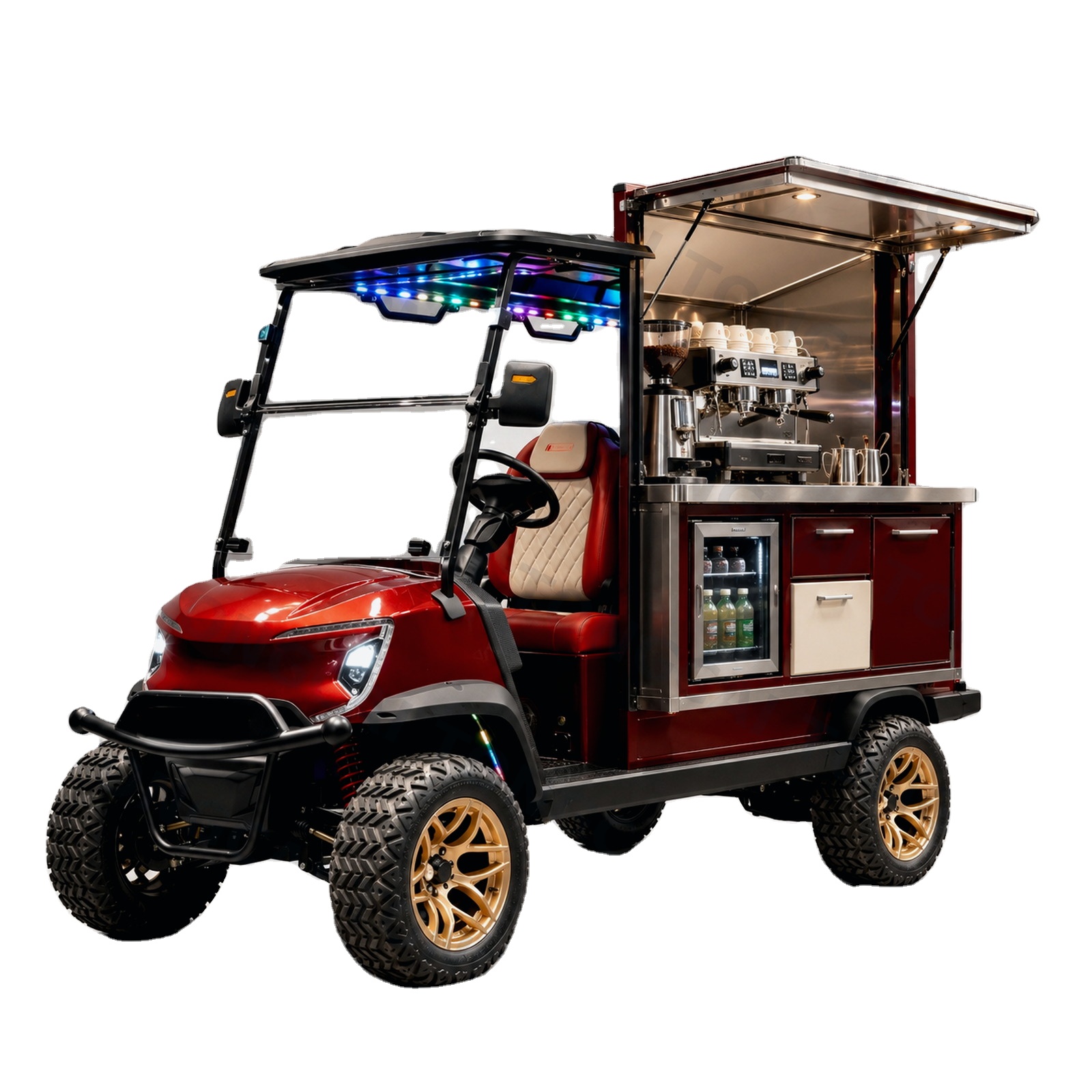
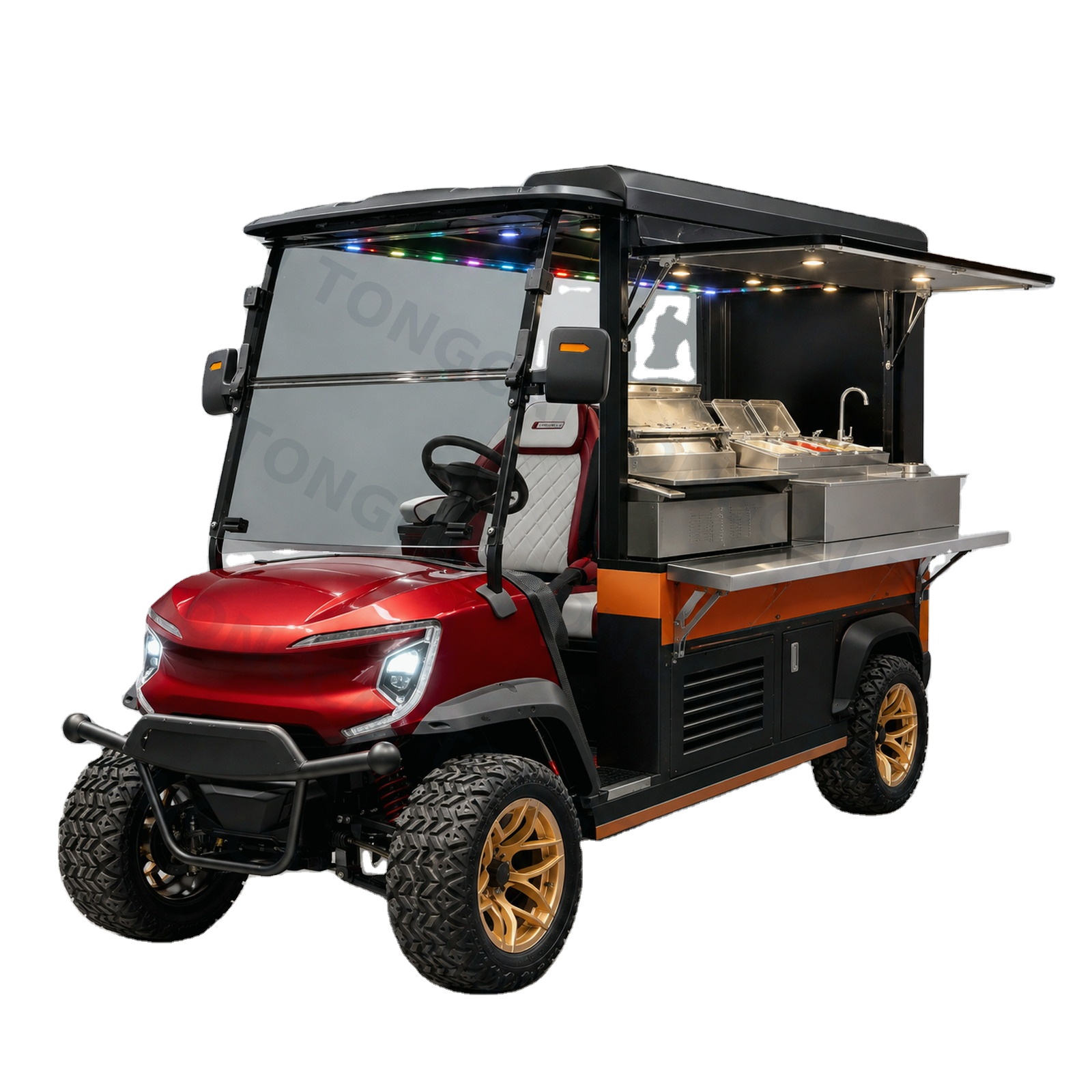
High capital costs necessitate multi-role utility vehicles. Shandong CCB designs interchangeable rear assemblies: a 4-seater passenger pod can be swapped in 40 minutes for a cargo dump box, a mobile coffee/donut dispensary, or medical ambulance stretcher modules, maximizing utility across four seasons.
Manufacturing Authority & Supply Chain Resilience
Why Tier-1 Importers Partner with Shandong CCB New Energy Machinery
While the Chinese market includes hundreds of small trading intermediaries, genuine manufacturing facilities possessing heavy industrial tooling, in-house metallurgy, and international export clearance are remarkably rare. Shandong CCB New Energy Machinery Co., Ltd. operates from Tianqu Industrial Park, Dezhou City, Shandong Province — the epicenter of China’s advanced commercial vehicle supply chain. Verified on-site by TÜV Rheinland, our manufacturing plant provides overseas brands, regional dealers, and government procurement officers with verifiable production discipline.
Complete In-House Metallurgy & Tooling
We do not purchase generic pre-welded chassis. From computerized raw steel tube cutting, automated hydraulic CNC pipe bending, to fixture-based robotic welding, our Dezhou facility executes every fabrication step internally. This guarantees precise dimensional tolerances, high structural rigidity, and eliminates frame cracking under punishing 4WD off-road stress.
Electrophoretic Cathodic Dip Coating
Corrosion is the primary destroyer of coastal resort vehicle assets. CCB chassis pass through an automated 8-stage cathodic dip immersion bath and high-temperature curing oven. This ensures deep uniform anti-rust coverage inside tubular frames that conventional manual electrostatic spray powder coating fails to reach.
Deep OEM / ODM Specification Control
We empower regional distributors to build dominant local market presence. From sample-based body shell customization, injection-molded automotive dashboards, proprietary suspension lift kits, to localized language firmware and high-output solar auxiliary roofs, CCB’s engineering department tailors every unit to client specifications.
Each vehicle leaving our Dezhou factory floor is accompanied by an inspection certificate verified against strict quality protocols. Our 12-stage workflow guarantees absolute traceability from raw billet to container lashing.
STAGE 01
Raw Steel Laser Cutting
Automated laser profiling of high-grade tubular carbon steel within 0.1mm tolerance.
STAGE 02
Precision CNC Machining
Suspension mounting brackets and pivot points milled for zero vibration alignment.
STAGE 03
Multi-Axis Pipe Bending
Cold mandrel bending preserves structural tube wall thickness without wrinkling.
STAGE 04
Precision Fixture Welding
Chassis locked into rigid geometric jigs to eliminate warping, followed by smooth seam polishing.
STAGE 05
Anti-Corrosive E-Coating
Cathodic dip primer and UV-resistant automotive polyurethane topcoat application.
STAGE 06
Drivetrain & Axle Marriage
Installation of 4WD transaxles, AC electric motors, independent wishbones, and brake rotors.
STAGE 07
Electrical & BMS Looming
Waterproof IP67 wiring harness integration with CAN-bus controller and LiFePO4 packs.
STAGE 08
Body Paneling & Trim
Impact-resistant PP automotive body shells, luxury seats, and reinforced roofs fitted.
STAGE 09
Electronic Bench Calibration
Software testing of controller throttle curves, regenerative brake limits, and lighting circuits.
STAGE 10
Dynamic Roller Dyno Test
Simulated continuous hill climb and full-throttle acceleration to verify torque balance.
STAGE 11
Water Deluge Ingress Test
High-pressure rain chamber soak to verify enclosure sealing around all critical electronics.
STAGE 12
FQC Final Road Inspection
Live track driving assessment covering steering tracking, braking distances, and cosmetic sign-off.
Practical Sourcing Intelligence
Frequently Asked Questions for Commercial Buyers & Importers
What are the key technical differences between full-time 4WD and selectable on-demand 4WD in electric golf carts?
Full-time 4WD utilizes dual independent AC motors (front and rear) running continuously with torque dynamically split by smart controller firmware. This setup provides uninterrupted traction on slippery hills, sand, and mud, but draws slightly higher battery amperage. Selectable or on-demand 4WD relies on electronic switching or electromagnetic sprag clutches in the front axle. On paved flat roads, only the rear motor operates, boosting range by 12–18%. When the controller detects rear-wheel slip or the operator engages the 4WD toggle on the dashboard, the front motor activates instantaneously. For rental fleets and golf courses with moderate elevation, on-demand systems offer the best balance of range and off-road capability.
How does LiFePO4 battery total cost of ownership (TCO) compare to lead-acid batteries over a 5-year commercial operational cycle?
While LiFePO4 lithium power systems require an initial 20% to 35% procurement premium, they dramatically reduce operating expenditures within 18 months. A commercial lead-acid battery pack lasts approximately 600–800 charge cycles, meaning high-use resort fleets require complete pack replacements every 2 to 2.5 years. Lead-acid also incurs substantial labor costs for terminal cleaning, specific gravity hydrometer checks, and weekly distilled water replenishments, while wasting up to 25% more electricity during charging due to heat inefficiency. In contrast, Grade-A LiFePO4 cells deliver 3,500+ cycles (8 to 10 years of daily use), zero maintenance, integrated smart cell balancing, and support Opportunity Charging during lunch shifts without degrading cell capacity. Over five years, lithium reduces fleet TCO by 42% to 58%.
What specific certifications are required to register and legally operate these vehicles as Low Speed Vehicles (LSV) in the US and Europe?
In the United States, street legal registration requires compliance with Federal Motor Vehicle Safety Standard 500 (FMVSS 500) for Low-Speed Vehicles (top speed 20–25 mph). Required equipment includes a Department of Transportation (DOT) certified automotive glass windshield (AS4/AS5), 3-point seatbelts compliant with FMVSS 209, DOT-stamped headlights with high/low beams, front and rear turn indicators, red rear brake lights, side mirrors, a rear-view mirror, an exterior horn, parking brake, and a 17-digit Vehicle Identification Number (VIN) plate. In the European Union, carts must comply with L6e or L7e light vehicle regulations under Whole Vehicle Type Approval (WVTA), which mandates CE directives, electromagnetic compatibility (EMC E-mark) certification, hydraulic dual-circuit brakes, and COC documentation. Shandong CCB manufactures turnkey models pre-configured to meet both US DOT and EU CE/EEC standards upon customs clearance.
What is the optimum shipping configuration: Completely Built-Up (CBU), Semi-Knocked Down (SKD), or Completely Knocked Down (CKD)?
The decision hinges on your local labor capabilities, import tariff structures, and container freight economics:
• CBU (Completely Built-Up): Vehicles arrive 100% assembled inside heavy-duty steel transit frames. Ideal for buyers ordering small batches (1 to 4 units) or those without mechanical assembly workshops. A 40ft High Cube (HC) container accommodates 4 to 6 units depending on body length and lift kits.
• SKD (Semi-Knocked Down): The chassis, drivetrain, and wiring arrive fully intact, while the roof, windshield, wheels, and seat brackets are packed flat. This method strikes the best balance for commercial dealers, allowing 10 to 14 units per 40ft HC container, slashing per-unit sea freight by over 50% while requiring only 45 minutes of mechanical reassembly per cart.
• CKD (Completely Knocked Down): Components are entirely disassembled into separate crates. Many developing markets levy significantly lower customs tariffs on CKD vehicle components compared to finished vehicles. A 40ft container can accommodate 18 to 22 units, but the importer must operate a dedicated assembly and testing facility.
Can Shandong CCB provide customized private label branding, localized speed firmware, and proprietary accessory integration for regional dealer networks?
Yes, custom engineering is our core operational focus. As a verified custom manufacturer, we routinely partner with distributors across North America, Europe, Australia, and Latin America. OEM options include custom-molded steering wheel logos, embroidered headrests, bespoke automotive paint color matching via Pantone/RAL codes, client-designed digital LCD touchscreen startup screens, and specialized chassis configurations (such as lift kits, hydraulic dump beds, refrigeration boxes, or rooftop solar arrays). Firmware parameters—including top-speed governance, acceleration curves, regenerative braking aggression, and battery low-voltage cutoffs—are tailored to ensure strict compliance with your local municipal and regional off-road regulations.
How does the factory manage after-sales technical support, schematic documentation, and spare parts supply chains internationally?
Every container shipment includes an export-grade emergency maintenance pack (relays, fuses, brake pads, switch sensors, LED light clusters). We provide authorized dealers with detailed English technical service manuals, full-color wiring schematics, and controller diagnostic software. For ongoing operational support, our Dezhou engineering desk connects directly via secure video communication to assist local dealer technicians with troubleshooting. Common wear parts are stocked in volume and dispatched internationally via DHL or FedEx air express within 48 hours, ensuring zero fleet downtime for your end customers.
Engineer Your Commercial Golf Cart Fleet with Shandong CCB
Connect directly with our Dezhou technical export desk to obtain comprehensive CAD dimensional drawings, electrical schematics, full commercial dealer price lists, and customized container loading plans.
 Deutsch
 Português
 Español
 Français
 Italiano
 Русский
 한국어
 日本語
 العربية
 ไทย
 Tiếng Việt
 Türkçe
 Nederlands
 Indonesia
 עברית
 हिन्दी