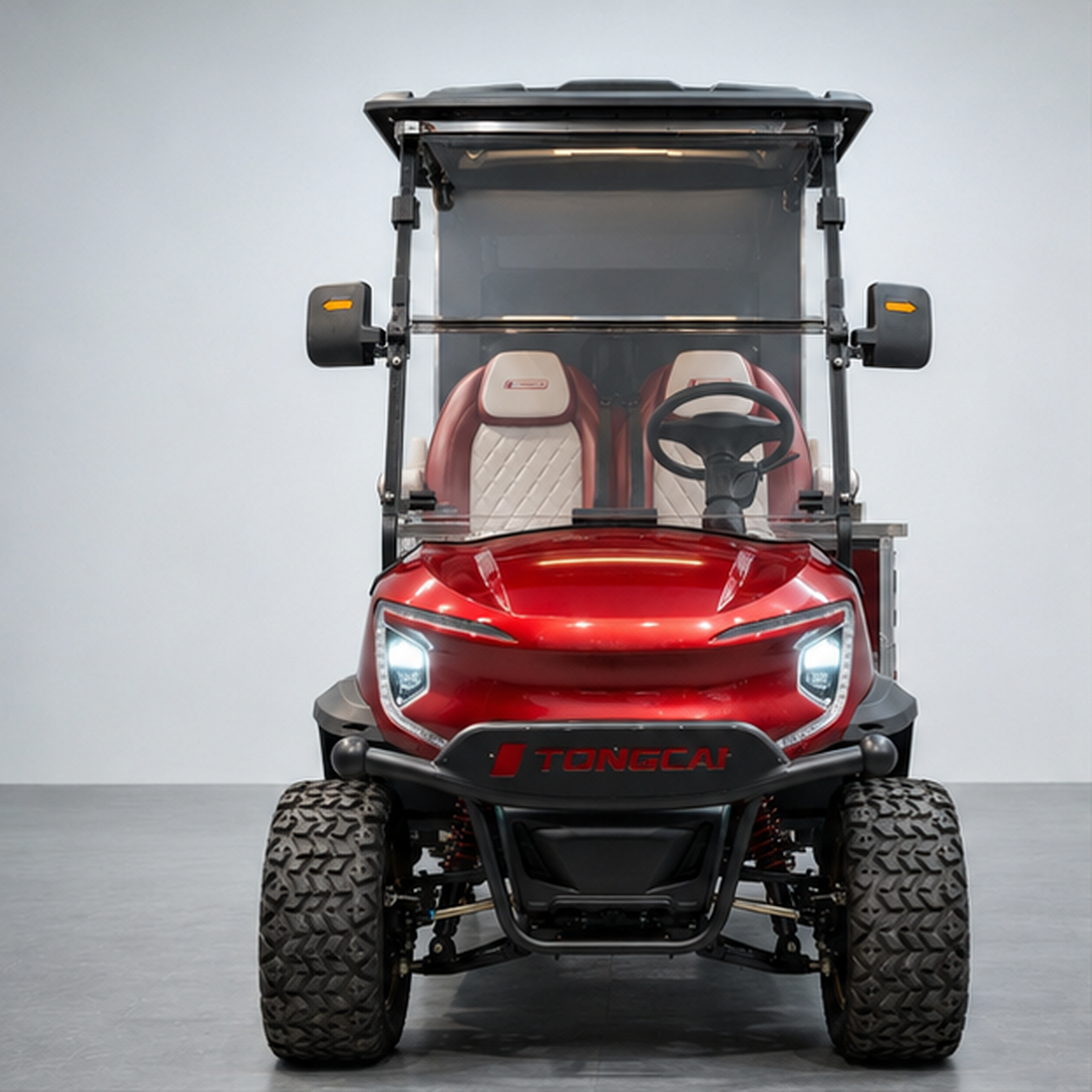
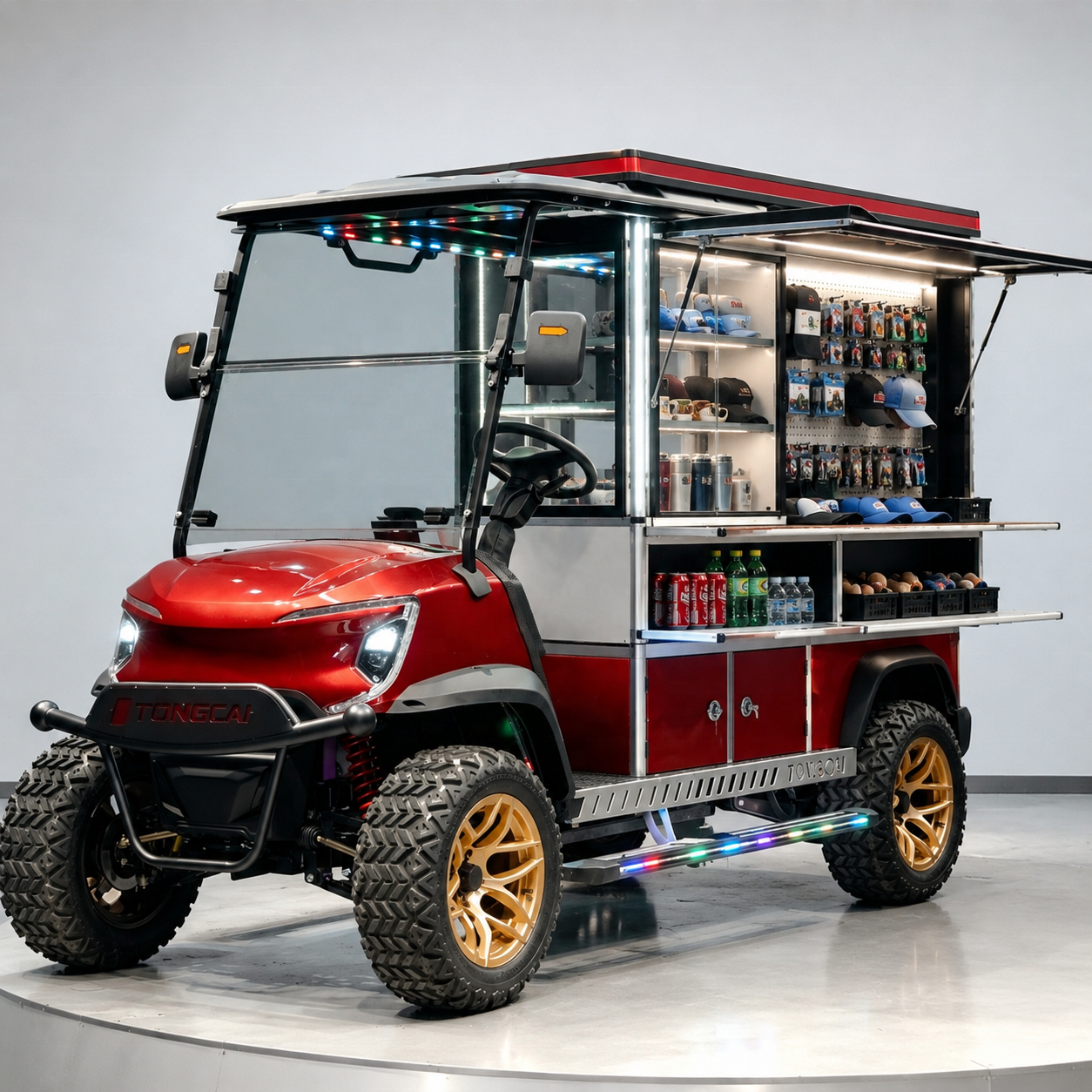
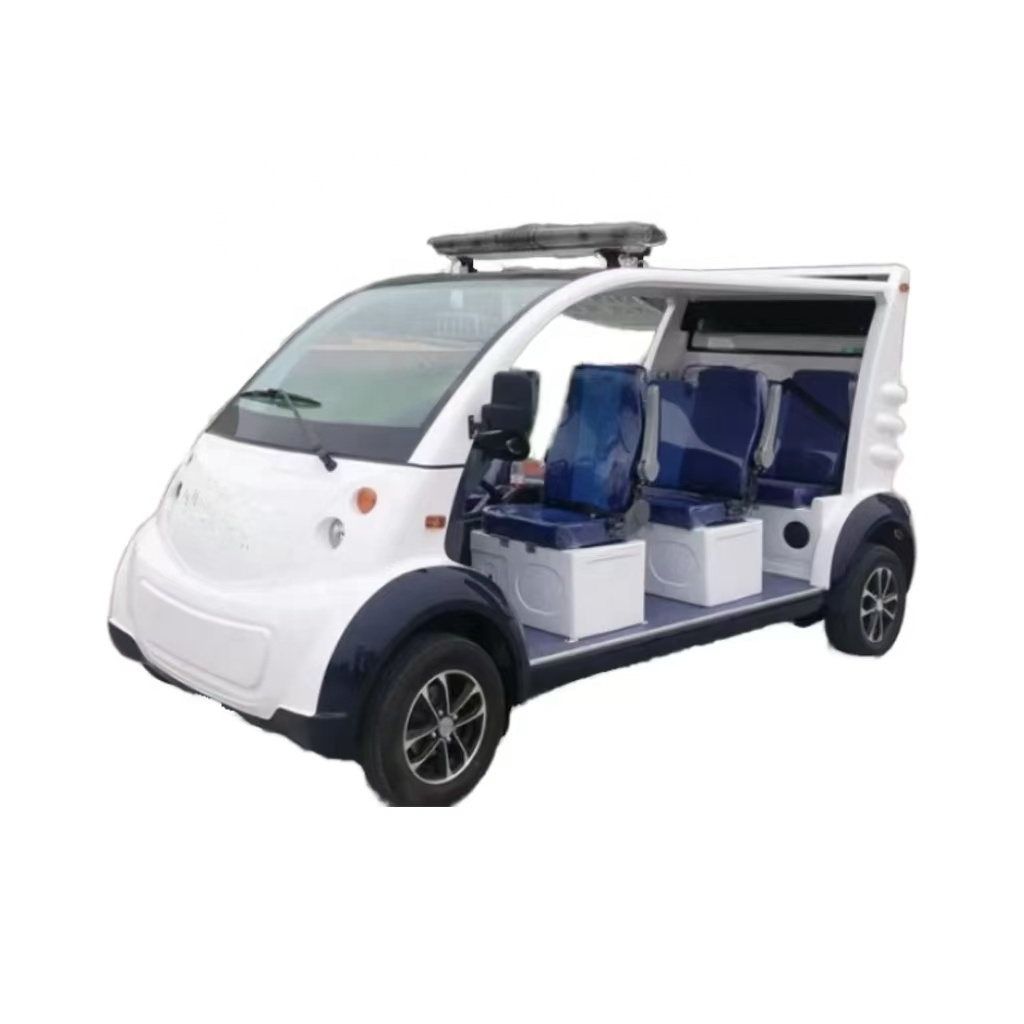
The global transition toward decentralized clean-energy transport has transformed low-speed vehicles (LSV) from modest fairway carts into heavy-duty passenger movers. Modern 8-seater electric golf carts operate as mission-critical shuttles across luxury island resorts, gated master-planned communities, international airports, botanical reserves, and university campuses. Sourcing an 8-passenger platform demands deeper scrutiny than choosing conventional 2- or 4-seat runabouts. Accommodating eight adult passengers alongside baggage introduces dynamic payloads exceeding 700 kg (1,540 lbs), demanding substantial structural integrity, optimized powertrain efficiency, and precise electronic safety integration.
1. Chassis Torsional Rigidity and Anti-Corrosion Metallurgy
A primary failure mode in extended-wheelbase passenger vehicles originates from chassis flexing under full gross vehicle weight ratings (GVWR). Shandong CCB New Energy Machinery Co., Ltd. addresses frame deflection by replacing basic square steel tubing with high-tensile hot-dip galvanized and electrophoretic (e-coated) seamless tubular chassis systems. By deploying computerized tube bending and robotic fixture welding, dimensional tolerances stay under 0.5 mm across a wheelbase spanning 3,200 mm to 3,800 mm.
Furthermore, coastal hospitality operations—such as island resorts and tropical beachfront promenades—regularly battle salt-spray corrosion. CCB applies a dual-layer cathodic electrodeposition coating beneath automotive-grade polyurethane topcoats. This treatment withstands rigorous ASTM B117 salt spray tests beyond 1,000 hours, keeping critical chassis welds, suspension subframes, and battery mounting cradles structural sound over multi-year operations.
2. Drivetrain Architecture: 72V LiFePO4 vs. Legacy 48V Lead-Acid
Payload capacity is intrinsically bound to voltage stability. While historic 48V systems operating lead-acid battery banks suffer from severe voltage sag under high amperage demands (such as navigating 20% inclines with 8 passengers), contemporary commercial fleets rely on 72V Lithium Iron Phosphate (LiFePO4) systems. The benefits are proven across operational environments:
| Engineering Attribute |
Standard 48V Lead-Acid Array |
CCB Advanced 72V LiFePO4 Platform |
Operational Impact |
| Pack Weight (Typical) |
320 kg – 380 kg |
95 kg – 130 kg |
Saves ~250 kg in dead weight; increases passenger allowance |
| Cycle Life (80% DoD) |
500 – 750 cycles |
3,500 – 4,500 cycles |
Eliminates battery replacements for 6–8 years of service |
| Charging Protocol |
8 – 10 hours (Bulk + Float) |
2.5 – 3.5 hours (Fast CC/CV) |
Enables midday opportunity charging between shuttle shifts |
| Motor Efficiency |
DC Series-Wound (~78%) |
AC Induction / PMSM (~92%) |
Delivers higher torque, zero brush wear, regenerative braking |
| Incline Gradeability |
12% – 15% under payload |
20% – 25% sustained |
Reliable traversal over steep golf course bridges & ramps |
The integration of Permanent Magnet Synchronous Motors (PMSM) controlled via intelligent microcontrollers enables seamless regenerative braking. In an 8-passenger platform carrying significant kinetic energy, regenerative braking recovers up to 14% of battery capacity during deceleration while drastically reducing wear on mechanical brake pads and hydraulic rotors.
3. Active Safety Systems & Braking Dynamics
Passenger safety across a commercial low-speed passenger fleet is paramount. Stopping an 8-seater vehicle with a combined gross mass approaching 1.4 metric tons requires four-wheel hydraulic disc braking systems. Older models relying on rear-axle mechanical drum setups face severe heat dissipation limits and prolonged stopping distances. CCB utilizes dual-circuit master cylinders, ventilating front and rear disc rotors, and electronic automatic parking brakes (EMB). The electro-magnetic park brake automatically locks the transmission whenever the cart drops to zero speed or encounters power loss on inclines, preventing accidental rollbacks.
The electric golf cart industry is rapidly integrating innovations from consumer electric vehicles. Over the next five to ten years, four major engineering advancements will define the 8-passenger commercial vehicle segment:
1. Direct-Drive In-Wheel Hub Motors
Current drivetrains rely on a central motor coupled to a transaxle differential. Future iterations will adopt distributed in-wheel hub motors or dual-motor electronic differential setups. Eliminating mechanical gears reduces mechanical transmission losses by 8–10%, lowers unladen mass, and frees up lower body space for expanded lithium cell capacity or low-floor passenger egress.
2. Integrated Bifacial Solar Extended Canopies
With 8-seater vehicles possessing extended canopy surfaces spanning 3.5 to 4.2 square meters, integrated monocrystalline and bifacial solar arrays are becoming standard installations. Generating between 450W and 600W of sustained solar power under clear skies, these systems provide 15 to 25 km of supplementary daily range, reducing off-grid charging dependencies in remote ecotourism settings.
3. Aluminum Space-Frame Metallurgy
To balance the structural demands of high-passenger payloads with total vehicle efficiency, lightweighting via automotive-grade extruded 6000-series aluminum alloys is replacing carbon steel chassis. Aluminum space frames deliver equal torsional resistance with an absolute 40% frame weight reduction, eliminating atmospheric corrosion risks in coastal operations.
4. Sensor-Driven Collision Mitigation and Autonomous Shuttling
In closed environments such as airports, technology parks, and expansive gated communities, 8-seater electric platforms serve as testing grounds for Level-3 low-speed autonomous shuttle operations. Ultrasonic obstacle sensing, short-range radar, and automated emergency braking (AEB) systems protect pedestrians in busy tourist corridors.
 Deutsch
 Português
 Español
 Français
 Italiano
 Русский
 한국어
 日本語
 العربية
 ไทย
 Tiếng Việt
 Türkçe
 Nederlands
 Indonesia
 עברית
 हिन्दी