Choosing the best Electric Golf Car is not about finding one model that suits everyone. The right choice depends on where you will drive, how many people or supplies you will carry, and how often you can recharge. A smooth ride on a flat course may feel very different from a loaded trip across rough paths or a large property.
This guide looks at practical details that can shape your decision: battery type, usable range, charging time, seating, storage, comfort, and safety features. Advertised range is only a starting point. Passenger weight, hills, temperature, tire condition, and driving habits can all affect how far a car travels between charges. Check the warranty terms and ask who can service the vehicle near you. If possible, take a test drive with the usual passengers and cargo.
Little things matter. A cup holder in the wrong spot, limited legroom, or a difficult-to-reach charger can become irritating with daily use. Compare the total cost of ownership, not just the sticker price, and confirm that replacement parts are available. A higher price does not always mean a better fit. Nor does a longer feature list. Some buyers may still choose differently after living with the car for a week; that uncertainty is worth acknowledging. The sections ahead offer a clear way to weigh the trade-offs and choose with confidence.
Identify Your Intended Uses and Essential Requirements
Start with a route map, not a specification sheet. Will the vehicle carry two people around a flat course, move tools across a property, or handle daily trips between buildings? Note the steepest slope, longest round trip, typical passenger count, and cargo weight. Measure the route. A cart that fits the driveway may still feel cramped with a cooler, bags, or maintenance gear onboard.
For golf-course use, estimate peak demand, not just an ordinary day. The National Golf Foundation reported 28.1 million U.S. on-course golfers in 2024; that figure describes participation, not cart demand, so operators still need their own booking and fleet records. For neighborhood or campus travel, check the vehicle’s classification and intended roads before comparing speed. The U.S. Department of Energy’s Alternative Fuels Data Center describes low-speed vehicles as having maximum speeds of 20–25 mph; a golf car is not automatically a road-approved low-speed vehicle. Then test it. If possible, drive with the usual passengers and load, over the actual route. Advertised range is only a starting point: hills, frequent stops, and extra weight can change the result. I would not choose by range alone. Comfort, charging access, storage, and service support may matter more in everyday use.
Compare Electric Golf Car Types, Seating, and Configurations
The best electric golf car depends on who rides in it and where it travels. A two-seat model suits short trips, narrow paths, and limited storage space. It is easier to park, but passengers may feel cramped with bags or wet-weather gear. Measure the actual footwell, not just the seat width.
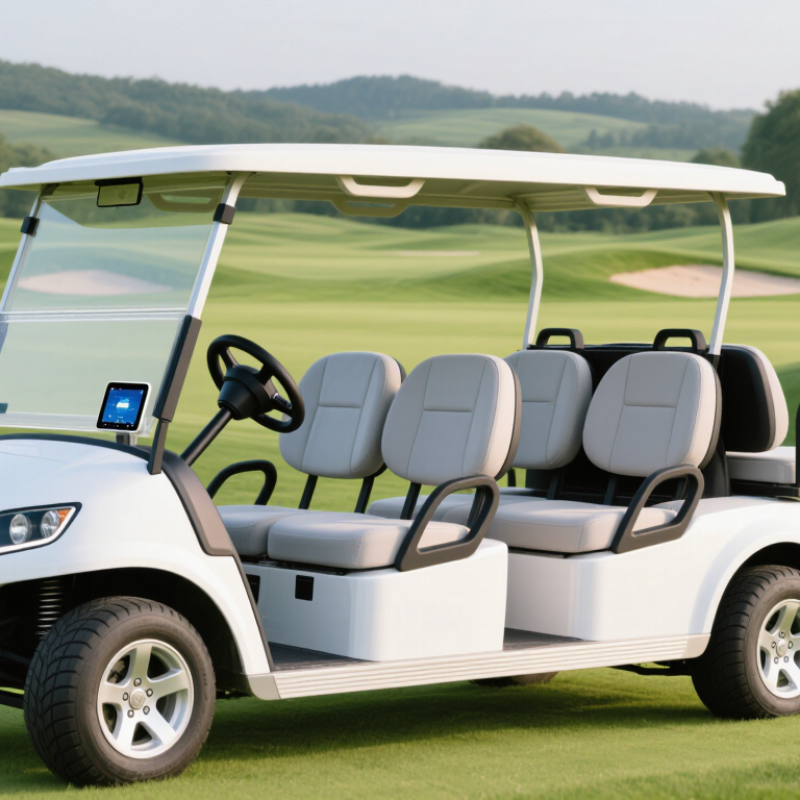
Four-seat cars often use forward-facing seats or a rear-facing bench. Forward-facing layouts feel familiar for neighborhood trips. A rear-facing seat may fold into a small cargo deck, useful for groceries or garden supplies. Room matters. Check whether the rear passengers have grab handles and enough legroom; a quick showroom sit can reveal awkward knees or a high step.
Six-seat configurations carry groups, but added weight can reduce distance between charges, especially on hills or rough paths. Some layouts place two passengers facing backward, which may not suit everyone. Think about daily loads: four adults, a cooler, and bags demand more space than occasional solo use. Battery chemistry, tire size, terrain, and payload all affect real-world range, so compare specifications under similar conditions. I would not choose by seat count alone; manufacturers’ range figures can be optimistic, and I still find cargo access easy to overlook. Ask for the vehicle’s rated passenger and cargo limits, then test the exact configuration you plan to use.
What Is the Best Electric Golf Car to Buy?
Compare common electric golf car configurations by passenger capacity.
Choose a two-seat model for solo or paired travel, a four-seat model for families or small groups, and a six-seat model for larger groups. Utility models often prioritize cargo space and commonly have two seats. Actual layouts vary by vehicle.
Evaluate Battery Range, Charging, and Performance
Battery range is most useful when measured against your real route, not an ideal test. A flat path with one passenger uses less energy than hilly ground carrying several people. Compare the stated range with your typical daily distance, then leave a practical reserve. Weather, tire pressure, and frequent stops can all reduce distance. Real use varies.
Charging convenience matters just as much. Check how long a full charge takes and whether the charger suits your available outlet. A vehicle parked overnight may work well with slower charging; several daily trips may call for a shorter recharge window. Ask whether the battery can be charged in place, and confirm that the charging instructions are clear. Charge overnight. Avoid judging solely by battery voltage; usable capacity and charger output provide better context.
Performance should feel steady with your usual passengers and cargo. Test acceleration from a stop, braking, and hill climbing if those conditions match your route. Pay attention to how quickly speed drops on an incline. A high top-speed figure does not guarantee useful power under load. I would not treat any single range number as a promise; it is an estimate that deserves a cautious margin. That small uncertainty is easy to overlook.
Assess Safety Features, Comfort, and Maintenance Needs
What Is the Best Electric Golf Car to Buy?
The best electric golf car is one that feels predictable and secure on the routes you actually use. Check for responsive brakes, working lights, mirrors, a steady parking brake, and seat belts where fitted. On a test drive, try a gentle slope and a tight turn at low speed. Listen for rattles, and notice whether the car leans or stops unevenly. Small details matter. A long specification list cannot replace a careful drive.
Tips: Ask how the car handles your usual passengers and cargo. Test the seat and step-in height, too. A short ride may hide discomfort that becomes obvious after an hour.
Maintenance needs vary with battery type and use. Ask about battery lifespan, charging time, replacement cost, and service intervals before buying. Inspect the tires for cracking and uneven wear, and look for corrosion around battery connections. Keep the charger and battery area clean and dry, following the owner’s manual. One easy mistake is focusing only on the purchase price; worn tires or aging batteries can change the real cost quickly. I would still compare service access nearby, because a minor repair is less convenient when parts or help are far away.
Compare Total Ownership Costs and Available Support
What Is the Best Electric Golf Car to Buy?
The best electric golf car is not always the one with the lowest purchase price. Compare the full cost of ownership over several years. Ask for written estimates covering the car, charger, routine service, and likely battery replacement. Battery life varies with use, charging habits, climate, and storage, so avoid relying on a single promised lifespan.
Include electricity, tires, brakes, and seasonal storage in your budget. These costs may seem small individually. They add up. Ask whether a home charging setup needs extra work, and check how easily you can access parts. A simple spreadsheet helps: record each expected cost and the assumptions behind it. The estimate will still be imperfect, but it is better than guessing at the showroom.
Support can matter as much as the vehicle. Confirm warranty coverage, service locations, typical repair turnaround, and whether replacement parts are readily available. Ask who handles a problem if the seller cannot fix it. I would also speak with a current owner nearby, if possible, and ask how long repairs actually took. Paperwork can sound reassuring; real-world delays are less tidy. Pay attention to how clearly staff explain maintenance and charging. If answers feel vague, pause and compare another seller.
What Is the Best Electric Golf Car to Buy? - Compare Total Ownership Costs and Available Support
| Comparison |
Basic 2-Passenger, Lead-Acid |
4-Passenger, Lead-Acid |
4-Passenger, Lithium-Ion |
| Typical new purchase price (USD) |
$8,000–$10,000 |
$10,000–$13,000 |
$13,000–$18,000 |
| Estimated electricity cost over 5 years |
$300–$600 |
$400–$750 |
$400–$750 |
| Estimated routine maintenance over 5 years |
$1,000–$1,750; includes battery watering and terminal care |
$1,250–$2,250; includes battery watering and terminal care |
$750–$1,500; less battery-specific routine care |
| Battery replacement allowance within 5 years |
$1,200–$2,000; replacement may be needed depending on use and care |
$1,500–$2,500; pack size and replacement cost vary |
$0 assumed in this 5-year estimate; battery life and warranty vary by model |
| Estimated 5-year ownership cost |
$10,500–$14,350 |
$13,150–$18,500 |
$14,150–$20,250 |
| Battery upkeep |
Requires periodic watering, cleaning, and charge management |
Requires periodic watering, cleaning, and charge management |
Generally less routine battery maintenance; follow the maker’s charging and storage guidance |
| Support to confirm before purchase |
Nearby service for battery testing, charging issues, brakes, and tires; written vehicle and battery warranty terms |
Nearby service for the larger battery pack, passenger seating, brakes, and tires; parts availability and written warranty terms |
Qualified lithium-battery service, diagnostic support, replacement-pack availability, and written battery warranty terms |
| Best suited to |
Buyers prioritizing a lower upfront cost and simple two-person transport |
Buyers who need extra seats and want to keep the initial price below a comparable lithium model |
Buyers who value reduced battery upkeep and can justify the higher purchase price |
Cost figures are illustrative U.S. planning ranges, not quotes. The 5-year estimate assumes moderate use and home charging. It excludes taxes, financing, insurance, registration, accessories, storage, and resale value. Actual costs, warranty coverage, and service availability vary by location and model; request written quotes and warranty terms before buying.
Conclusion
Choosing the best Electric Golf Car starts with understanding how and where it will be used. Consider whether it is mainly for golf, neighborhood travel, work, or a mix of activities, then decide how many passengers and how much cargo it needs to carry. Compare available seating layouts and configurations to find a practical balance of capacity, maneuverability, and storage.
Next, evaluate battery range, charging time, and performance against your typical routes and terrain. Safety features, passenger comfort, and routine maintenance also affect long-term satisfaction. Finally, compare the total cost of ownership, including the initial price, charging, upkeep, and replacement parts, and consider the availability of service and support. The right choice is the one that meets your everyday needs reliably, fits your budget, and remains comfortable and practical over time.
 Deutsch
 Português
 Español
 Français
 Italiano
 Русский
 한국어
 日本語
 العربية
 ไทย
 Tiếng Việt
 Türkçe
 Nederlands
 Indonesia
 עברית
 हिन्दी