Choosing a China Best Electric Golf Buggy for Sale means looking beyond a polished paint finish. Buyers need to compare passenger capacity, battery range, charging time, terrain, and after-sales support. A buggy used on flat resort paths faces different demands from one carrying equipment over damp, uneven ground. Small details matter. Seat comfort matters too.
Electric golf buggy industry specialist Jordan Lee puts the decision this way: “A good buggy fits the route, the load, and the daily charging routine—not just the showroom photo.” That is a useful test, though buyers should verify every specification with the seller. Ask for the battery type, rated range, warranty terms, and service arrangements in writing. A stated range may change with hills, passenger weight, temperature, and driving habits. Real use is messier.
This guide explores what to check when comparing China-made models for sale, from frame construction and braking to controls and replacement parts. It also considers how suppliers communicate specifications and support customers after delivery. Not every attractive offer is the best fit. And not every premium feature will earn its cost. A careful shortlist can help buyers match a buggy to their course, resort, or private property, while leaving room for one honest question: what will daily use actually feel like?
Electric Golf Buggies in China: Definition and Common Uses
An electric golf buggy is a battery-powered vehicle designed to carry golfers, clubs, and small loads across short routes. It usually has a compact frame, low-speed operation, and seating for two or more people. Unlike a road car, it is built for frequent stops on courses and managed properties. Quiet matters. On Chinese golf courses, common uses include moving players between holes, carrying golf bags, and helping staff transport tools. Resorts, large campuses, and industrial sites may also use similar vehicles for short-distance passenger or service trips.
The wider market is growing, though it does not tell buyers exactly what Chinese operators need. Grand View Research estimated the global golf cart market at USD 1.85 billion in 2023 and forecast continued growth through 2030. That figure covers golf carts broadly, not electric buggies in China alone. Range still matters. So do passenger capacity, charging access, tire choice, and the surface underfoot. A buggy that works smoothly on paved paths may struggle on wet grass or steep lanes. The label can be confusing, too: seating, cargo capacity, and intended terrain vary by model.
Tips: Match the buggy to route length and daily load. Ask for battery and charging specifications, then test it on the actual surface. Worth checking.
How Electric Golf Buggies Work: Main Components and Power Systems
An electric golf buggy turns battery energy into controlled movement through a compact powertrain. The battery pack supplies direct current, while a controller regulates how much power reaches the motor when the driver presses the pedal. The motor then turns the axle or differential, moving the wheels. A battery management system monitors temperature, voltage, and charge; the onboard charger restores power from a standard charging connection. Small parts matter.
Most buggies use lead-acid or lithium-ion batteries. Lead-acid systems often cost less upfront, but they are heavier and need more maintenance. Lithium-ion packs are generally lighter and can recharge faster, though the right choice depends on daily distance, load, terrain, and service access.
The U.S. Department of Energy’s fueleconomy.gov notes that electric vehicles convert more than 77% of grid electricity into power at the wheels; that broad figure is useful context, not a buggy-specific test result. Real-world range still falls with hills, cold weather, passengers, and frequent stops.
The International Energy Agency’s Global EV Outlook 2024 reports that battery demand for transport reached about 750 GWh in 2023, up roughly 40% from 2022. That scale reflects wider electrification, not golf buggies alone. Buyers should compare usable battery capacity, charger compatibility, and expected daily mileage rather than relying on a single advertised range. Regenerative braking may recover some energy on equipped models, but it cannot replace careful charging and battery care. The wiring diagram looks tidy; actual duty cycles are less tidy.
Types and Specifications of Chinese Electric Golf Buggies for Sale
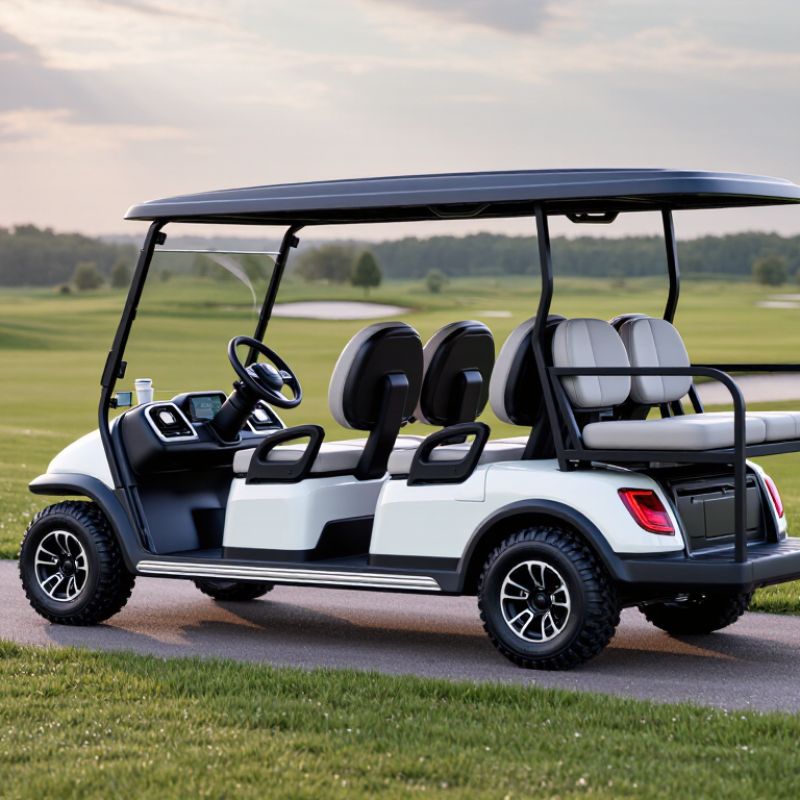
Chinese electric golf buggies for sale generally fall into passenger, utility, and multi-row configurations. A two-seat buggy suits short course trips and compact storage. Four-seat models add rear-facing seats, often with a folding cargo platform. Utility versions trade passenger space for a rear tray, useful for tools or light supplies. Some suppliers offer six-seat layouts, but turning space and braking feel deserve a close check. Not every extra seat is practical.
Specifications vary by frame and battery package. Many listings show 48-volt systems, with motor ratings and battery capacity differing by load and terrain. Lead-acid batteries can cost less upfront; lithium packs are lighter and usually charge faster, but raise the purchase price. Ask for rated payload, climbing ability, tire size, charger type, and expected range under real passenger weight. A quoted range may assume flat ground. Check the warranty, parts availability, and whether the stated specification applies to the exact configuration being shipped. A slow walkaround inspection still helps. Look at welds, seat hinges, wiring protection, and brake response before accepting delivery. Some listing sheets are vague, and that is worth questioning.
How to Evaluate Manufacturers, Build Quality, and Vehicle Performance
When comparing electric golf buggies for sale, look beyond the advertised range. Ask manufacturers for battery capacity, charging time, warranty terms, and a clear parts list. A dependable supplier should explain how the vehicle is tested and where routine servicing is available. Vague answers are worth noting. They may not prove poor quality, but they make careful comparison harder.
Tips: Inspect welds, panel gaps, seat mounts, and cable connections. Ask for a test drive with a typical passenger and equipment load.
On a test drive, check acceleration on a slope, braking on level ground, and steering over uneven paths. Listen for rattles near the wheel hubs, and notice whether the buggy feels stable through a turn. Compare the stated range with your route, passenger count, terrain, and expected stops; real use can differ from a brochure figure. Check tire condition, ground clearance, and access to the battery compartment. One detail is easy to overlook: a smooth ride on flat pavement says little about performance on damp grass. If possible, test the buggy where you plan to use it.
Purchasing, Import Compliance, Warranty, and After-Sales Support
China Best Electric Golf Buggy for Sale
Purchasing, Import Compliance, Warranty, and After-Sales Support
Buying a golf buggy from China takes more than comparing prices. Ask for a written specification covering seating, battery type, range, charging time, and included accessories. Request recent photos of the actual configuration, plus a pro forma invoice that lists each item and its cost. Compare the quoted price with shipping, insurance, and destination charges. A low initial price can hide expensive gaps.
Before paying a deposit, check your destination’s current import and vehicle requirements with the relevant authorities or a qualified customs broker. Requirements vary by location and vehicle use. Confirm which documents are available, such as the commercial invoice, packing list, and battery transport details. Get warranty terms in writing, including duration, covered components, claim steps, and who pays for parts and shipping. Ask how technical support works when the buggy is overseas. Even a careful checklist can miss a detail, so leave time to verify.
Tips: Request a parts list and clarify how replacements are ordered. Keep payment records, messages, and delivery photos together. Ask for a short video showing the buggy moving, braking, and charging before dispatch. A prompt reply helps, but clear written terms matter more.
Conclusion
An Electric Golf Buggy is a battery-powered vehicle commonly used to transport golfers, staff, and equipment around golf courses. It can also serve resorts, residential communities, campuses, and other large properties where quiet, low-speed travel is useful. Most models combine an electric motor, battery pack, controller, chassis, steering, brakes, and seating. Battery capacity, charging time, passenger capacity, range, speed, and terrain capability vary by configuration.
When comparing Chinese electric golf buggies for sale, consider the intended use and review specifications alongside build quality, safety features, materials, and performance. Ask manufacturers for clear product details, inspection information, and suitable configuration options, and evaluate their communication and production consistency. Before purchasing or importing, confirm that the vehicle meets the requirements that apply in your destination and intended setting. Also clarify shipping arrangements, warranty coverage, spare-parts availability, maintenance guidance, and after-sales support to help ensure reliable ownership.
 Deutsch
 Português
 Español
 Français
 Italiano
 Русский
 한국어
 日本語
 العربية
 ไทย
 Tiếng Việt
 Türkçe
 Nederlands
 Indonesia
 עברית
 हिन्दी